The Ministry of Works (KKR) has launched a push to attract more contractors into the facility management and maintenance sector, identifying a significant gap between market opportunity and industry participation. Deputy Works Minister Datuk Seri Dr Ahmad Maslan highlighted that between 2023 and 2025, the sector accumulated RM39.59 billion in project value, yet the field remains underpenetrated by qualified service providers. This disparity presents what government officials view as a major untapped opportunity for construction firms seeking business diversification.
Data from the Construction Industry Development Board (CIDB) reveals the scale of the mismatch. During the three-year period, contractors lodged 1,541 facility management and maintenance projects. However, only 468 companies hold the necessary F01 and F02 specialisation registrations required to operate in this niche. The mathematics suggest substantial room for market entry, with current registered contractors handling work that translates to an average of RM85 million per firm annually if evenly distributed—a figure that understates the potential for growth-minded operators.
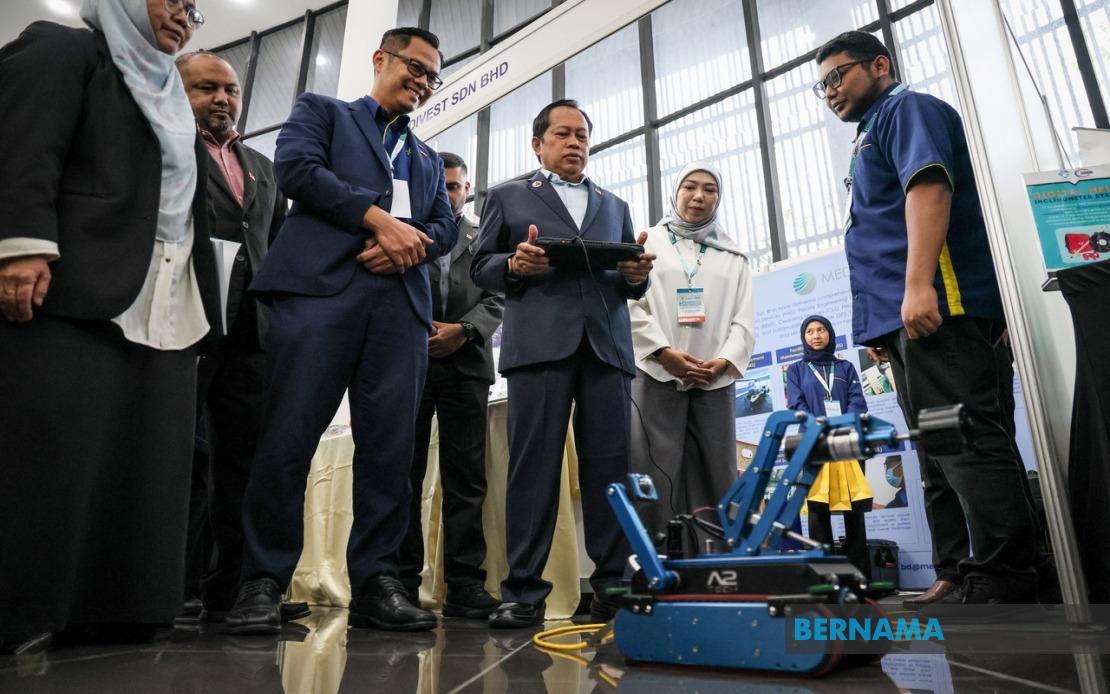
Ahmad's remarks, delivered during the launch of the Contractors Convention 2026: NexGen Builders in Butterworth, reflect a broader strategic shift in how Malaysia's construction sector views asset lifecycles. Historically, the industry has concentrated resources and expertise on project delivery—the construction phase itself. Once a building, bridge, or road reaches completion and handover, the attention of contractors typically pivots elsewhere, with maintenance and upkeep relegated to secondary status or outsourced to specialist vendors unfamiliar with original design intent.
This historical bias has created inefficiencies that extend far beyond immediate operational concerns. Buildings deteriorate faster when maintenance is reactive rather than preventative, roads develop safety hazards when routine care is deferred, and bridges face premature obsolescence when inspections and repairs lack coordination. The cumulative effect represents substantial waste across Malaysia's public asset portfolio, with taxpayers bearing the costs of accelerated degradation and emergency interventions that could have been avoided through systematic facility management.
The Ministry's initiative coincides with the release of CIS 33:2026—Facility Management Good Practice Guide, a new standard developed by CIDB to institutionalise best practices across the construction sector. This framework aims to establish common protocols and expectations among asset owners, facilities managers, contractors, and other stakeholders. By providing a structured methodology, the guide attempts to elevate facility management from an ad-hoc support function into a recognised professional discipline with measurable performance standards and accountability mechanisms.
For contractors, the implications are substantial. The existing gap between market size and service provider capacity suggests pricing power and profit margins in the sector remain attractive. Firms that develop expertise in systematic facility management can differentiate themselves from competitors, build long-term client relationships through recurring service contracts, and generate revenue streams less subject to cyclical construction downturns. A construction company that views FM as merely a transitional service after project completion misses the opportunity to capture lifetime value from client relationships.
The Malaysian context amplifies these opportunities. The country has invested heavily in infrastructure over recent decades, creating an expanding stock of assets requiring professional stewardship. The tropical climate accelerates material degradation, making regular maintenance essential rather than optional. Government-led sustainability initiatives increasingly demand evidence of efficient asset management practices. Additionally, Malaysia's aspirations toward becoming a high-income nation depend on reliable, well-maintained public infrastructure that supports business operations and quality of life.
The demographic composition of registered FM contractors suggests the sector has historically attracted smaller, specialised firms rather than major construction conglomerates. This fragmentation creates opportunities for consolidation or network effects, but also means that established contractors entering the space can rapidly establish market position. For firms currently focused on building and civil works, facility management offers a hedge against project-based revenue volatility and a platform for employing skilled workers year-round rather than on temporary employment cycles.
Ahmad's framing of facility management as a deliberate business opportunity rather than an afterthought represents a subtle but significant reorientation of industry thinking. By elevating FM to equal status with construction in strategic discussions, and by providing a standardised framework through CIS 33:2026, the Ministry signals that this sector warrants investment in training, capability development, and professional advancement. The Contractors Convention 2026 platform amplifies this message to industry participants actively considering business directions.
The policy alignment evident in these initiatives—regulatory encouragement through CIDB data sharing, professional standards through CIS 33:2026, and ministerial advocacy through public forums—suggests government commitment to formalising what remains a fragmented market. For Malaysian contractors, particularly mid-sized firms seeking growth vectors beyond traditional construction, the sector presents measurable opportunity backed by government support and underpinned by genuine market demand for professional facility management services across Malaysia's expanding infrastructure portfolio.

