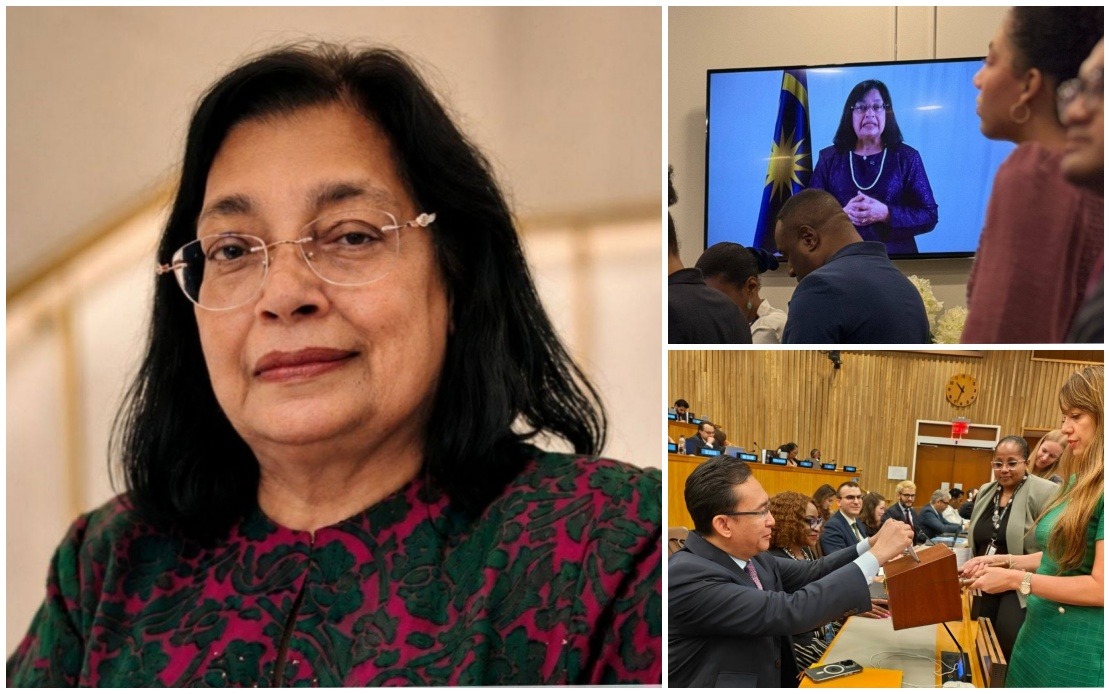
Datuk Yasmeen Muhamad Shariff has been elected to the UN Committee on the Rights of the Child for the 2027–2031 term, the Foreign Ministry announced on Wednesday following voting at the UN Headquarters in New York. The election, held during the 21st Meeting of States Parties to the Convention on the Rights of the Child, saw Yasmeen emerge as the top candidate with 136 votes from the 189 States Parties present and participating in the ballot.
This latest victory marks a significant recognition of her sustained commitment to child welfare and international advocacy. Yasmeen's previous tenure on the committee from 2013–2017 demonstrated considerable expertise in monitoring compliance with global child protection standards, positioning her as a trusted voice in international discussions surrounding children's rights and welfare. Her re-election underscores the confidence the global community continues to place in her analytical abilities and practical understanding of how international conventions translate into meaningful protections for vulnerable populations.
Serving as an independent expert in her personal capacity, committee members like Yasmeen play a crucial role in the UN's oversight mechanisms. They evaluate how signatory nations implement the Convention on the Rights of the Child, facilitate dialogue between governments and civil society, and advocate for rights-based approaches to global child welfare challenges. This work extends beyond ceremonial functions; it involves rigorous examination of national policies, identification of implementation gaps, and recommendations that shape the priorities of member states.
The Foreign Ministry emphasised that Yasmeen's election reflects international recognition of Malaysia's broader commitment to advancing children's rights through substantive policy reforms and targeted programmes. Over recent years, Malaysia has undertaken legislative initiatives and institutional reforms designed to strengthen protections for minors, expand access to education and healthcare, and address emerging challenges such as online exploitation and trafficking. The fact that an expert from a Southeast Asian nation secured the top voting position signals growing influence of the region in global child protection discourse.
Malaysia's consistent engagement with the Convention on the Rights of the Child represents more than ceremonial participation. The country has incorporated core principles into its domestic legal framework, from custody and inheritance laws to education policy and juvenile justice proceedings. However, like all nations, Malaysia faces ongoing implementation challenges, particularly in vulnerable populations such as children in informal settlements, migrant worker families, and those with disabilities. Having a national representative on the monitoring committee provides Malaysia with direct insight into best practices and comparative approaches while also placing domestic child welfare efforts under constructive international scrutiny.
The timing of this appointment carries particular significance in the contemporary context. Global challenges affecting children have multiplied and intensified in recent years, encompassing mental health crises, climate-related displacement, digital exploitation, and the prolonged effects of pandemic disruptions on education and development. The committee's mandate to promote a rights-based approach to these interconnected issues positions members like Yasmeen as key figures in shaping international consensus on emerging child welfare concerns. Her expertise will be particularly valuable as the committee grapples with how established conventions adapt to technological change and transnational challenges.
The Ministry of Women, Family and Community Development contributed substantially to Yasmeen's successful nomination and election. This inter-agency collaboration demonstrates how Malaysia's child welfare agenda requires coordination across multiple government portfolios. The women and family affairs ministry, which oversees programmes targeting children, women, and family stability, works alongside the Foreign Ministry to ensure that international commitments align with domestic implementation capacity. This institutional coordination is often the difference between aspirational policy statements and genuine progress in vulnerable population protection.
For Southeast Asian nations, Yasmeen's re-election provides a platform for regional perspectives to influence global child protection standards. The region faces distinct challenges—from the legacy effects of protracted conflicts in Myanmar and elsewhere, to rapid urbanisation and internal migration patterns that create protection gaps, to the particular vulnerabilities of children in maritime communities. Through committee participation, Malaysian expertise can help international frameworks address regional realities rather than exclusively reflecting perspectives from developed nations.
The Foreign Ministry's statement highlighted that the committee's role remains crucial precisely because childhood development trajectories established today will shape whether future generations can fully exercise their rights and reach their potential. This long-term perspective is essential for policymaking. Child protection investments often yield benefits that extend far beyond individual lifespans, reducing cycles of poverty and trauma while building human capital and social stability. The committee's work contributes to evidence-based approaches rather than reactive or punitive responses to child welfare failures.
Looking ahead, Yasmeen's term from 2027–2031 will occur during a period when significant questions surrounding child welfare, technology governance, and sustainable development will likely intensify. The committee will need to address how artificial intelligence, social media, and digital commerce affect children's safety and development, while also maintaining focus on foundational needs in less developed regions. Her appointment positions Malaysia to contribute meaningfully to these discussions while potentially drawing international attention to regional and national child welfare innovations worth scaling.
Malaysia's continued engagement with the convention reflects acknowledgment that child protection transcends national borders and requires harmonised standards while respecting cultural contexts. The country's formal commitment to the convention, coupled with institutional mechanisms for implementation and the placement of credible experts in international monitoring roles, demonstrates a serious approach to this dimension of human rights governance. As Yasmeen embarks on her second committee term, her contributions will help ensure that international standards translate into tangible improvements for children across the globe.