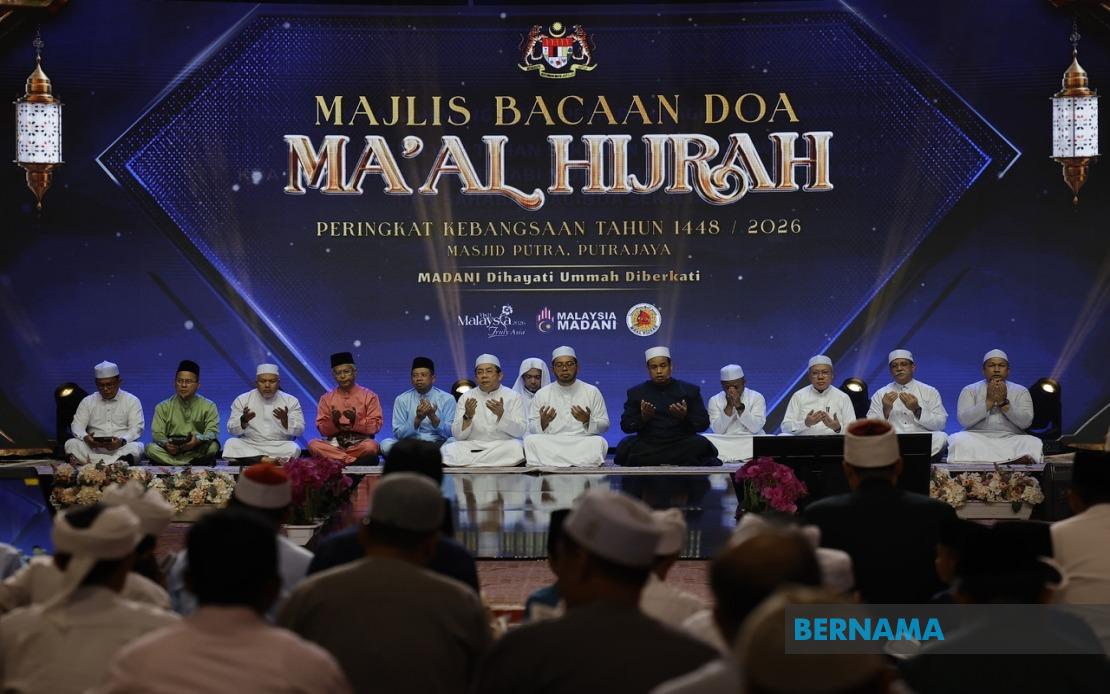
Malaysia's youth are being encouraged to harness the profound lessons embedded in the Hijrah—Prophet Muhammad's migration from Makkah to Madinah—as a blueprint for meaningful personal transformation and nation-building. Datuk Dr Zulkifli Hasan, Minister in the Prime Minister's Department (Religious Affairs), made this call during the national Maal Hijrah celebration held in Putrajaya, positioning the historical religious event as both a spiritual commemoration and a contemporary catalyst for positive societal change among young Malaysians.
The Hijrah narrative, which marks the Prophet's journey undertaken in the face of adversity, carries multifaceted significance that extends well beyond its historical context. For Malaysia's diverse and youthful demographic, the underlying principles of resilience, conviction, and the pursuit of better circumstances resonate across religious and cultural boundaries. Zulkifli's framing of the celebration emphasizes that Malaysia's youth possess considerable untapped potential, and channelling this energy through reflection on the Hijrah's spiritual tenets could catalyze broader transformations within communities and institutions across the country.
The 1448 Hijri/2026 Gregorian celebration, which commenced in mid-June, was designed with a deliberate structural approach that prioritizes contemplation and communal engagement. Rather than adopting conventional ceremonial formats, organisers elected to anchor the national-level festivities at Putra Mosque, a symbolic choice grounded in historical precedent. When Prophet Muhammad arrived in Madinah, the mosque functioned as far more than a place of worship—it served as the foundational institution upon which social cohesion, governance, and civilisational advancement were constructed. By beginning the commemoration at this venue, planners sought to reinvigorate public consciousness regarding the interconnection between spiritual institutions and practical community development.
Zulkifli articulated that the decision to launch proceedings from Putra Mosque was intentional, designed to galvanize a fresh wave of remembrance concerning the Prophet's multifaceted struggles and accomplishments. The mosque, in this conception, represents not merely a sacred space but rather the epicenter from which civilisation and organised community welfare emanate. This framing invites contemporary reflection on how religious and social institutions might similarly serve as anchors for progress in modern Malaysia, where rapid urbanization and social fragmentation present ongoing challenges to cohesion.
The observance itself was calibrated to align with broader national priorities beyond the religious domain. Organizers consciously adopted a measured, modest scale for the celebration, demonstrating sensitivity to Malaysia's energy consumption concerns amid the prevailing global supply chain disruptions. This approach reflects a practical acknowledgment that responsible governance requires balancing traditional observance with contemporary environmental and economic imperatives—a message subtly embedded within the festivities themselves.
A pivotal component of the celebration unfolded through a keynote lecture series convened at the JAKIM Auditorium on June 18, drawing an anticipated attendance of approximately 1,000 participants. This forum featured addresses from both nationally and internationally recognized figures whose work encompasses the philosophy and practical implementation of Hijrah principles in modern contexts. By providing a platform for diverse voices to expound on how the Hijrah spirit translates into contemporary action, the programme created space for audiences to absorb not merely theoretical exposition but grounded, experiential insights from practitioners and scholars operating across different geographies and sectors.
The centerpiece of the national celebration transpired on June 17, coinciding with the Islamic calendar date of 1 Muharam 1448 Hijri. Proceedings at Putra Mosque commenced at 7 am and featured the formal presentation of national and international Maal Hijrah Figure awards. These honours, bestowed upon individuals exemplifying the transformative principles embodied in the Hijrah narrative, serve to publicly recognize and celebrate those whose lives and work demonstrate commitment to positive personal and communal change. The ceremonial officiation by Sultan Nazrin Shah, the Sultan of Perak, invested the occasion with official state endorsement and elevated its prominence within Malaysia's public consciousness.
For Malaysian youth specifically, the contemporary resonance of Hijrah principles warrants deeper examination. The narrative of deliberate migration undertaken to establish a community founded on justice, mutual support, and spiritual clarity holds particular relevance for a generation navigating profound economic uncertainty, employment precarity, and questions of social belonging. The Hijrah, properly understood, encompasses not merely geographical relocation but rather a comprehensive reorientation of priorities, values, and commitments—a concept that could profoundly influence how young Malaysians approach career decisions, community involvement, and personal ethics.
The invitation extended to Malaysia's youth to internalize the Hijrah spirit also carries implicit policy dimensions. Throughout Southeast Asia, youth unemployment, skills mismatches, and feelings of disconnection from traditional community structures remain persistent challenges. By anchoring national messaging in religious and historical narratives that emphasize agency, purposeful action, and community service, Malaysian policymakers position spiritual reflection as a complementary tool alongside economic and educational interventions. This integrated approach acknowledges that material prosperity alone proves insufficient for generating the sense of meaning and direction that younger populations increasingly seek.
The Maal Hijrah observance, though rooted in Islamic tradition, offers universalizable lessons about transformation, resilience, and institutional foundations that extend into secular domains. The emphasis placed on the mosque as a foundational institution for civilisational development subtly reframes how Malaysians might conceptualize the role of public institutions—whether educational, governmental, or civic—in fostering social progress. Such reframing becomes particularly relevant in a multiethnic, multireligious nation where identifying shared principles and common aspirations remains an ongoing necessity.
Looking forward, the effectiveness of these appeals to Malaysia's youth will depend significantly on translating rhetorical exhortations into concrete opportunities and pathways. While celebration and commemoration serve important functions in maintaining cultural and religious consciousness, sustainability requires alignment with tangible economic prospects, educational advancement, and structures enabling meaningful civic participation. The Hijrah spirit, invoked as inspiration for positive change, ultimately gains traction when young Malaysians perceive genuine possibilities for constructing lives characterized by purpose, security, and contribution to their communities.