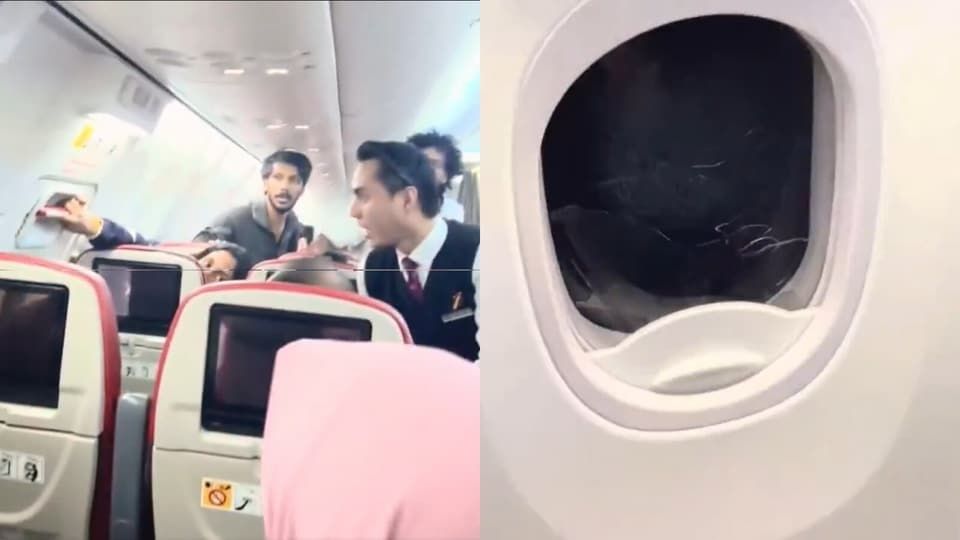
A serious aviation safety incident was narrowly averted on Wednesday night when a passenger attempted to open the emergency exit of a Batik Air Boeing 737 aircraft mid-flight, prompting swift intervention by fellow travellers and cabin crew. The man, identified as Jamsheer Athanikkal, 36, from Palakkad in Kerala but currently residing in Sreemoolanagaram, was arrested by Kerala Police upon the flight's arrival in Kochi early Thursday morning. The incident has reignited concerns about passenger behaviour and security protocols on commercial flights operating across South Asia, particularly on routes serving the region's major aviation hubs.
According to the first information report filed by Batik Air's security personnel at Kochi airport, the dramatic incident unfolded between 9.30 pm and 11.05 pm as flight OD231 cruised at altitude. The accused allegedly used his foot to damage the emergency exit's inner window panel and subsequently attempted to force the door mechanism open, simultaneously threatening and intimidating fellow passengers and members of the cabin crew. The situation escalated rapidly enough to cause widespread panic among those aboard, though the precise sequence of events suggests the aircraft's safety systems and structural design ultimately prevented the door from opening despite the assault on its components.
Passenger Matty Mathew, who documented portions of the incident, later shared a detailed account on social media describing how most travellers were sleeping during the overnight service when they were jolted awake by the unmistakable sound of air rushing violently through the cabin. According to Mathew's post, the commotion began when the passenger in the emergency row seat deliberately broke through the window and interfered with the door assembly. The fundamental design of modern aircraft—specifically the pressurisation system and the manner in which emergency doors are engineered—proved critical in preventing catastrophe. Emergency exit doors on commercial aircraft cannot be opened during flight due to the significant differential between cabin pressure and external atmospheric pressure at cruise altitude, a safety feature that functioned as intended despite the determined assault.
Matthew emphasised in his social media account that passengers and Batik Air crew members coordinated their response swiftly, physically restraining the individual before the situation could deteriorate further. His subsequent message, expressing gratitude for the safety outcome, underscores the crucial role of both crew training and passenger awareness in mitigating aviation emergencies. The rapid mobilisation of fellow travellers demonstrates how emergency preparedness and quick thinking among civilians can complement professional crew responses, though such situations highlight the unpredictability of passenger behaviour at high altitude.
The authorities have pursued multiple charges against Athanikkal under Indian legal provisions reflecting the gravity of the incident. He faces prosecution under Section 351(3) of the Bharatiya Nyaya Sanhita for criminal intimidation, acknowledging the threatening behaviour directed at passengers and crew. More significantly, charges under Section 11A of the Aircraft Act address the violation of safety and security directives—the core offence in this category of aviation incident. Additional charges under Section 118(e) of the Kerala Police Act cover acts that endanger public safety, providing a broader legal framework for addressing the reckless behaviour that endangered numerous lives.
The timing of this incident compounds concerns about aviation safety in the region, arriving merely two days after another serious mid-air emergency involving an Indian carrier. Air India flight AI2379, operating from Phuket in Thailand to Delhi, experienced a sudden and unexplained loss of altitude during cruise on Tuesday, forcing an emergency descent. The aircraft, carrying 137 passengers and eight crew members, managed to land safely in Delhi despite the frightening circumstances. Following the unscheduled descent, 13 passengers and four crew members required hospitalisation for treatment, suggesting the incident involved sufficient G-forces and turbulence to cause injuries among those aboard.
The Air India aircraft involved was a seven-year-old Airbus according to flight-tracking data, meaning it fell within the normal operational lifespan of modern commercial aircraft. The airline initiated immediate investigations and engaged with relevant aviation regulators and the aircraft manufacturer, underscoring the protocol followed when unusual technical events occur. Air India's public statements confirmed that passenger and crew safety remained the organisation's foremost priority, though the airline provided limited detail about the specific causes of the altitude loss or whether any mechanical anomalies had been identified.
The back-to-back incidents raise broader questions about aviation security and safety management across South Asian carriers operating major international routes. While the Batik Air incident represents a passenger security breach—an issue of human behaviour and cabin management—the Air India situation points to potential technical or operational concerns that warrant thorough investigation. Both incidents underscore the inherent risks of commercial aviation and the multilayered systems designed to protect passengers and crew from diverse threats ranging from mechanical failure to unruly passenger conduct.
For Malaysian travellers and the broader Southeast Asian aviation community, these incidents carry particular significance given the interconnectedness of regional routes and the shared reliance on similar aircraft types and safety protocols. Kuala Lumpur and other major Malaysian airports serve as crucial hubs for connecting flights across South Asia, meaning passengers regularly transit through airports serving routes like the Kuala Lumpur-Kochi service. The incidents highlight the importance of rigorous crew training in de-escalation techniques, passenger screening procedures, and the continued effectiveness of aircraft design in withstanding external threats.
The investigation into the Batik Air incident will likely focus on identifying any underlying factors that may have contributed to the passenger's behaviour—whether medical, psychological, or situational. Airlines operating in the region have increasingly implemented protocols addressing passenger misconduct, though the apparent premeditation evident in this case—using his foot to deliberately damage the window panel—suggests a determined effort rather than impulsive behaviour. The intervention by fellow passengers and crew prevented what could have represented an unprecedented aviation disaster, though the incident serves as a sobering reminder of vulnerabilities that remain despite modern safety systems.
As aviation authorities across Malaysia, India, and the broader region continue monitoring these developments, the emphasis will likely shift toward strengthening pre-flight screening, enhancing crew response training, and potentially implementing additional security measures on high-risk routes. The incidents also underscore the critical importance of passenger cooperation and situational awareness—the most valuable resources available to crew members in responding to emergencies of this nature. For the aviation industry serving Southeast Asia and South Asia, these events represent opportunities to reinforce the multifaceted approach required to maintain the safety record that has made commercial aviation the world's safest form of long-distance travel.

