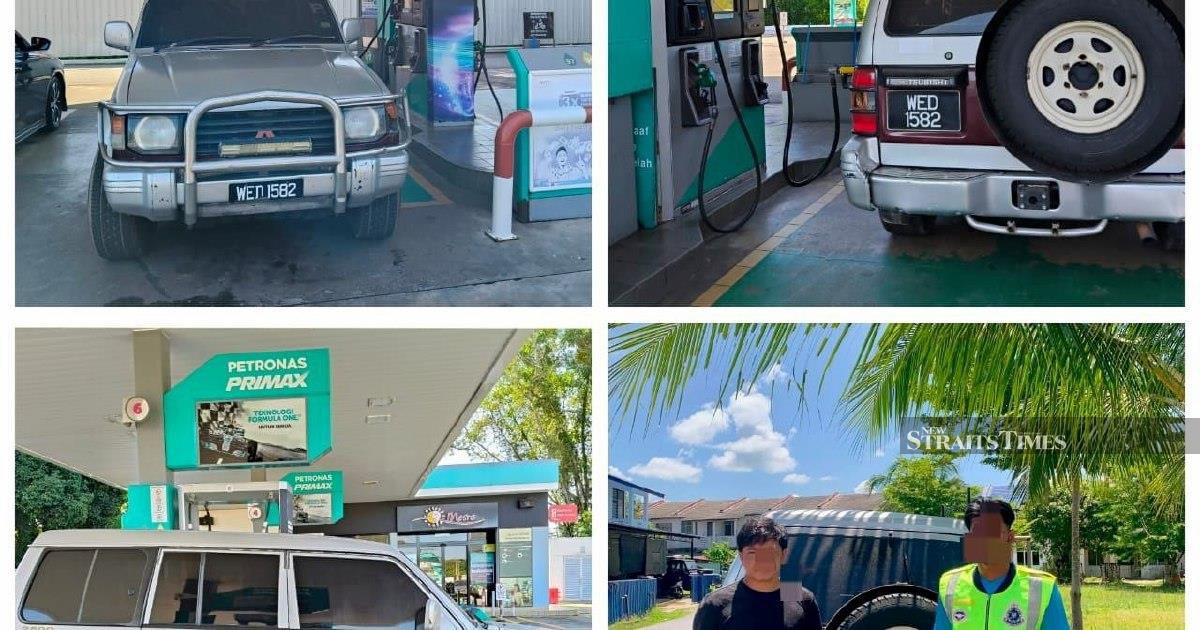
A 36-year-old man was taken into custody at a petrol station in Rantau Panjang yesterday following allegations that he had been systematically purchasing petrol for smuggling operations across the Thai border. The arrest underscores persistent enforcement challenges along Malaysia's northern frontier, where fuel price differentials continue to create lucrative opportunities for cross-border smuggling networks.
The detention occurred during what authorities describe as a routine operation at the petrol station, a strategic location positioned near the Malaysia-Thailand land crossing. Rantau Panjang, a border town in Kelantan state, has long been identified as a vulnerable point for illicit trade activities, particularly fuel smuggling operations that capitalise on significant price disparities between the two countries. The suspect's alleged involvement in multiple fuel purchases suggests a deliberate pattern of activity rather than isolated transactions.
Fuel smuggling remains one of the most persistent cross-border smuggling challenges facing Malaysian enforcement agencies. The economics are straightforward: Malaysia's government-controlled fuel prices remain substantially lower than those in Thailand, creating a price gap that incentivises illegal export operations. A single petrol purchase appears inconspicuous, but systematic repeated transactions provide steady supply for smuggling networks operating along porous sections of the international boundary.
The border region between Kelantan and Thailand has historically served as a transit corridor for various contraband activities. Beyond fuel, authorities regularly intercept smuggling attempts involving consumer goods, agricultural products, and other commodities. The prevalence of such activities reflects the challenging operational environment faced by border enforcement agencies tasked with monitoring thousands of kilometres of international boundary with limited resources.
Smuggling operations along this corridor typically involve coordinated networks spanning both sides of the border. Malaysian residents purchase fuel at domestic prices, then transport it across into Thailand where higher retail prices ensure immediate profit margins. The arrangement often involves Thai nationals or cross-border traders who facilitate the onward sale. Intelligence gathered by enforcement agencies suggests these operations frequently employ rotation systems, with multiple individuals conducting repeated small-scale purchases to avoid triggering suspicion through excessively large single transactions.
The detention of this individual represents one component of broader enforcement efforts aimed at disrupting smuggling supply chains. However, enforcement agencies acknowledge the difficulty in addressing demand-side factors that sustain such activities. As long as significant price differentials persist between Malaysia and Thailand, the economic incentive structure will continue motivating smuggling attempts. The scale and sophistication of these operations have evolved considerably, with networks becoming increasingly adept at circumventing detection.
Authorities have implemented various countermeasures including increased patrols at fuel stations, heightened scrutiny of vehicles near border crossings, and intelligence-sharing arrangements with Thai counterparts. Despite these efforts, apprehension rates remain modest relative to the estimated scale of smuggling occurring. The challenge is compounded by the geographic reality of Malaysia's border, characterised by numerous unofficial crossing points and remote areas where detection becomes exponentially more difficult.
This incident also highlights the vulnerability of retail fuel distribution systems to exploitation by smuggling networks. Petrol station operators face a delicate balance between serving legitimate customers and preventing their premises from becoming staging points for contraband activities. While individual transactions may appear lawful, cumulative patterns of suspicious activity should ideally trigger reporting mechanisms, though implementation varies considerably across different service stations.
For Malaysian policymakers, sustained fuel smuggling presents a dual challenge. First, there is the direct loss of government revenue, as fuel sold at domestic prices is diverted to foreign markets, bypassing official export mechanisms and customs oversight. Second, uncontrolled smuggling undermines the effectiveness of government price control policies intended to provide domestic consumers with affordable energy. These leakages reduce the subsidisation benefit that ordinary Malaysians are intended to receive.
The detention also underscores regional dimensions of fuel smuggling. Thailand itself has implemented price adjustments and enforcement initiatives attempting to reduce the price gap that encourages smuggling. However, as long as Malaysia maintains significantly lower fuel prices, the arbitrage opportunity persists. Both governments have occasionally engaged in coordination discussions, though fundamental differences in pricing policies and fiscal priorities have limited the scope of joint action.
Looking forward, comprehensive solutions require addressing the underlying economic incentives driving smuggling while simultaneously strengthening enforcement capabilities. This might encompass price policy review, enhanced border controls, and international cooperation frameworks. The arrest at Rantau Panjang represents only the visible tip of a much larger smuggling phenomenon characterising Malaysia's northern frontier, one that will likely persist as long as economic incentives remain compelling.

