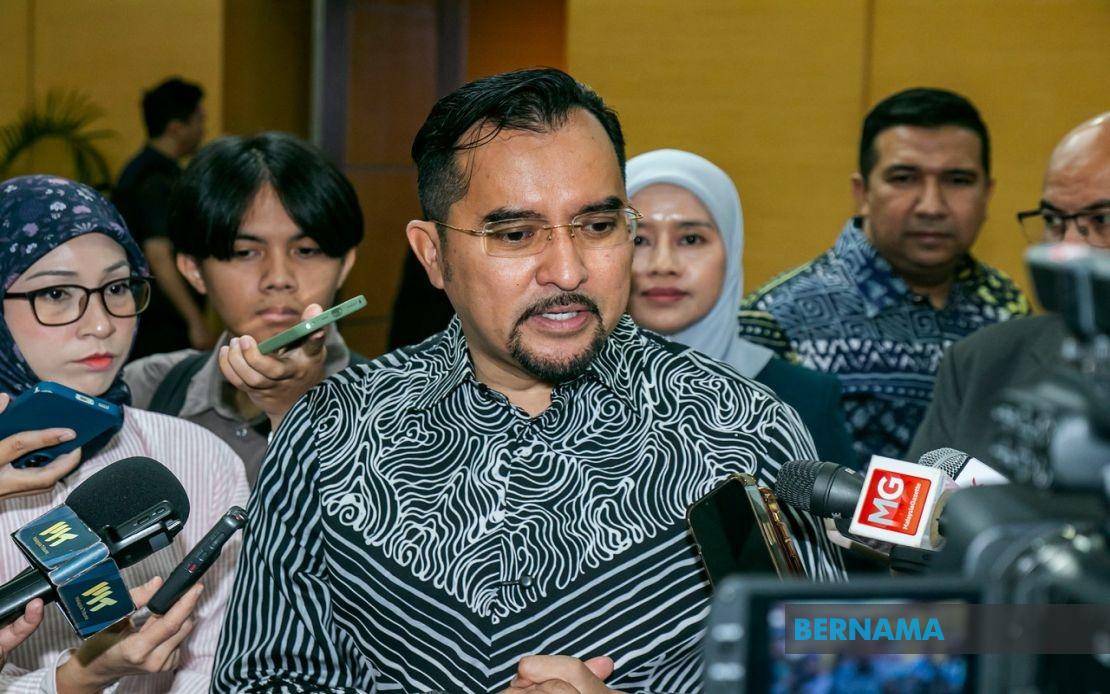
The long-awaited overhaul of the Majlis Amanah Rakyat (MARA) framework is approaching a critical milestone, with the proposed MARA Bill 2026 set to arrive before Parliament in November. The new legislation, which has already secured Cabinet policy approval, represents a comprehensive effort to modernise the institution's legal foundation and reinforce safeguards against misuse of authority. MARA chairman Datuk Asyraf Wajdi Dusuki confirmed during remarks at the MARA Sponsored Pre-Departure programme that the Bill has reached its final drafting stage and is ready for legislative consideration within the coming weeks.
The driving philosophy behind the legislative refresh centres on institutional resilience rather than personality-driven leadership. According to Asyraf Wajdi, approximately 80 per cent of the Bill's substantive provisions focus explicitly on good governance mechanisms aligned with international standards and recognised corporate practices. This emphasis reflects a deliberate strategic choice to position MARA's internal controls and oversight structures at par with multinational standards, moving beyond the legacy framework established under the original MARA Act 1966. The chairman underscored that his role in championing these reforms transcends personal legacy, instead serving the broader institutional imperative to insulate MARA from governance failings that have periodically emerged.
A cornerstone reform embedded in the draft Bill involves substantially curtailing the chairman's executive authority. Under the proposed amendments, the chairman's remit would be confined to chairing the Board of Directors or Council and shaping high-level policy direction, a significant narrowing of the expansive powers afforded to the position under the 1966 Act. Critically, the chairman would be explicitly barred from involvement in routine administrative operations, a provision designed to prevent concentration of authority and create a genuine system of institutional checks and balances. This structural separation between strategic oversight and operational management mirrors corporate governance best practices increasingly adopted across the Asia-Pacific region, where separation of powers has proven effective in mitigating conflicts of interest and enhancing accountability.
The impetus for legislative renewal traces to a series of governance challenges that have periodically afflicted the institution. On 12 August, Asyraf Wajdi identified the Bill's foundational purpose as eliminating future recurrence of abuse of power, governance deficiencies, misappropriation, administrative irregularities, resource leakages, wastage, and institutional risks capable of inflicting serious damage. These concerns are not theoretical; MARA, entrusted with safeguarding the economic and social interests of Malays and Bumiputera communities, carries heightened accountability obligations given its custodian role over public resources designated for bumiputera advancement. The new legislation attempts to entrench preventive mechanisms rather than relying on reactive remedial action once misconduct surfaces.
The archaic nature of the 1966 Act itself provides strong justification for wholesale legislative modernisation. Asyraf Wajdi articulated this point with particular clarity, noting that governance frameworks appropriate for the post-independence era bear limited relevance to contemporary institutional requirements. The 1960s operational context, 1970s administrative practices, and current governance expectations represent fundamentally different regulatory universes, each demanding corresponding legal and procedural adaptation. This principle extends forward; governance approaches crafted in 2026 will similarly require evolution to address emerging challenges a decade or two hence. The Bill therefore embodies a commitment to establishing flexible institutional architecture capable of absorbing new governance insights and responding to evolving risk landscapes.
For Malaysian stakeholders invested in institutional integrity and bumiputera advancement, the MARA Bill 2026 carries significant implications. The Bumiputera community depends on MARA's effective deployment of resources toward educational advancement, business development, and skills training. Robust governance safeguards therefore translate directly into better resource utilisation and improved outcomes for intended beneficiaries. Conversely, governance weaknesses within MARA create leakage pathways where designated resources are diverted, misdirected, or squandered, ultimately undermining the institution's foundational mission. The proposed Bill attempts to close these leakage channels through structural rather than purely procedural mechanisms, representing a more durable reform approach.
From a broader Southeast Asian perspective, Malaysia's deliberate effort to strengthen governance frameworks within statutory authorities reflects regional movement toward enhanced institutional accountability. Countries across the region increasingly recognise that sustained economic development and equitable resource distribution depend on governance infrastructure capable of withstanding political pressure and resisting extractive behaviour. MARA's legislative refresh therefore signals Malaysia's commitment to this trajectory, potentially establishing precedent for similar governance upgrades within other statutory agencies charged with developmental mandates.
The November parliamentary tabling will initiate the legislative journey toward enactment. Parliamentary scrutiny will likely focus on whether the proposed power reductions for the chairman strike appropriate balance between empowering institutional leadership and preventing concentrated authority. Opposition members may raise questions about implementation mechanisms and enforcement protocols, while government-aligned legislators will probably emphasise the governance advancement represented by the legislation. The intensity of parliamentary debate will provide important signals regarding the depth of political consensus supporting this governance modernisation effort.
Successful passage and implementation of the MARA Bill 2026 would establish a governance template potentially applicable to other bumiputera-focused institutions operating within similar operating environments. The legislation's emphasis on international best practices and explicit power limitations could inform future reforms of the Bumiputera Entrepreneur Development Council, various state-level bumiputera agencies, and other development-oriented statutory bodies. Conversely, should parliamentary deliberations reveal significant political resistance, the outcome may signal limits to governance reform appetite within Malaysia's institutional reform agenda.
Asyraf Wajdi's framing of these reforms as institutional legacy rather than personal achievement merits particular attention. This rhetorical move distances the governance modernisation from personality-driven politics, instead anchoring it to institutional imperatives and fiduciary obligations toward bumiputera communities. Such framing increases the likelihood that subsequent MARA leadership will maintain rather than dismantle these governance enhancements, as they become embedded within institutional identity rather than tied to individual administrative tenure. This approach suggests sophisticated understanding that durable governance reform requires structural embedding and broad stakeholder internalisation of reformed values.
The pathway toward November parliamentary consideration represents culmination of extended consultation and policy development processes. The Bill's receipt of Cabinet policy approval indicates prior interagency coordination and political clearance among key government constituencies. Assuming the legislative calendar accommodates November tabling, passage appears likely given government control of parliamentary majorities. The substantive focus therefore shifts toward implementation fidelity and whether reformed governance structures are genuinely operationalised rather than superficially maintained while informal power dynamics persist beneath the formal institutional surface.
As MARA prepares for legislative modernisation, the institution stands at a juncture between inherited governance frameworks and contemporary accountability standards. The proposed Bill represents commitment to bridging this gap through deliberate architectural reform prioritising institutional resilience over convenient administrative shortcuts. Success in this endeavour would strengthen MARA's capacity to serve bumiputera communities effectively while demonstrating that Malaysia's statutory agencies can evolve governance practices without sacrificing institutional effectiveness or developmental focus.

