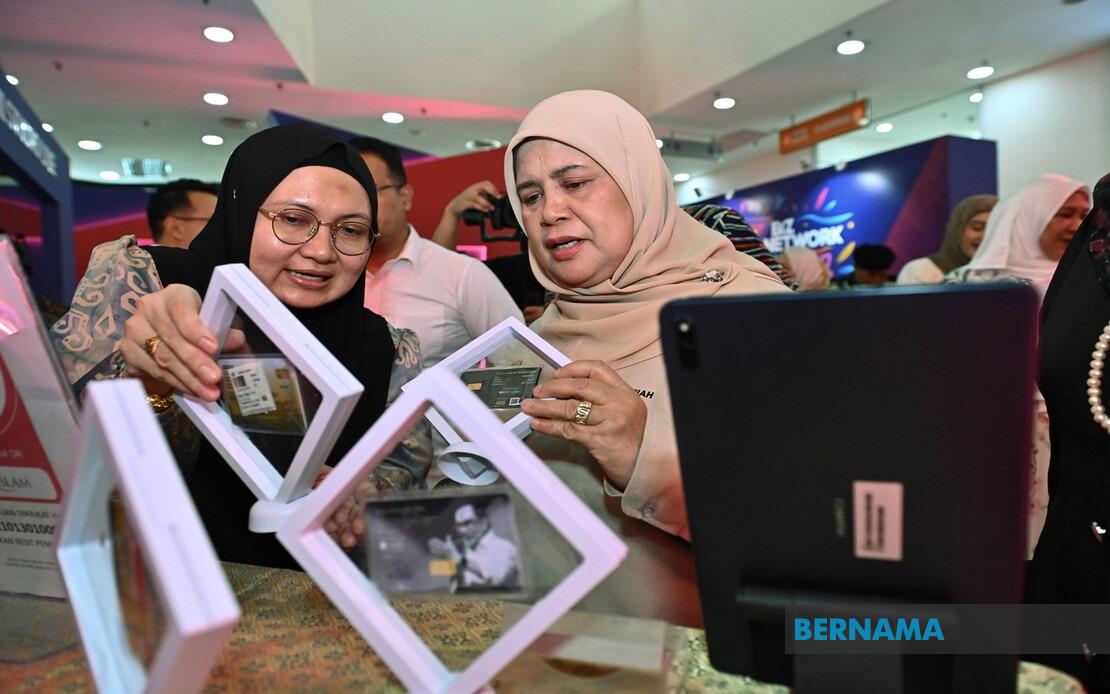
Majlis Amanah Rakyat (MARA) is channelling fresh momentum into Sarawak's entrepreneurial ecosystem through its BizNetwork Sarawak programme, which aims to deliver RM1 million in combined sales while strengthening digital marketing capabilities among participating business owners. The initiative, unveiled in Kuching this week, represents an expansion of a proven model that has gained traction in Peninsular Malaysia, where structured business matching between entrepreneurs and corporate partners has consistently driven measurable commercial growth.
Deputy Minister of Rural and Regional Development Datuk Rubiah Wang emphasised that the RM1 million target reflects lessons learned from the programme's success elsewhere in the country. Rather than focusing solely on transactional outcomes, the initiative weaves together digital skills development with curated networking sessions designed to facilitate genuine business partnerships and market access expansion. This dual-pronged approach acknowledges that sustainable entrepreneurial success depends on both capability building and opportunity creation—a recognition that differentiates MARA's current strategy from earlier, more narrowly focused interventions.
The three-day Sarawak BizNetwork Fiesta is drawing thirty-two entrepreneurs from across the state, each undergoing intensive training in digital marketing methodologies tailored to contemporary commerce. A strategic partnership with TikTok introduces participants to livestream selling techniques and short-form video content creation, skills increasingly central to reaching younger consumer demographics and building engaged online communities. Early momentum is evident: preliminary sales figures from the opening day already exceeded RM228,190, with several entrepreneurs reporting near-complete product sellouts even at this nascent stage of the programme.
Beyond immediate sales targets, the programme functions as a capacity-building initiative designed to create lasting competitive advantages for Sarawak-based businesses. Entrepreneurs gain exposure to digital platforms that command substantial user bases across Southeast Asia, positioning them to tap regional markets with minimal additional investment. The livestream selling methodology is particularly relevant in Malaysia's context, where e-commerce adoption continues accelerating and consumers increasingly expect interactive, real-time purchasing experiences that traditional static listings cannot provide.
The event incorporates a secondary pillar focused on fashion entrepreneurship, showcasing the MARA In Fashion programme and celebrating Borneo-inspired design aesthetics. This component amplifies Sarawak's distinctive cultural heritage as a commercial asset, transforming traditional and contemporary design elements into marketable products with authentic regional provenance. Such positioning resonates powerfully in global markets where consumers increasingly prioritise authenticity and cultural connection in purchasing decisions.
Underscoring this fashion initiative is MARA's commitment to integrating technical and vocational education with entrepreneurial opportunity. The textile and apparel training courses, positioned within the broader Technical and Vocational Education and Training (TVET) framework, equip participants with production competencies while building pathways toward sustainable enterprise creation. Rubiah highlighted that the sector carries substantial wealth-generation potential for individual trainees and contributes meaningfully to Sarawak's broader economic diversification agenda.
The integration of artificial intelligence into design processes represents a particularly forward-looking dimension of MARA's approach. Rather than treating AI as a potential threat to creative employment, the programme positions technological augmentation as a tool for expanding creative possibilities and accelerating design iteration cycles. This mindset shift—viewing technological change as an enabling force rather than a displacement threat—is increasingly critical as Malaysia competes for talent and investment in higher-value manufacturing segments.
Financial support underpins the initiative's credibility and impact. Four participating entrepreneurs received combined MARA financing and development grants totalling RM333,000 during the launch event, providing tangible capital for business expansion activities. This infusion of concessional financing, coupled with skills development and market access facilitation, creates a comprehensive support ecosystem that addresses the interconnected constraints typically facing small entrepreneurs in regional Malaysia.
For broader Malaysian policy considerations, BizNetwork Sarawak exemplifies MARA's evolution toward demand-driven intervention models that engage private sector partners like TikTok and emphasise measurable commercial outcomes. The programme moves beyond traditional subsidy-focused approaches toward mechanisms that build genuine competitive capability while maintaining affordability for participants. Such recalibration is essential as Malaysia navigates the transition toward higher-productivity entrepreneurship less dependent on government support.
The geographical focus on Sarawak carries particular significance. The state has historically lagged Peninsular Malaysia in digital commerce adoption and access to metropolitan-scale business networks. By deliberately extending flagship MARA programmes to East Malaysia, the initiative addresses persistent regional disparities in entrepreneurial infrastructure and opportunity access. Success in Sarawak could establish a replicable model for extending similar digital economy initiatives to other underserved regions, gradually expanding the geographic footprint of Malaysia's entrepreneurial ecosystem.
Looking forward, the RM1 million sales target serves less as a ceiling than as a baseline expectation. If early momentum sustains and the business matching components function as envisioned, individual entrepreneurs could exceed their personal targets substantially. The broader institutional achievement would lie in establishing self-reinforcing dynamics—where successful participants become mentors to subsequent cohorts, where TikTok engagement translates into ongoing commercial relationships, and where Sarawak emerges as a recognised centre for digitally-native entrepreneurship within Southeast Asia.
The programme's success will ultimately depend on implementation quality and genuine entrepreneur engagement rather than programme structure alone. MARA's presence alongside Council member Siti Ajar Yasin and Entrepreneur Development deputy director Fadhlina Zulkifli signals organisational commitment to hands-on support during execution. For Sarawak's entrepreneurial community and policymakers throughout Malaysia tracking SME development effectiveness, BizNetwork Sarawak represents a meaningful test case for whether integrated, sector-specific, digitally-sophisticated support can meaningfully accelerate small business growth in regional contexts.

