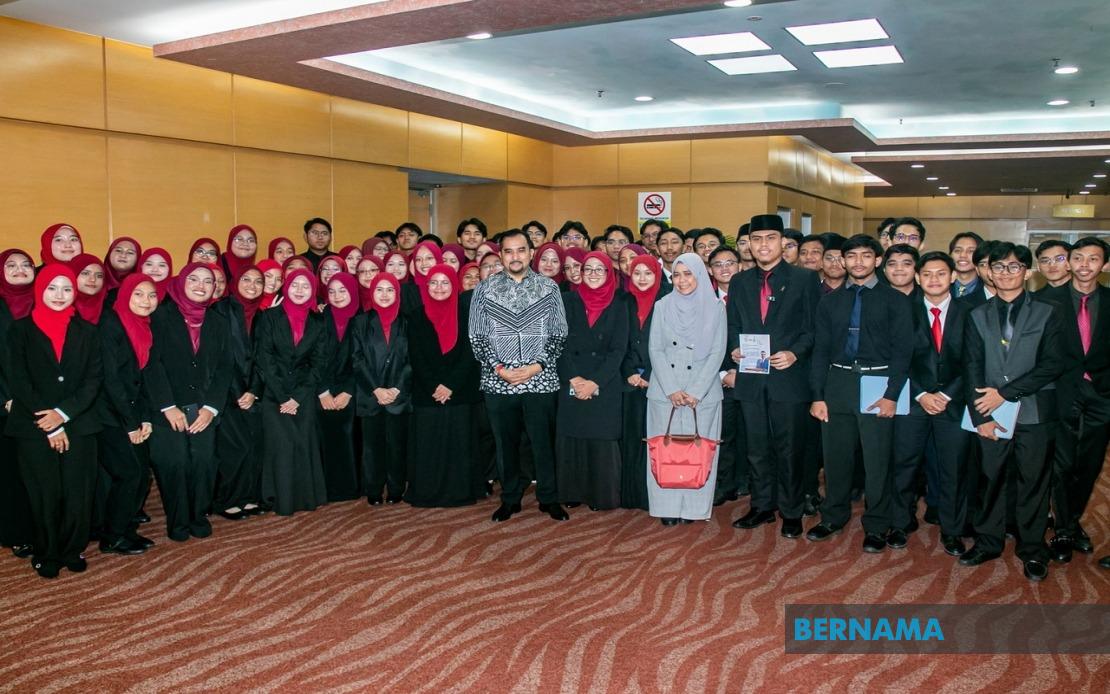
Majlis Amanah Rakyat (MARA) has relaunched its medical scholarship programme at Al-Azhar University in Cairo, marking a significant return to international educational partnerships after a seven-year dormancy. The initiative, which halted in 2019, will send 78 aspiring doctors in the current intake, fundamentally reshaping MARA's approach to supporting Malaysian students pursuing tertiary medical qualifications abroad. The programme's revival comes as Malaysian institutions grapple with growing demand for medical places, making strategic overseas partnerships increasingly vital to the nation's healthcare workforce development.
MRA chairman Datuk Dr Asyraf Wajdi Dusuki confirmed that the resurrection of the Al-Azhar medical scheme received formal Cabinet approval, underscoring its elevation to strategic national importance. The decision reflects broader government thinking about optimising educational expenditure while expanding opportunities for talented Malaysian students who might otherwise struggle to secure places in local medical programmes. This governmental backing provides the institutional and financial stability necessary for a sustained, long-term engagement with the Egyptian institution.
Financial considerations played a decisive role in resurrecting the partnership. Each student's five-year medical course, inclusive of full accommodation, carries a total cost of RM350,000—substantially below comparable domestic expenses. The pricing advantage stems from Al-Azhar University's generous 50 per cent discount on fees, a concession that effectively halves the programme's financial burden. By contrast, pursuing medical degrees within Malaysia typically demands between RM700,000 and RM800,000 per student, making the Egyptian option approximately half the price despite maintaining rigorous academic standards.
The financial mathematics reveal deeper implications for Malaysian education policy. As domestic medical school places remain fiercely competitive and expensive, developing robust overseas scholarship channels becomes essential for ensuring merit-based access regardless of family financial circumstances. MARA's expanded international reach signals a recognition that Malaysia cannot meet all its healthcare professional training needs domestically, and that strategic partnerships with established international institutions represent prudent investment in the nation's medical future.
Beyond the Al-Azhar medical cohort, MARA's broader scholarship apparatus is simultaneously mobilising to send approximately 600 students globally in staged departures commencing the following week. These scholars, who have completed preparatory studies at MARA's domestic colleges in Seremban, Banting, and Kuala Nerang, represent the agency's largest coordinated overseas dispatch in recent years. The geographical spread encompasses New Zealand, Canada, Australia, South Korea, the United Kingdom, and Egypt, reflecting MARA's diversified international education strategy.
Prime Minister Datuk Seri Anwar Ibrahim's explicit approval of the Al-Azhar medical programme highlights the government's priority on expanding professional education pathways for economically disadvantaged but academically talented Malaysians. MARA's traditional constituency—lower-income bumiputera students—constitutes a critical talent pool whose potential remains underutilised without adequate scholarship infrastructure. By renewing the Al-Azhar partnership, the government demonstrates commitment to talent mobility and meritocratic advancement across socioeconomic boundaries.
The calibre of MARA scholars' international placements evidences the agency's sustained competitiveness in global tertiary education markets. Among the 600 departing students, 40 have secured admission to universities ranked within the world's top ten institutions, while 107 have gained places at top-twenty universities globally. These placements, particularly the 11 MARA scholars accepted to Imperial College London for the current academic session, underscore the academic rigour of MARA's preparatory education and the international recognition of its students' qualifications.
Al-Azhar University's willingness to offer substantial fee discounts reflects broader regional educational dynamics within the Muslim world. As a premier Islamic educational institution, Al-Azhar maintains historical relationships with Southeast Asian Islamic communities and actively recruits talented students from Malaysia and beyond. The university's fee concession strategy indicates institutional commitment to regional educational access, transforming it into a cost-effective gateway for Malaysian medical aspirants seeking internationally recognised qualifications.
The revival carries implications for Malaysian medical workforce planning that extend beyond immediate student numbers. By establishing sustainable pathways for Malaysian medical graduates from recognised international institutions, MARA and the government enhance the nation's healthcare professional supply and retention capacity. International medical graduates trained at institutions like Al-Azhar frequently return to Malaysian practice, enriching domestic healthcare delivery with globally-informed clinical experience and reducing brain drain of qualified professionals.
Regional competition for medical education spaces has intensified across Southeast Asia, with neighbouring countries similarly pursuing international partnerships to supplement domestic capacity. Malaysia's strategic repositioning through MARA scholarship expansion demonstrates proactive engagement with this reality, ensuring Malaysian students maintain competitive access to quality medical training despite local constraints. The Al-Azhar partnership situates Malaysia advantageously within broader Asian educational networks, while maintaining cost efficiency that public scholarship programmes require.
Looking forward, the programme's sustainability depends on maintaining quality assurance mechanisms and graduate employment pathways that justify substantial public investment. MARA must establish robust tracking systems ensuring Al-Azhar medical graduates achieve successful licensing and integration into Malaysian healthcare systems. Success metrics should extend beyond graduation rates to encompass professional registration, employment placement, and long-term career progression within Malaysia's healthcare sector.
The Al-Azhar medical programme's resurrection represents MARA's adaptive response to contemporary educational financing realities and national workforce development imperatives. By leveraging international institutional partnerships, negotiating favourable financial terms, and implementing coordinated scholarship deployment, the agency amplifies opportunities for capable Malaysian students who might otherwise face prohibitive financial barriers to medical qualification. This strategic orientation positions MARA as a contemporary development institution, actively shaping Malaysia's professional competitiveness through intentional, cost-effective international education engagement.

