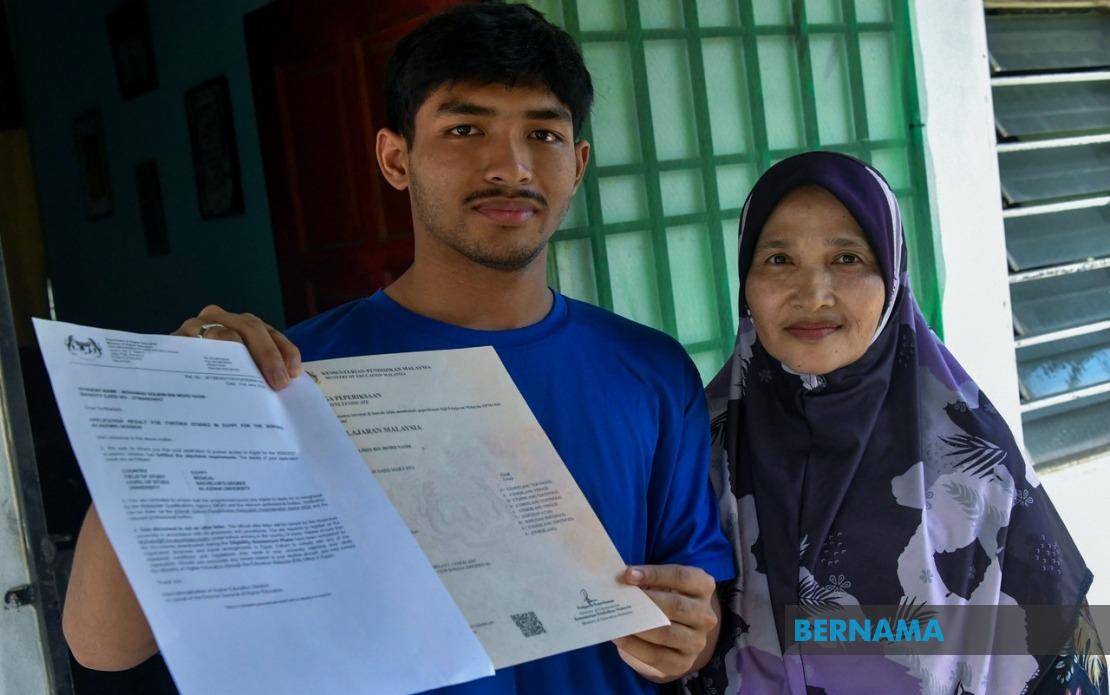
A 19-year-old student from Kelantan facing the crushing decision to abandon his aspiration to become a doctor has received a lifeline from Malaysia's Majlis Amanah Rakyat (MARA). Mohamad Solihin Mohd Nasir, who gained admission to study medicine at the prestigious Al-Azhar University in Egypt, had resigned himself to declining the offer because his family could not shoulder the estimated RM100,000 in tuition and living expenses over the five-year programme. The intervention by MARA leadership has now reopened the possibility of his pursuing a medical career, marking a significant moment in his educational journey.
The circumstances surrounding Mohamad Solihin's situation underscore the financial barriers that talented students from disadvantaged backgrounds face in Malaysia. After excelling at Kelantan Matriculation College with a cumulative grade point average of 3.96, he secured the coveted admission to Al-Azhar University on June 15 but immediately confronted the grim reality of his family's inability to finance such an undertaking. His mother, Faridah Mohamad, aged 60 and managing a thyroid condition, relies on support from her other children. The family's economic fragility intensified when his father, Mohd Nasir Abdul Rahman, succumbed to a heart attack in 2014 whilst Mohamad Solihin was still in primary school. The loss profoundly shaped the teenager's ambition, driving his aspiration to become a cardiothoracic surgeon so that he might eventually contribute to preventing similar tragedies.
During a video call at Mohamad Solihin's residence in Kampung Kubang Keranji, Kota Bharu, MARA chairman Datuk Dr Asyraf Wajdi Dusuki presented two distinct pathways forward. The first option involves MARA facilitating his departure to Egypt by providing not only financial support but also arranging an Arabic language preparatory course to satisfy Al-Azhar's entry requirements. The second option offers him a place at Universiti Sains Malaysia Health Campus (USMKK) under full MARA sponsorship, which would spare him the international relocation whilst ensuring his medical training remains within Malaysian institutions. By presenting both choices, MARA acknowledged the legitimacy of Mohamad Solihin's preference for the Egyptian university whilst ensuring he need not abandon his medical aspirations regardless of his decision.
Mara's intervention reflects an institutional commitment to identifying and nurturing academic talent from society's most vulnerable segments. The chairman explicitly articulated the agency's targeting criteria, emphasizing that students like Mohamad Solihin—those from underprivileged families and those who have experienced parental loss—represent precisely the demographic MARA prioritizes. This policy framework recognizes that educational excellence should not remain the preserve of financially secure households, and that Malaysia's future prosperity depends on unlocking potential across all socioeconomic strata. The case also demonstrates how Malaysia's structured bursary system, when effectively deployed, can counteract the accumulating disadvantages that poverty creates across generations.
The broader educational context reveals why Mohamad Solihin's situation resonates beyond his individual circumstances. Malaysia's medical education sector remains intensely competitive, with places at institutions like Al-Azhar representing extraordinary achievements for students from rural or economically marginal backgrounds. Yet the finance trap that nearly derailed his prospects is experienced by numerous talented young Malaysians annually. Medical programmes demand not merely tuition payment but sustained family investment across five or more years, effectively pricing out families without accumulated savings or continuous employment. The human cost of this accessibility gap means that Malaysia loses medical talent to discouragement, and families lose the income-earning potential that their children might have generated.
Mohamad Solihin's story also illuminates the informal support networks that sustain hopeful students when institutional systems initially fall short. Teachers at his former secondary institution, MRSM Jeli, organized fundraising initiatives on his behalf. Simultaneously, his family pursued assistance applications with multiple Kelantan-based agencies, including the Islamic Religious and Malay Customs Council, the Islamic Foundation, and the Darulnaim Foundation. These parallel efforts demonstrate how educational aspiration mobilizes community action, and how the absence of initial institutional support does not entirely foreclose opportunity when motivated individuals persist in seeking assistance. The subsequent MARA intervention suggests that such persistence, combined with demonstrated academic excellence, does eventually activate support mechanisms.
The scheduled departure timeline carries practical urgency. If funding is confirmed, Mohamad Solihin anticipates departing for Egypt between August 21 and 29, meaning institutional decisions must crystallize within weeks. This compressed timeline underscores the administrative reality underlying educational opportunity—students cannot indefinitely postpone life decisions whilst awaiting bureaucratic processes. MARA's rapid response to his situation, facilitated through the chairman's direct engagement, suggests institutional awareness of such time pressures and a willingness to expedite decisions for genuinely deserving candidates. The speed of resolution matters substantially in whether promising students ultimately realize their ambitions or default to less fulfilling alternatives.
Mohamad Solihin's expressed preference remains unchanged: he wishes to study at Al-Azhar University despite the requirement for preliminary Arabic language training. His commitment to this choice, maintained even whilst contemplating rejection, suggests deep intentionality about his educational pathway rather than opportunistic acceptance of whichever option presents itself. This consistency of purpose, combined with his academic credentials and family circumstances, strengthens the case for institutional investment in his international studies. For MARA, facilitating the Al-Azhar route would represent a meaningful commitment to enabling Malaysian talent to access world-class institutions and international networks that medical professionals increasingly require.
Beyond Mohamad Solihin's individual trajectory, his story raises systemic questions about how Malaysia identifies and supports academic talent from disadvantaged backgrounds. The existence of cases where students nearly forgo extraordinary opportunities due to financial constraints suggests that current information dissemination and support-seeking pathways remain suboptimal. Many talented students may never submit applications to agencies like MARA, not through lack of ambition but through simple unawareness or uncertainty about eligibility. Strengthening proactive outreach mechanisms—particularly through secondary schools serving lower-income populations—could prevent similar near-misses. Schools like MRSM Jeli, despite their selective entry, clearly maintain connections with vulnerable student populations and could serve as valuable touchpoints for identifying support-eligible candidates.
The mother's poignant observation—that her son has harbored medical aspirations since childhood and that she desperately hopes external assistance materializes—captures the emotional weight that educational opportunity carries for families operating at economic margins. For such households, education represents not merely personal advancement but potentially transformative intergenerational mobility. When a child from such circumstances gains admission to a prestigious international university, the prospect carries almost existential significance for the entire family. The near-loss of this opportunity, following so closely upon its achievement, must have created considerable anguish. MARA's intervention thus addresses not merely a logistical funding gap but restores a family's confidence that their son's merits will not be squandered by circumstance.
Moving forward, Mohamad Solihin's case may catalyze broader institutional discussion about how Malaysia ensures that medical talent flows into the profession regardless of family economic status. The scarcity of physicians with backgrounds similar to Mohamad Solihin's—young people from rural areas, from single-parent households, from families experiencing chronic economic strain—creates a medical profession demographically divorced from significant portions of the population it serves. By ensuring that someone like Mohamad Solihin successfully completes medical training, MARA contributes to building a healthcare workforce more reflective of Malaysian society's actual composition. Furthermore, Mohamad Solihin's specific aspiration toward cardiothoracic surgery addresses documented national medical workforce gaps where certain specialties depend heavily on importing foreign expertise.

