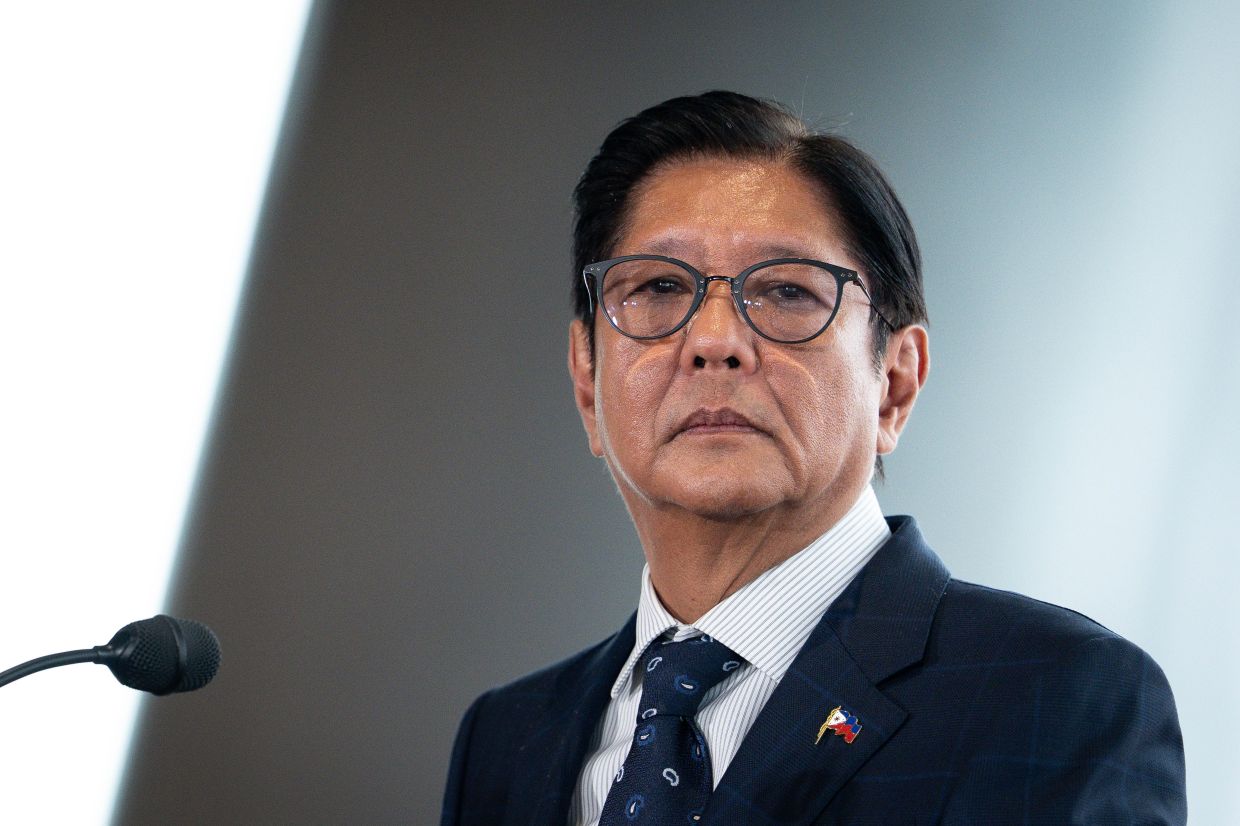
Philippine President Ferdinand Marcos Jr entered a critical juncture in his leadership when he addressed Congress on Monday, tasked with reviving an economy battered by corruption revelations and geopolitical shocks. Twelve months earlier, the discovery of billions of dollars siphoned through flood-control schemes had shaken national confidence and triggered a sharp economic contraction as businesses and consumers curtailed spending amid uncertainty and eroded trust in government institutions.
The graft revelation struck particularly hard given Marcos's carefully cultivated image as an anti-corruption crusader. His late father, dictator Ferdinand Marcos, had infamously accumulated vast stolen wealth during his 20-year rule, a shadow that hangs over the son's administration despite his public commitment to clean governance. Analysts suggest the contradiction between campaign promises and on-the-ground realities has left citizens deeply skeptical of his anti-graft credentials. The situation reflects a broader governance challenge endemic to Philippine politics, where promises of institutional reform frequently falter against entrenched patterns of patronage and opacity in infrastructure spending.
Public frustration has crystallized around tangible failures in flood management, a concern particularly acute in communities regularly devastated by typhoons. In Calumpit, located 50 kilometres northwest of Manila, residents watched as a critical dike remained broken while related mitigation projects stalled. Local officials captured the public mood succinctly: residents questioned whether bodily adaptation to floodwaters would precede project completion. This imagery encapsulates broader anxieties about governmental capacity and sincerity, transforming infrastructure delays into symbols of administrative breakdown.
The economic backdrop compounds these governance challenges. Growth decelerated sharply to 2.8 percent during the first quarter of 2026, trailing comparable Southeast Asian economies including Malaysia and Singapore and falling significantly below earlier forecasts of six percent annual expansion. Economists attribute the slowdown partly to external pressures, including elevated petroleum costs stemming from Middle Eastern tensions—the Philippines imports over 90 percent of its crude oil from that region—and partly to domestic uncertainty engendered by the corruption scandal. Revised 2026 growth projections now estimate expansion between 3.5 and 4.5 percent, reflecting diminished confidence among investors and households.
Investor sentiment has deteriorated substantially. The benchmark stock exchange index has declined 1.5 percent since last year's state address, while the peso weakened nearly eight percent against the dollar, signalling capital outflows and reduced foreign confidence. The Philippines captured less than five percent of regional investment flows to Southeast Asia during the previous year, suggesting that the nation has lost competitive positioning relative to neighbours in attracting growth capital. Economists emphasise that rehabilitation of the investment climate depends critically upon demonstrable progress in addressing governance failures and accelerating project execution—twin imperatives that define the current administration's credibility test.
Multiple political fractures have further complicated the administration's capacity to project strength. Vice President Sara Duterte currently faces Senate impeachment proceedings on corruption allegations and threats of violence, which she categorically denies. Her trial and potential acquittal could position her as a formidable 2028 presidential contender, creating perverse incentives within the coalition. Meanwhile, Senator Imee Marcos, the president's sister, has repeatedly distanced herself from administration policies, signalling erosion of family-based political unity that historically anchored presidential authority. These internal divisions undermine governmental coherence precisely when unified direction toward economic recovery is essential.
Civil society organisations and the business community have articulated sophisticated diagnoses of the impasse. The Management Association of the Philippines warned that allowing anti-corruption operations to constrain economic momentum would represent a false choice, urging instead simultaneous pursuit of both accountability and growth. Analysts at major financial institutions emphasised that investors particularly scrutinise fiscal stimulus deployment and infrastructure project acceleration as indicators of genuine commitment to economic acceleration. The unspoken message: rhetorical commitments to reform lack credibility without visible executive action that delivers tangible results.
Domestic cost-of-living pressures have intensified public discontent. Inflation stemming from elevated energy costs and supply-chain disruptions has squeezed household purchasing power, particularly among vulnerable populations dependent upon subsistence wages. Workers, farmers, and marginalised communities have organised visible protests outside Congress, articulated through organisations like Sanlakas, which represents subordinated sectors. These demonstrations reflect authentic grievances rather than merely choreographed opposition, distinguishing them from typical political theatre. The street-level perspective contradicts governmental assertions of policy effectiveness, creating a credibility gap between official narratives and lived experience.
The timing of Monday's address coincided with the anniversary celebration of Iglesia ni Cristo, a religious organisation commanding hundreds of thousands of adherents. Recent church-organised demonstrations against the administration had disrupted the capital, signalling that established institutions were withdrawing tacit support. Security planners deployed over 21,000 police personnel, reflecting acute concerns about potential confrontation amid heightened political volatility. This extraordinary security presence itself communicates governmental anxiety about public receptivity and crowd sentiment—a visible acknowledgement that confidence has eroded beyond routine political disagreement.
Economists and institutional analysts identified several specific priorities that the administration required to address credibly. Immediate action against accused officials, including named senators and former public works officials implicated in the graft schemes, would signal genuine commitment to accountability rather than selective prosecutions. Concrete articulation of energy policy responses to petroleum-driven inflation, beyond platitudinous assurances, would address households' immediate material anxieties. Substantially accelerated infrastructure project implementation, coupled with transparent monitoring mechanisms to prevent recurrence of corruption, would demonstrate capacity for competent governance. Investment in productive sectors, particularly regarding integration into regional and global supply networks, represents the essential foundation for sustained growth that can absorb population growth and rising expectations.
Marcus faces an 18-month window before mid-term election cycles begin reshaping political calculations toward 2028 succession contests. This compressed timeframe necessitates demonstrable progress on multiple fronts—corruption accountability, economic acceleration, and inflation management—simultaneously. The task is formidable because each objective generates distinct political constituencies and constituencies with potentially conflicting priorities. Business interests prioritise growth above all considerations; workers and the poor prioritise immediate cost-of-living relief; institutional watchdogs and civil society organisations prioritise accountability. Reconciling these demands represents the essential political challenge confronting the administration.
The Philippines enters a period where governance legitimacy hinges substantially upon executive capacity to deliver tangible improvements in citizens' economic circumstances and visible accountability for wrongdoing. The state address represented an opportunity to recalibrate public expectations and demonstrate renewed executive capacity. Whether Monday's rhetoric translated into credible programmatic commitments and realistic delivery timelines will determine whether the administration can recover ground lost during twelve months of scandal, stagnation, and political turbulence. For Southeast Asia's second-largest economy, the stakes extend beyond presidential political fortunes to encompass the nation's competitive positioning within the region and capacity to address structural development challenges.

