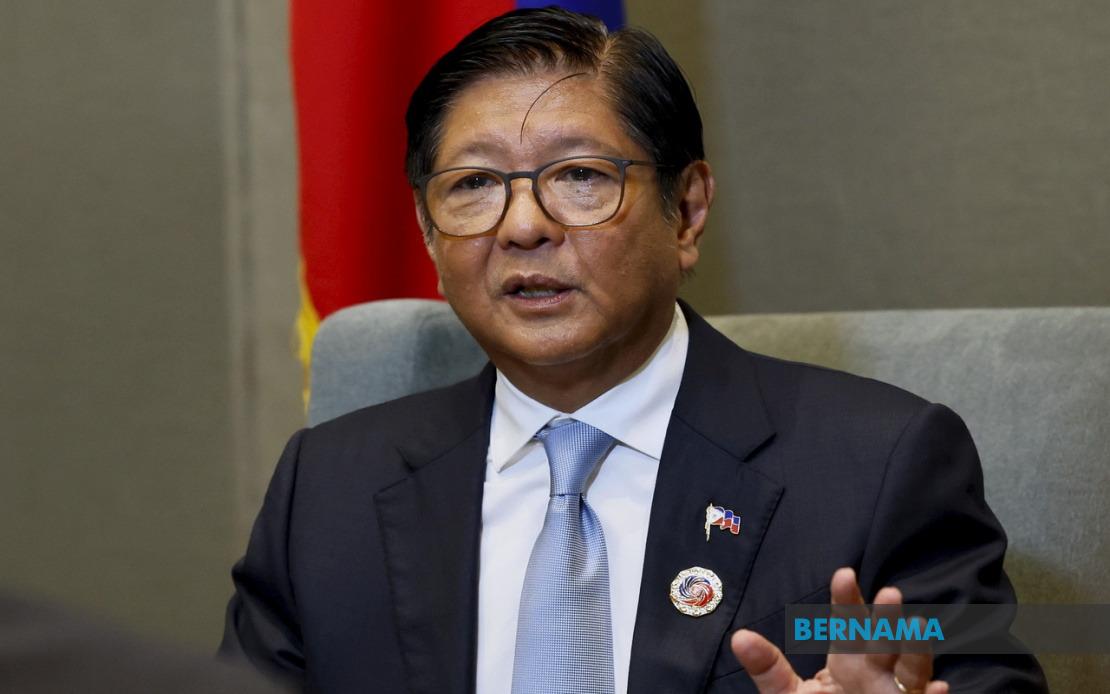
Philippine President Ferdinand Marcos Jr. has cast the Association of Southeast Asian Nations as the Philippines' essential stabilising force in a world beset by mounting geopolitical instability and economic uncertainty. Speaking during his fifth State of the Nation Address on Monday, the President emphasised that ASEAN represents far more than a convenient regional club—it has evolved into the country's most reliable partner as Manila grapples with compounding security challenges and resource pressures.
Marcos articulated a vision of Southeast Asian interdependence rooted in both geographic proximity and deeper cultural alignment. His characterisation of ASEAN as a "safe harbour" reflects a deliberate strategic messaging that prioritises regional multilateralism over bilateral great-power dependencies. This positioning carries particular significance for Southeast Asian capitals watching the intensifying US-China competition and reassessing their own diplomatic hedging strategies. The Philippine leader's emphasis on mutual affinity suggests Manila views ASEAN solidarity not merely as a pragmatic arrangement but as an expression of shared regional identity and values, a framing that distinguishes it from transactional security partnerships.
Underscoring these rhetorical commitments, Marcos pointed to the Philippines' role chairing ASEAN in 2026 as evidence of the bloc's capacity to generate tangible outcomes. He highlighted the operationalisation of the ASEAN Plus Three Emergency Rice Reserve as a landmark achievement in collective food security. This mechanism directly addresses vulnerabilities exposed during the pandemic and recent global supply-chain disruptions, guaranteeing emergency rice supplies when individual member states face domestic production shortfalls. For Malaysia and other import-dependent nations in the region, such backstop arrangements provide crucial insurance against market volatility and agricultural shocks that could destabilise populations.
The ASEAN Digital Economy Framework, which the Philippines spearheaded, represents another substantive initiative reshaping the region's economic architecture. By harmonising digital regulations across Southeast Asia, this framework lowers transaction costs for cross-border commerce and reduces the regulatory fragmentation that has historically deterred investment in regional fintech and digital banking sectors. The emphasis on financial inclusion for small and medium enterprises signals recognition that the region's future competitiveness depends on enabling broader participation in the digital economy, a priority that resonates across ASEAN capitals grappling with widening digital divides.
Energy security emerged as a central thread in Marcos' address, reflecting the region's acute vulnerability to external shocks. The ratification of the Framework Agreement on Petroleum Security, mandating joint stockpiling arrangements among member states, transforms energy resilience from an individual national concern into a collective enterprise. This mechanism allows ASEAN to absorb price volatility and supply disruptions more effectively than isolated national reserves, a critical advantage as geopolitical tensions threaten conventional energy supply routes. Malaysia, a significant energy producer and consumer, benefits from both the stabilising effect of coordinated reserves and the framework's implicit commitment to maintaining open energy markets within the region.
Marcos' advocacy for the ASEAN Power Grid project signals recognition that electrical interconnectivity underpins broader regional integration. The Philippines' achievement in fully linking its Luzon, Visayas, and Mindanao grids demonstrates technical capability and political will to participate in transcontinental energy architecture. Once realised, the ASEAN Power Grid would enable load-balancing across the region, facilitate renewable energy deployment at scale, and reduce individual nations' dependence on fossil-fuel imports. For countries like Malaysia with renewable energy ambitions, such infrastructure becomes essential for achieving clean energy targets while maintaining grid stability.
The President's invocation of "bayanihan"—the Filipino concept of communal unity—as a metaphor for international cooperation reflects an attempt to inject cultural values into multilateral diplomacy. This rhetorical move differentiates ASEAN from Western-centric institutional frameworks and positions the bloc as embodying distinctly Southeast Asian principles of consensus-building and collective welfare. Whether this framing will deepen ASEAN's institutional capacity or remain symbolic depends on members' willingness to subordinate narrow national interests to bloc-wide objectives, a persistent challenge in a group characterised by diverse regime types, development levels, and strategic orientations.
Marcos' call for regional solidarity in responding to conflicts beyond Southeast Asia, particularly the Middle East crisis, illustrates ASEAN's evolving role as a voice for developing-world interests in global affairs. By framing Middle East instability as a regional concern affecting energy supplies and trade routes, the President grounds ASEAN's peace advocacy in concrete economic interests rather than abstract humanitarian principles. This pragmatic framing enhances the bloc's credibility when appealing for conflict de-escalation and diplomatic solutions, particularly among nations increasingly sceptical of Western humanitarian interventionism.
The President's emphasis on peace as a foundation for development reflects a widely shared ASEAN axiom increasingly tested by regional tensions. The South China Sea disputes, Myanmar's political crisis, and renewed Myanmar-Bangladesh refugee pressures all represent challenges to regional stability that formal statements cannot easily resolve. Yet Marcos' positioning of peace as indispensable to security and development captures an essential truth for Southeast Asian publics: without basic stability, no economic development strategy can succeed. This framing gives ASEAN leaders political permission to prioritise diplomatic engagement and conflict prevention, though sustained implementation requires consistent commitment beyond high-profile addresses.
For Malaysian policymakers, Marcos' vision of ASEAN as a resilience mechanism holds particular relevance. Malaysia's geographic position at Southeast Asia's economic and political centre positions it as a natural beneficiary of deepened regional integration while also imposing responsibility for mediating bloc conflicts. The concrete initiatives highlighted—from rice reserves to digital frameworks to energy grids—create practical opportunities for Malaysian participation and leadership. Whether these initiatives mature into functioning mechanisms depends less on rhetorical commitment than on member states dedicating technical capacity, financial resources, and political capital to implementation amid competing domestic priorities.
The broader strategic implication of Marcos' address lies in its assertion that ASEAN remains the optimal framework for managing Southeast Asian development and security in an era of great-power competition. This positioning challenges both Beijing's efforts to establish bilateral dominance and Washington's attempts to anchor regional stability through exclusive security partnerships. By emphasising collective ASEAN agency and institutional capacity, Marcos argues that Southeast Asian nations need not choose between great powers but can instead chart an autonomous regional course. For Malaysia and other mid-sized powers within ASEAN, this vision offers a path to maintaining strategic autonomy while benefiting from collective arrangements that enhance national resilience.

