President Ferdinand Marcos Jr has declared his continued confidence in the Armed Forces of the Philippines, even as investigators examine whether active military personnel may be involved in a purported scheme to kill him. The statement from the presidential palace signals determination to preserve institutional stability while acknowledging that security threats require serious attention at the highest levels of governance.
National Bureau of Investigation Director Melvin Matibag disclosed the investigation's troubling scope during Vice President Sara Duterte's impeachment proceedings on Wednesday, revealing that uniformed personnel currently serving in the military are among those being questioned as persons of interest. The development adds a deeply concerning dimension to Philippine security governance, suggesting potential fractures within institutions meant to protect state leaders. The investigation also encompasses a member of the Vice President's own security contingent, indicating the alleged plot's reach across different echelons of the security establishment.
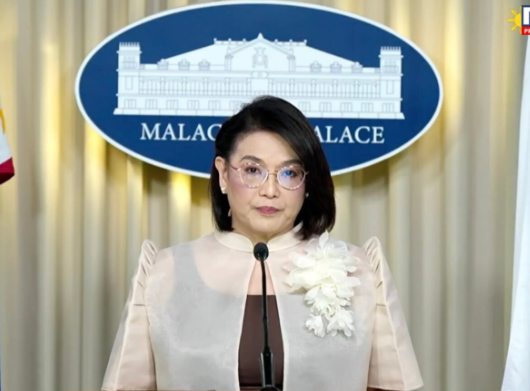
Palace Press Officer Claire Castro sought to reassure the public that presidential confidence in military institutions remains intact despite these revelations. Speaking during a regular media briefing, Castro emphasised that while the President maintains full trust in the armed forces as a whole, any individuals who deviate from their constitutional duties must face accountability. This nuanced position reflects the delicate balance required when security forces themselves become subjects of investigation, a situation that tests the credibility of institutions responsible for protecting democratic institutions.
Castro further clarified that any personnel found to be working against national interests rather than for them would be subject to identification and appropriate action. She stressed that the focus must centre on those who might weaponise their positions to advance narrow factional interests at the expense of national security and democratic governance. The palace response effectively separates institutional loyalty from individual culpability, suggesting a framework where trust in the armed forces as an entity need not be compromised by investigations into specific personnel.
Significantly, Castro indicated that no systematic loyalty reviews are currently being conducted across the military ranks. This declaration may be intended to prevent widespread paranoia or institutional paralysis that could result from blanket suspicion campaigns. Instead, the palace appears to be relying on existing security protocols and investigative processes to identify and isolate any problematic elements without triggering broader institutional disruption. Such an approach carries inherent risks, as it depends on the reliability of normal investigative channels to catch sophisticated plots that may have carefully embedded themselves within the system.
The palace spokesperson acknowledged that identifying individuals whose primary motivation is protecting or advancing personal or factional interests rather than serving the state remains a critical security matter. This framing positions the investigation within broader concerns about institutional integrity and the proper alignment of military loyalty toward constitutional government rather than individual leaders. The statement suggests recognition that true threats to national security may emerge from those who conflate personal loyalty with institutional duty.
During her impeachment trial testimony, Vice President Duterte made startling public revelations about her own security precautions, claiming she had previously instructed someone that if she were killed, the assassins should also target Marcos, businesswoman Liza Araneta, and House Speaker Martin Romualdez. Speaking in Filipino and emphasising the gravity of her statement, Duterte characterised this as no joking matter and indicated she had left formal instructions regarding succession of any attack. Her statements introduced an element of domestic political tension into discussions of the alleged assassination plot, complicating the security narrative.
The Vice President's dramatic testimony highlighted the extraordinary nature of security concerns at the highest levels of Philippine government. Rather than treating assassination threats as purely external or criminal matters, Duterte's comments introduced questions about whether tensions within the country's political leadership might connect to broader security vulnerabilities. Her invocation of specific names and explicit instructions suggested she perceived genuine mortal danger from multiple quarters.
Following Duterte's testimony, the NBI moved to compel her cooperation through a formal subpoena, seeking to deepen the investigation into the alleged plot. However, Duterte did not comply with the investigative summons, citing unspecified reasons for her refusal. Her non-compliance raised additional questions about cooperation levels between different branches of government during an active security investigation of such magnitude. Whether the Vice President's refusal stemmed from legal, institutional, or strategic considerations remained unexplained.
For Malaysian observers and other Southeast Asian readers, the Philippine situation underscores how security investigations at the highest political levels can expose institutional vulnerabilities that extend beyond any single alleged crime. The allegations point to broader questions about military accountability, the relationship between security forces and elected leadership, and how democratic institutions maintain cohesion when trust itself becomes compromised. The Philippines' experience demonstrates challenges facing regional democracies where security establishments and political systems must function amid mutual suspicion and factional divisions.
The intersection of military investigation, vice-presidential impeachment proceedings, and assassination allegations reveals the complex security environment within which Philippine governance operates. As investigations progress, the ability of institutions to maintain both security and democratic legitimacy will depend significantly on transparent, credible processes that can identify genuine threats without undermining broader institutional confidence.

