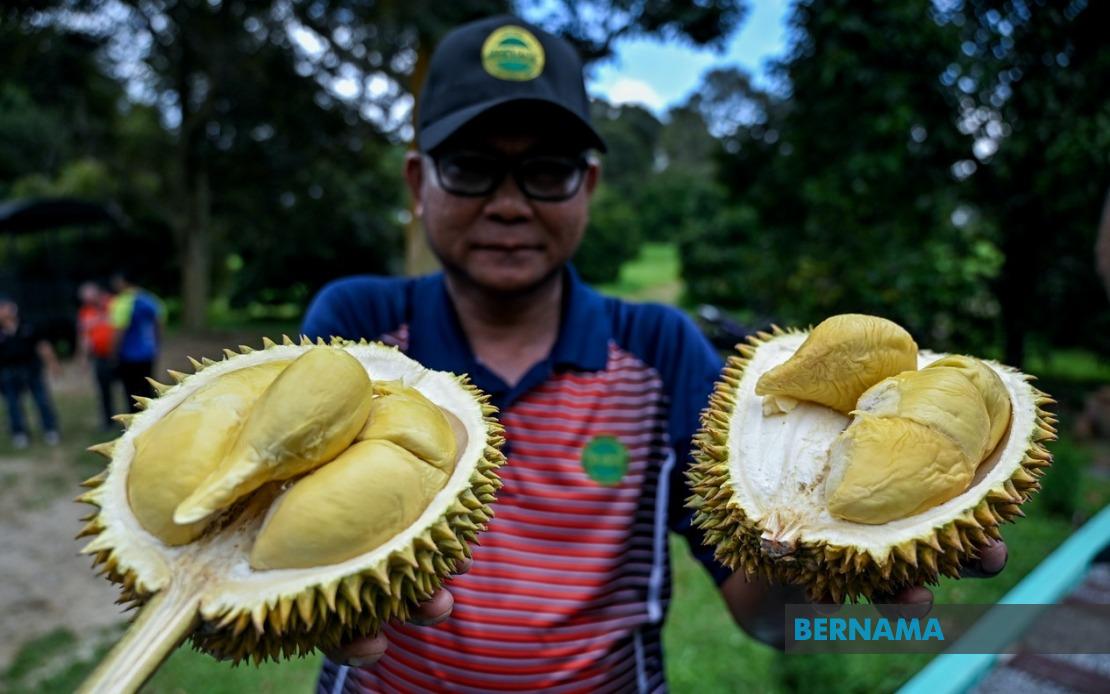
The Malaysian Agricultural Research and Development Institute (MARDI) has reached a significant milestone in its premium durian cultivation initiative, with approximately 25,000 MS88 hybrid durian trees now established across the nation. This expansion represents a substantial commitment to elevating Malaysia's durian industry through advanced agricultural breeding techniques and represents a continuation of MARDI's long-term vision to establish locally-developed superior varieties that command global market recognition.
According to MARDI's director-general Datuk Dr Mohamad Zabawi Abdul Ghani, the deployment spans roughly 242 hectares of land, with concentrations in Selangor and several east coast states that possess suitable agroclimatic conditions for premium durian cultivation. The geographic distribution reflects a strategic approach to leveraging Malaysia's established durian-growing regions while introducing improved genetics that enhance yield consistency and fruit quality. This territorial expansion demonstrates confidence among growers in the MS88 hybrid's commercial viability and market acceptance across different regional environments.
The MS88 variety represents one component of MARDI's broader portfolio of proprietary durian genetics developed over more than two decades. Alongside the MS88, MARDI has successfully commercialised MDUR78 and MDUR79, both of which have cultivated dedicated consumer followings within Malaysia's competitive durian marketplace. These existing varieties have established benchmarks for what constitutes a premium locally-developed durian, characterised by specific flavour profiles, flesh quality, and horticultural traits that distinguish them from traditional cultivars. The continued popularity of these earlier releases validates MARDI's technical breeding methodology and consumer-centric product development approach.
Beyond the current MS88 deployment, MARDI is actively advancing a developmental pipeline encompassing three additional hybrid durian varieties intended for premium market positioning. These new candidates are undergoing rigorous multi-stage evaluation protocols designed to assess their commercial readiness across several critical dimensions. Fruit quality metrics, including taste, texture, aroma intensity, and visual appeal, are being systematically evaluated against established market standards and consumer expectations that have evolved considerably over the past decade as durian consumption has become increasingly sophisticated globally.
Consumer acceptance testing represents a pivotal component of MARDI's varietal selection process, reflecting the reality that breeding excellence alone does not guarantee commercial success in the highly subjective durian market. The institute is conducting structured tasting panels and preference assessments to identify which hybrid candidates resonate most strongly with Malaysia's diverse consumer base, encompassing both domestic enthusiasts and international buyers whose preferences have become increasingly influential in determining which varieties command premium pricing. This consumer-focused approach distinguishes MARDI's methodology from purely agronomic breeding orientations.
Farmer suitability assessments form the third critical evaluation pillar, recognising that even consumer-preferred varieties must be practically cultivable within Malaysia's diverse environmental and economic contexts. MARDI is evaluating factors including disease resistance, pest susceptibility, fertiliser requirements, water management needs, and harvesting logistics to ensure new varieties do not impose unreasonable cultivation burdens on smallholder and commercial growers. This farmer-centric assessment reflects lessons learned from earlier varietal releases and acknowledges that adoption rates depend substantially on whether varieties reduce rather than amplify production complexity and input costs.
The planned disclosure strategy for new varieties—timed to coincide with the upcoming durian season—reflects sophisticated market positioning designed to maximise publicity and consumer engagement. By unveiling new genetics during the height of consumer appetite and purchasing activity, MARDI can orchestrate comprehensive market introduction campaigns while capitalising on elevated media attention surrounding premium durian varieties. This seasonal timing also permits public tasting opportunities and direct consumer evaluation under optimal conditions, facilitating word-of-mouth promotion that has become increasingly influential in the durian sector where consumer communities exercise substantial purchasing influence.
From a broader sectoral perspective, MARDI's continued investment in premium hybrid development responds to structural changes within global durian markets. Rising living standards across Southeast Asia have elevated demand for superior-quality fruit commanding substantially higher prices than conventional varieties, while simultaneously expanding the geographic scope of commercial durian cultivation in competing nations including Thailand, Indonesia, and Vietnam. Malaysia's historical competitive advantage increasingly depends on product differentiation through superior genetics and consistency rather than competitive pricing, making MARDI's breeding investments strategically essential for maintaining market share and premium positioning in increasingly sophisticated international marketplaces.
The concentration of MS88 plantings in Selangor and east coast states reflects both agroclimatic advantages and existing infrastructure supporting durian cultivation, processing, and export. These regions possess established supply chains, processing facilities, cold storage capabilities, and logistics networks that reduce barriers to commercialising new varieties and facilitating rapid product distribution to both domestic and international markets. MARDI's geographic selection strategy thus demonstrates integrated thinking extending beyond plant breeding to encompass the entire value chain requirements necessary for commercial success.
For Malaysia's agricultural sector and rural development agenda, MARDI's durian programme represents a significant value-creation opportunity. Premium durian cultivation generates substantially higher returns per hectare than conventional crops, creating meaningful income enhancement potential for participating farmers and contributing to agricultural modernisation within participating states. Beyond direct farmer income, the durian value chain generates employment and economic activity across processing, logistics, retail, and export service sectors, multiplying the economic impacts of successful varietal development and commercialisation programs.
The institute's transparent communication regarding the developmental status of new varieties—acknowledging that candidates remain under evaluation rather than premature claiming of breakthrough achievements—reflects appropriate scientific caution and professional credibility. This measured approach builds stakeholder confidence that MARDI's eventual variety releases represent genuine advances rather than marketing-driven announcements of marginal improvements. In the highly competitive and sometimes speculative durian sector, such credibility represents genuine competitive advantage that distinguishes government research institutions from private entities with more immediate commercial pressures.
Looking forward, MARDI's coordinated strategy combining accelerating MS88 deployment while advancing successor varieties suggests confidence in sustained market demand for premium locally-developed durians. The institute's willingness to invest substantial resources in multi-year evaluation protocols before varietal release reflects recognition that successful commercial adoption requires not merely agronomic excellence but comprehensive market preparation encompassing consumer education, farmer training, and supply chain optimisation. This integrated approach positions Malaysian durian production to capture increasing value from global market premium segments that reward superior quality, consistency, and distinctive characteristics that newer hybrid varieties can deliver competitively.

