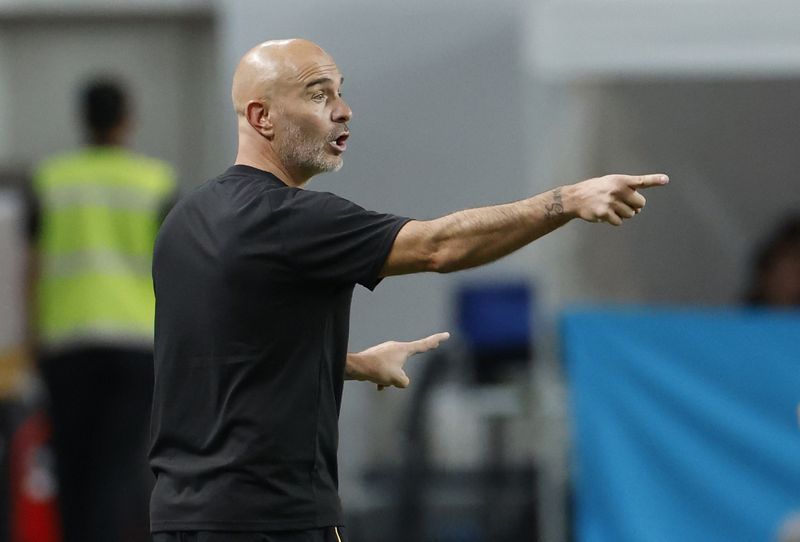
Manchester City embarks on a new chapter this season without Pep Guardiola on the sideline for the first time in a decade, marking a seismic shift in English football. The Spanish coach's decade-long tenure reshaped City into an unparalleled force, securing six Premier League titles, a Champions League trophy, and establishing a template of excellence that redefined standards across the sport. His successor, 46-year-old Italian Enzo Maresca, inherits a club at the peak of its powers yet facing the delicate balancing act of maintaining momentum while establishing his own managerial identity at the Etihad Stadium.
Maresca's appointment carries strategic logic that extends beyond typical succession planning. The former Leicester City and Chelsea manager brings intimate knowledge of City's operations, having served as part of Guardiola's coaching staff during the club's treble-winning campaign. This insider familiarity distinguishes his appointment from a conventional external hire, signalling City's preference for evolutionary change rather than revolutionary transformation. His track record as a standalone manager—resurrecting Leicester to Premier League status and securing silverware at Stamford Bridge—provided the credentials necessary to convince City's hierarchy that he possessed both the tactical acumen and proven capability to lead this transition period.
The philosophical continuity embedded in Maresca's appointment reflects City's strategic calculation. The club has deliberately steered away from pursuing a radical departure from Guardiola's methodology, instead selecting a coach thoroughly versed in the positional play, ball retention principles, and tactical adaptability that underpinned their sustained success. This approach suggests City recognizes that their dominance stemmed not merely from individual brilliance but from an integrated system that permeated squad training, match preparation, and competitive culture. Maresca's challenge, therefore, involves preserving this architectural foundation whilst gradually introducing sufficient novelty to prevent tactical stagnation and to assert his managerial imprint.
The squad Maresca inherits remains genuinely formidable in continental terms. Erling Haaland, the Norwegian striker who has topped Premier League scoring charts in three of the past four seasons, guarantees a relentless source of goals that few attacking units in world football can match. Rodri's presence in midfield provides the positional intelligence, passing range, and defensive positioning that functioned as the connective tissue throughout Guardiola's tenure. Despite Barcelona's well-documented interest, Rodri's contributions remain integral, particularly following his pivotal role in Spain's recent World Cup victory and his tournament Golden Ball recognition. The summer addition of Elliot Anderson from Nottingham Forest, secured for a reported £116 million, addresses midfield depth concerns whilst introducing fresh athleticism and ball-winning prowess alongside the philosophical continuity the club sought.
The squad's developmental dimension offers genuine long-term promise that tempers concerns about the managerial transition. Emerging talents including Rayan Cherki and Nico O'Reilly represent investment in a hybrid approach combining proven experience with youthful dynamism. These younger players provide the energetic foundation necessary for any evolving tactical system whilst avoiding the false economy of wholesale squad rebuilding. However, this generational shift carries complications. The departure of long-serving figures including Bernardo Silva and John Stones represents a tangible loss of dressing-room experience and established leadership structures that previously operated beyond Maresca's direct influence. This institutional knowledge dissipation creates a subtler challenge than mere player quality assessment.
Guardiola's final season outcome illuminates the performance expectations confronting Maresca. Whilst City's domestic cup double would justify considerable satisfaction at most elite clubs, their Premier League runners-up finish to Arsenal fundamentally represented disappointment given the standards Guardiola established. This perspective reveals the psychological and competitive terrain Maresca must navigate. He will not be evaluated primarily through tactical innovation or philosophical freshness but rather through immediate title contention and trophy silverware. The City hierarchy and supporter base have been conditioned by a decade of dominance to regard anything short of major honours as underperformance, a standard that offers neither grace period nor redemption narrative common to managerial transitions elsewhere.
The cultural dimensions of Guardiola's influence extend considerably beyond tactical instruction or match-day decisions. His impact shaped the club's daily operations, training methodology, psychological approach, and organizational expectations at levels that transcend conventional managerial responsibility. Replicating this pervasive influence represents perhaps Maresca's most elusive challenge. His familiarity with City's environment and existing structures should theoretically facilitate transition management, yet considerable distinction separates functioning as a trusted lieutenant within an established hierarchy from directing the broader institutional vision. The psychological shift from implementing another's philosophy to authoring one's own requires adjustment that even deeply embedded insiders cannot bypass entirely.
Current circumstances suggest potential for relatively smooth transition despite inherent uncertainties. Many players returning from World Cup commitments later than normal cycles create natural adaptation periods that might mask initial tactical adjustments. City's continued positioning among competition favourites across all available competitions reflects realistic assessment of their underlying talent rather than mere optimism. The squad possesses sufficient quality that competent management maintains genuine contention prospects. However, this same quality matrix potentially establishes unrealistic performance benchmarks if marginal tactical inefficiencies or squad chemistry variables translate into silverware shortfalls.
Maresca's path to establishing legitimacy requires navigating between twin imperatives. Preserving the systematic continuity that shaped City's culture and tactical identity prevents unnecessary disruption whilst maintaining institutional confidence. Simultaneously, introducing sufficient tactical freshness and strategic innovation prevents psychological stagnation and demonstrates genuine managerial agency rather than mere custodianship. This balancing act determines whether his tenure evolves into seamless succession or represents a transitional interregnum. The opening fixture against Bournemouth on August 23 provides the first competitive canvas upon which supporters and analysts will assess whether Maresca has absorbed Guardiola's legacy whilst establishing genuine ownership of Manchester City's future direction.

