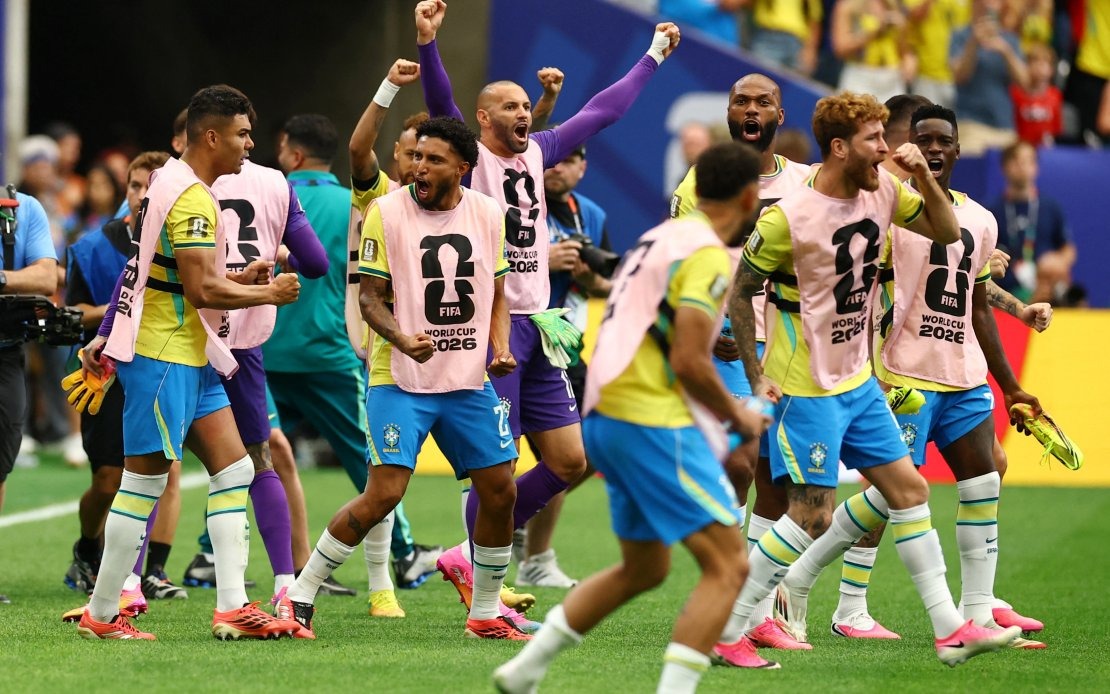
Gabriel Martinelli struck deep into stoppage time to secure Brazil's passage to the World Cup last 16, delivering a 2-1 victory over Japan in a tightly contested round-of-32 encounter in Houston on Monday. The drama of the late goal capped a thoroughly entertaining match between two teams who had impressed their way through the group stage without tasting defeat, setting up a formidable last-16 clash for the five-time champions against either Cote d'Ivoire or Norway.
Both nations had advanced from their respective groups with unblemished records. Brazil topped Group C with seven points, demonstrating the consistency that has defined their tournament campaign, while Japan secured second place in Group F with one victory and two draws—a remarkable achievement for the Asian representatives that defied pre-tournament expectations. The contrast in their group-stage approaches belied the competitive nature of this knockout fixture, which would prove to be a stern test for both sides.
Historically, Brazil has held a commanding advantage in the head-to-head rivalry, having defeated Japan 4-1 in their sole previous World Cup meeting. However, that narrative shifted last year when Japan produced a stunning comeback to win 3-2, overturning a deficit to claim their first-ever victory against the Brazilian outfit. This recent history suggested that Japan possessed the tactical awareness and attacking potency to trouble even the tournament favourites, a theory that would be validated during the opening exchanges in Houston.
Brazil's early dominance in possession was evident from the kickoff, with the South American side controlling the tempo and dictating terms. Matheus Cunha tested Japan's goalkeeper Zion Suzuki with a chance in the 14th minute, forcing the Japanese shot-stopper into a one-handed save that hinted at the quality both teams would bring to the contest. Yet for all Brazil's territorial superiority, they were undone by a moment of individual brilliance from their opponents.
Japan's opening goal arrived in the 29th minute through a devastating counter-attack triggered by Danilo's imprecise pass, which was intercepted by Kaishu Sano. The Japanese midfielder surged forward with purposeful intent, brushing past Casemiro's challenge before unleashing a precisely struck effort that evaded Alisson's grasp and nestled in the net. The goal handed Japan a psychological advantage and vindicated their patient, organised approach to a match where they were expected to absorb significant pressure.
As the first half progressed, Brazil generated additional opportunities without translating them into concrete rewards. The five-time World Cup champions created several chances, but few genuinely troubled Suzuki, who maintained admirable composure between the posts. Brazil's dominance in possession was not translating into the clinical finishing typically associated with the tournament's elite teams, a vulnerability that Japan sought to exploit whenever the opportunity arose.
The second half witnessed Brazil's intensity escalate considerably. Bruno Guimaraes tested Suzuki with a strike shortly after the interval, before Casemiro went close with a header that was blocked by the Japanese defence. The pattern suggested an inevitable Brazilian comeback, and it materialised in the 56th minute when Casemiro atoned for his earlier defensive lapse by powering home a Bruno Guimaraes cross to level the scoreline. The goal revitalised Brazil's attacking ambitions and appeared to signal the beginning of Brazilian dominance in the knockout phase.
Vinicius Jr produced a moment of individual flair minutes after the equaliser, embarking on a mazy dribbling run that drew gasps from the crowd, only for his subsequent strike to strike the post—a frustrating near-miss that could have settled the contest earlier. Brazil maintained relentless pressure on the Japanese defence, with Suzuki forced into several important interventions to keep his side's World Cup dream alive. The rhythm of the match suggested Brazil would eventually break Japan's resistance, though the timing and manner of the breakthrough remained uncertain.
The decisive moment arrived in the depths of stoppage time when Bruno Guimaraes delivered a precisely weighted pass that found Martinelli unmarked inside the penalty area. The Brazilian forward displayed the composure required at such a critical juncture, maintaining his composure to beat Suzuki one-on-one and secure the victory. Japan pressed desperately for an equaliser in the remaining moments, but they could not breach Brazil's defensive resolve, departing the competition with considerable credit and vindication for an impressive campaign that exceeded many pre-tournament assessments.
Brazil's progression reflects both their quality and their capacity to overcome adversity in knockout football. The last-16 fixture against either Cote d'Ivoire or Norway represents the next hurdle for Tite's squad, who will be seeking to reclaim the World Cup title that has eluded them since 2002. For Japan, despite the exit, their performance against the tournament's elite has underscored the improving trajectory of Asian football and positioned them as serious contenders for future tournaments.

