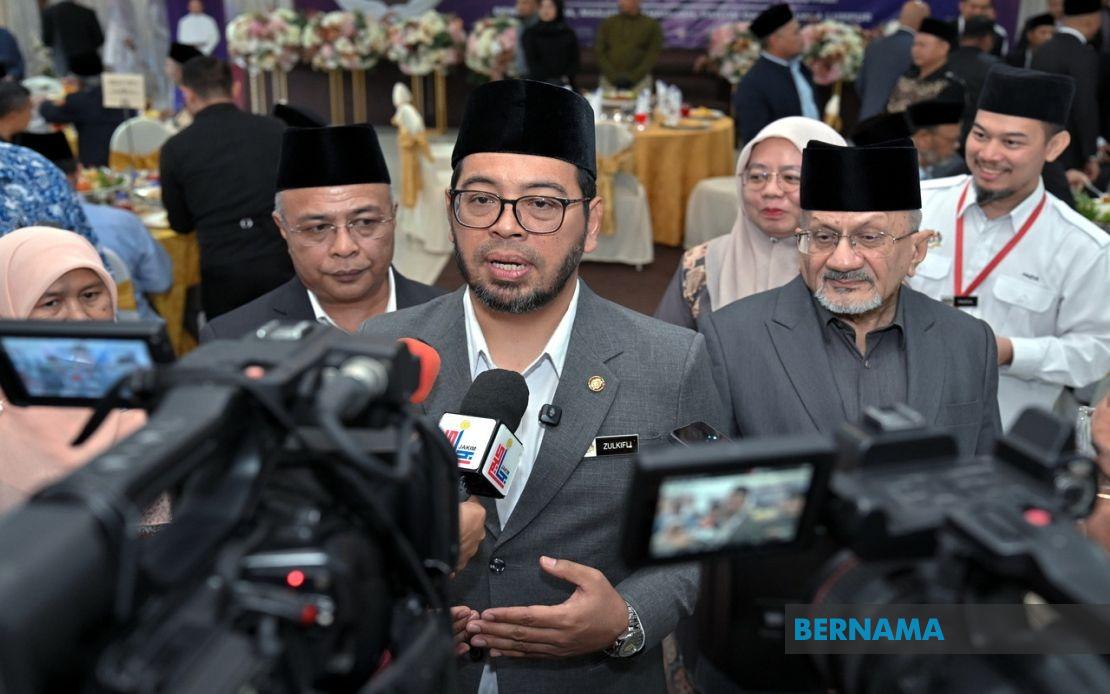
The Masjid Warisan project positioned in front of the Tun Razak Exchange (TRX) tower in Kuala Lumpur will move forward as scheduled, according to Minister in the Prime Minister's Department (Religious Affairs) Dr Zulkifli Hasan. His announcement on June 23 comes after mounting pressure from certain quarters seeking to halt the construction, with critics claiming the mosque could spark social discord and public dissatisfaction in the bustling financial district.
Dr Zulkifli framed the decision as a continuation of long-established planning and vision rather than a new initiative. The construction aligns with the government's broader strategy of positioning mosques as vital institutions for fostering social cohesion and unity within communities. His remarks underscored the administration's commitment to religious infrastructure development across Malaysia's urban centres, reinforcing the view that such facilities serve purposes beyond worship to strengthen the social fabric.
The minister acknowledged that opposition exists regarding the project, noting that some groups have publicly voiced reservations. Rather than dismissing these concerns outright, Dr Zulkifli directed interested parties to engage with the Federal Territories Islamic Religious Council (MAIWP) for detailed clarification and discussion. This invitation to dialogue suggests the government's willingness to address specific objections through structured channels rather than unilateral action.
International precedent featured prominently in Dr Zulkifli's defence of the project. He highlighted that mosques operate successfully in major metropolitan areas across the globe, with the Islamic call to prayer serving as a source of spiritual calm and community identity. This globalised perspective positions Kuala Lumpur's development alongside world-class cities, suggesting that religious architecture and practice are compatible with contemporary urban planning and commercial development.
Beyond the TRX mosque announcement, Dr Zulkifli's visit to Masjid Al-Khadijah in Kampung Pantai Dalam served another significant function in the religious administration calendar. He formally presented appointment letters to members of the Federal Territories Mosque and Friday prayer surau committee for the 2026-2029 term, marking the institutional transition for leadership of these religious spaces.
The nomination and selection process for these committee positions demonstrates the rigour involved in appointing religious leaders at the federal territory level. A substantial 3,010 nominations were submitted across the broader 2026-2029 session, representing candidates from 91 mosques and 124 Friday prayer surau facilities operating within Kuala Lumpur, Labuan, and Putrajaya. This volume of applications reflects the significant responsibility these institutions bear within their communities.
The integrity vetting mechanism employed reveals the government's commitment to ensuring that mosque and surau committee members meet established standards. From the initial 3,010 candidates, 2,914 were successfully selected following a comprehensive integrity assessment process. This verification involved collaboration between multiple federal agencies: the Royal Malaysia Police, the Malaysian Anti-Corruption Commission, and the Insolvency Department. The multi-agency approach signals serious intent to place only vetted individuals in positions of religious trust and community leadership.
The stringent selection process underscores broader governance concerns in Malaysia's religious administration. By requiring background checks through law enforcement and anti-corruption bodies, authorities aim to shield religious institutions from potential mismanagement or conduct unbecoming of community leaders. This institutional safeguarding helps maintain public confidence in mosque and surau management, particularly important given their role as community gathering points and repositories of public trust.
For property developers and investors monitoring Kuala Lumpur's skyline, the Masjid Warisan project confirmation signals the government's determination to integrate religious spaces within premium commercial zones. Rather than relegating mosques to peripheral locations, the TRX project demonstrates a vision of inclusive urban development where financial centres and spiritual institutions coexist. This approach reflects evolving attitudes toward urban planning in Malaysia's capital, one that acknowledges both commerce and faith as legitimate urban functions.
The decision carries implications for Southeast Asia's broader trajectory on religious accommodation within modern cities. As the region experiences rapid urbanisation and increasing religious diversity, Malaysia's approach to embedding mosques within contemporary developments offers a model worth observing. The project signals that economic growth and religious expression need not operate in tension, potentially influencing how other regional hubs address similar questions about faith and urban planning.
Criticism of the project appears rooted in concerns about noise levels, traffic disruption, and perceived incompatibility with a premium commercial environment rather than fundamental religious objections. Dr Zulkifli's invitation to MAIWP engagement suggests the government views these concerns as resolvable through technical dialogue rather than existential opposition. The coming months will demonstrate whether such outreach effectively addresses community reservations or whether debate intensifies as construction commences.