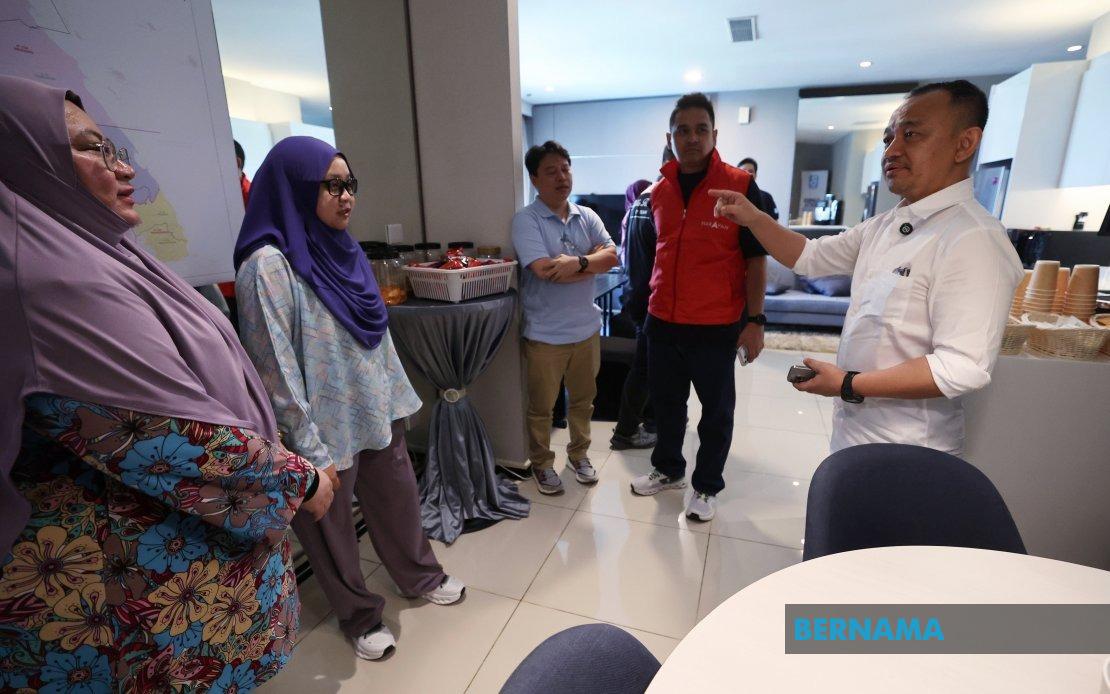
Dr Maszlee Malik, the Pakatan Harapan candidate contesting the Puteri Wangsa seat in Johor, is preparing to introduce a custom-built mobile application designed to fundamentally reshape how residents interact with their elected representative's office. The app would enable constituents to log local grievances, file complaints and access information about government support schemes with significantly greater ease than traditional channels currently allow. This technology-centred approach, Maszlee argues, has become essential given the constituency's sprawling geography and heterogeneous demographics, which encompass everything from upmarket residential enclaves like Austin Heights to rural settlements in Felda Ulu Tebrau.
The former education minister's proposal reflects a broader shift in Malaysian political engagement toward digital solutions, though such initiatives remain relatively uncommon at the state constituency level. During a recent interview, Maszlee emphasised that managing a constituency of such scale and complexity demands practical innovation beyond conventional town halls and office walkins. The application would function as a centralised reporting mechanism, allowing residents to document potholes, drainage issues, street lighting failures and other municipal concerns while simultaneously creating a digital audit trail that holds administrators accountable for response times and resolution outcomes.
One of the initiative's most significant potential advantages lies in its capacity to identify marginalised populations who have historically struggled to navigate government assistance programmes. Single mothers, persons with disabilities, elderly citizens and low-income households frequently remain unaware of entitlements or lack the administrative sophistication to apply for available support. By creating an accessible digital interface coupled with data analysis tools, Maszlee's office could proactively identify such individuals based on reported issues and neighbourhood patterns, then initiate outreach to ensure they receive appropriate help. This represents a departure from the typical reactive model where welfare must be sought by applicants rather than discovered by administrators.
Maszlee drew inspiration from governance models deployed in major international cities, specifically referencing the community engagement strategies employed by New York City Mayor Zohran Mamdani. The mayor's approach combines social media interaction with dedicated digital platforms to establish direct communication channels with residents, bypassing traditional bureaucratic hierarchies. Mamdani's model demonstrates that technology-driven constituent services can genuinely improve responsiveness whilst simultaneously building political capital through transparent accountability. For a Malaysian context where digital adoption among urban and younger populations has accelerated substantially, such an approach could differentiate Maszlee's campaign from competitors relying purely on conventional politics.
Beyond the flagship app, Maszlee's broader constituent engagement strategy incorporates multiple complementary components. Regular meetings with community organisations, residents' associations and government agencies would remain integral, ensuring that digital channels supplement rather than replace face-to-face interaction. Town hall sessions addressing constituency-specific issues would continue, providing platforms where residents can raise concerns collectively and receive direct responses. This hybrid model acknowledges that technology adoption remains uneven across the constituency; whilst young professionals and tech-savvy urbanites embrace digital reporting, older residents and those less comfortable with applications require alternative access points.
The campaign's media strategy heavily targets demographics historically underrepresented in conventional campaigning. Generation Z voters, Malaysians employed across the border in Singapore, professionals working irregular hours and residents in outer suburban and rural areas present distinctive outreach challenges. Traditional door-to-door canvassing cannot effectively reach working professionals during business hours, nor does it efficiently scale to catch commuters whose time in the constituency remains limited to evenings and weekends. Social media platforms and targeted digital content allow the campaign to deliver tailored messages to these fragmented audiences, provided the candidate's team understands each group's distinct concerns and communication preferences.
Yet digital campaigning introduces its own complexities, particularly the phenomenon of algorithmic filtering and echo chambers that naturally segment online audiences. When social media platforms' algorithms prioritise content engagement, they tend to reinforce existing viewpoints rather than exposing voters to diverse perspectives. Recognising this limitation, Maszlee's campaign deliberately creates differentiated content streams addressing specific communities' particular priorities. The approach acknowledges that Puteri Wangsa residents do not constitute a monolithic bloc; affluent Austin Heights residents may prioritize traffic management and property values, whilst Felda communities focus on agricultural support and rural infrastructure, and young professionals emphasise career opportunities and cost-of-living affordability.
This granular targeting strategy extends beyond simplistic demographic categories to encompass socioeconomic stratification, ethnic community networks and geographic subregions. Chinese community voters, particularly those working in Singapore and maintaining close ties to Johor, receive messaging addressing cross-border commuting concerns and family-oriented policies. Young professionals in office parks see content about economic development and digital infrastructure. Rural residents encounter information about agricultural extension services and transport connectivity. By refusing to assume uniform preferences, the campaign implicitly critiques the one-size-fits-all approach that characterises many Malaysian political efforts, instead treating the constituency as a complex ecosystem requiring sophisticated understanding.
The electoral context surrounding Puteri Wangsa remains notably competitive, with five candidates offering voters genuine choice across the political spectrum. Malaysian United Democratic Alliance candidate Rashifa Aljunied provides a reform-oriented alternative positioned slightly left of PH, whilst Barisan Nasional's Teow Chia Ling represents the incumbent coalition's traditional base. Parti Bersama Malaysia's Nicholas Paul Vincent and independent candidate Wang Wee Siong diversify options further, though polling trends typically show concentration around the PH-BN binary. Maszlee's technological innovation strategy potentially offers a differentiator in a crowded field, signalling to voters that his campaign represents forward-thinking governance rather than inherited political networks or factional loyalty.
The Johor state election scheduled for July 11, with early voting beginning July 7, occurs within a broader Malaysian political context of increasing voter scepticism toward conventional candidates and platforms. Incumbent coalitions face persistent questions about service delivery efficiency and resource allocation, whilst opposition parties must demonstrate tangible alternatives beyond rhetorical promises. Maszlee's specific, technology-enabled proposal attempts to bridge this credibility gap by offering something measurable and verifiable—an app that either functions effectively or visibly fails. This represents a calculated risk, as unfulfilled technological promises damage reputation more severely than unmet conventional pledges, yet it also signals genuine commitment to constituent service innovation.
For Malaysian constituencies across the nation, Maszlee's initiative may establish a template for how digital-native politicians can organise constituent relations at the state level. If implemented successfully, the approach could demonstrate that technology integration improves service delivery outcomes whilst simultaneously enhancing political accountability through transparency. If the initiative falters or proves inadequate, it may instead reinforce scepticism toward tech-driven governance solutions. Either outcome carries implications beyond Puteri Wangsa, potentially influencing how other constituency-level politicians conceptualise their relationship with constituents and what standards voters expect regarding responsiveness and administrative efficiency in coming electoral cycles.

