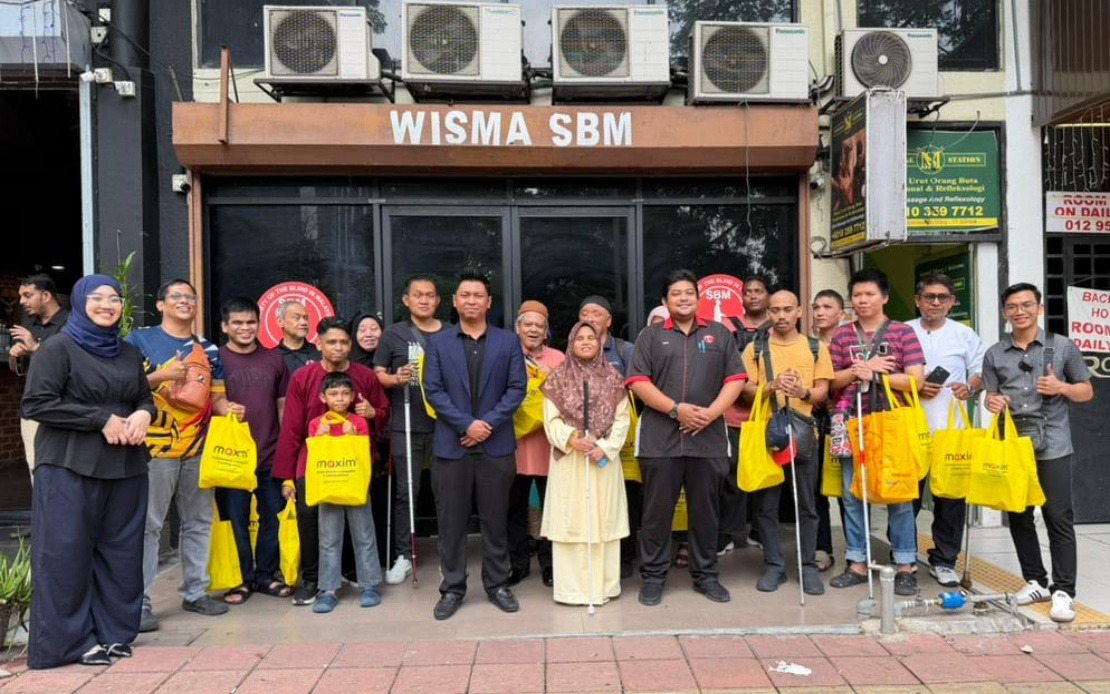
Transportation access remains one of the defining infrastructure challenges facing underserved populations across Malaysia, and e-hailing platform Maxim is positioning itself at the forefront of addressing this gap through a multi-pronged accessibility strategy encompassing affordable pricing, technological innovation, and collaborative partnerships with social institutions.
The initiative reflects a growing recognition within the mobility sector that inclusive services are not merely corporate social responsibility exercises but fundamental business imperatives in a market where roughly 3.9 million Malaysians live with disabilities and millions more face systematic barriers to transportation. Syed Abdul Syarif Syed Peiaru, Maxim's Kuala Lumpur Head, articulated the company's philosophy during recent discussions, framing mobility as fundamentally about unlocking human potential rather than simply moving bodies from point A to point B. This conceptual shift matters because it positions accessibility as a pathway to economic participation, educational advancement, and social dignity rather than a peripheral service offering.
Maxim's approach distinguishes itself through several targeted interventions designed specifically for different demographic groups. The company's Mesra OKU service exemplifies this specialisation, incorporating extended waiting periods for passengers requiring additional boarding time, professionally trained drivers equipped to provide hands-on assistance, mobility equipment support, and voice-recognition booking functionality that eliminates the need for manual app navigation. These features prove particularly significant for persons with disabilities who frequently abandon ride-hailing services when standard operations prove logistically complicated or psychologically unwelcoming. By embedding accessibility into the service architecture rather than treating it as an add-on, Maxim creates conditions where independence becomes genuinely possible.
Technological infrastructure undergirds these physical accessibility improvements. The company has developed digital interfaces with transparent pricing models that eliminate hidden surcharges often inflicted on vulnerable riders, real-time driver tracking that reduces uncertainty and anxiety, and streamlined booking processes that accommodate users with varying technological literacy levels. Particularly noteworthy is Maxim's partnership with the Society of the Blind in Malaysia to integrate TalkBack voice recognition features, demonstrating sensitivity to the diverse ways disability manifests and the corresponding need for multiple access pathways. As technology continues evolving, the company signals intentions to further refine these capabilities based on user feedback from the disability community.
Pricing represents another critical dimension of Maxim's inclusivity platform. The company has implemented special tariff structures specifically for persons with disabilities and individuals with identified special needs, recognising that fixed-income populations cannot absorb standard ride-hailing costs without sacrificing other necessities. This pricing philosophy extends to low-income families and students, demographic groups for whom transport represents a significant percentage of disposable income. Beyond individual discounts, Maxim's expansion into rural and underserved areas represents a spatial justice initiative, as many peripheral communities lack reliable e-hailing coverage entirely.
The partnership ecosystem that Maxim has constructed amplifies these direct service offerings. Collaborations with hospitals, educational institutions, and non-governmental organisations serving vulnerable populations create integrated mobility networks rather than standalone transportation arrangements. Such partnerships recognise that accessibility extends beyond individual transactions to encompass systemic connectivity between different social infrastructure nodes. A student with mobility limitations benefits little from cheap rides to university if the institution lacks accessible facilities; similarly, persons with disabilities derive maximum value from reliable transportation when it connects them to comprehensive healthcare, employment, and educational ecosystems.
Maxim's engagement with adaptive sports communities introduces an interesting dimension often overlooked in mainstream mobility discussions. The company's provision of transport support for para-athletes, including specifically supporting Sarawak para swimmers preparing for competitions, demonstrates recognition that accessibility contributes to social participation across life domains. When disability communities are excluded from sports, cultural events, and civic engagement due to transport barriers, the social costs extend far beyond the individual inconvenience. Maxim's initiatives help normalise para-athlete participation by removing a structural obstacle.
The Malaysian context sharpens these observations' urgency. As an upper-middle-income nation with modernising urban centres but persistent infrastructure disparities between major cities and peripheral areas, Malaysia exemplifies the uneven development patterns that create differential mobility access. The country's ageing population, projected to constitute 15 percent of the total population by 2030, necessitates transportation solutions accommodating reduced physical capacity. Simultaneously, income inequality remains substantial, with marginalised communities in both urban and rural settings facing systematic underinvestment. Against this backdrop, private sector mobility initiatives cannot substitute for government infrastructure investment, yet they can occupy crucial gaps while policy frameworks evolve.
Maxim's emphasis on community engagement and feedback mechanisms suggests understanding that accessibility requires ongoing calibration rather than one-time implementation. By maintaining active dialogue with disabled persons' organisations, elderly associations, and community groups serving low-income populations, the company positions itself to identify emerging barriers and adapt service features responsively. This participatory approach acknowledges that persons with disabilities themselves possess expertise regarding their own accessibility needs—knowledge that should inform rather than merely inform service design.
The broader implications for Malaysia's mobility ecosystem deserve consideration. As ride-hailing platforms saturate urban middle-class markets, competitive differentiation increasingly turns on service quality for currently underserved segments. Should Maxim successfully demonstrate that accessibility investments generate sustainable customer loyalty and positive brand recognition, competitor platforms may accelerate their own inclusive service development. This competitive dynamic could ultimately drive systemic improvement across the e-hailing sector, benefiting persons with disabilities and low-income riders regardless of platform choice.
However, genuine inclusive mobility requires complementary public policy frameworks. Accessibility standards require regulatory reinforcement; training for drivers serving disability communities demands certification systems; data collection on service delivery to underserved populations needs transparency requirements. Maxim's initiatives, however commendable, operate within a policy environment that remains nascent regarding e-hailing regulation and accessibility standards. Government agencies and industry associations must establish baseline accessibility requirements preventing a race to the bottom where companies claiming disability-friendly services provide inconsistent quality.
Looking forward, Maxim articulates intentions to deepen collaboration with government agencies, healthcare providers, NGOs, and educational institutions to systematically expand mobility access across the Malaysian landscape. This multi-stakeholder approach acknowledges that transportation challenges interweave with broader questions of social inclusion, economic opportunity, and national development. The company frames mobility as a bridge rather than an obstacle—a potentially transformative reframing that could influence how other Malaysian businesses conceptualise their relationship with marginalised communities. Whether Maxim's initiative ultimately catalyses sector-wide transformation depends substantially on whether other platforms recognise that inclusive mobility represents not corporate charity but sustainable business practice in an increasingly diverse marketplace.

