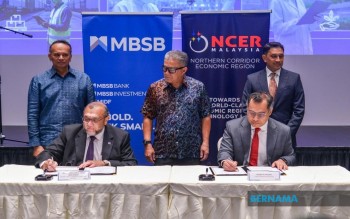
In a move aimed at catalysing entrepreneurial growth across Malaysia's northern region, MBSB Bank Bhd and the Northern Corridor Implementation Authority have formalised a strategic financial partnership. The memorandum of understanding, signed at a ceremony in Petaling Jaya, establishes a financing facility worth up to RM1 billion designed to unlock opportunities for small and medium-sized enterprises throughout the Northern Corridor Economic Region.
The partnership represents a significant commitment to supporting business expansion in Perlis, Kedah, Penang and Perak, four states that collectively form one of the country's most dynamic economic zones. By positioning affordable credit as a catalyst for growth, the collaboration seeks to address a persistent challenge facing Malaysian SMEs: accessing sufficient capital at reasonable terms to scale operations. Datuk Wan Kamaruzaman Wan Ahmad, chairman of MBSB Bank, emphasised that the financial commitment would empower businesses to strengthen manufacturing capacity, integrate into regional and global supply chains, and contribute meaningfully to the region's development trajectory over the medium and long term.
The Northern Corridor Economic Region has emerged as a competitive hub for investment and industrial activity, drawing both Malaysian and international capital into sectors spanning electrical and electronics manufacturing, advanced industrial production, food processing and agricultural value-added activities. This latest initiative reflects recognition among policymakers and financial institutions that continued momentum in these strategic sectors depends partly on reliable access to growth capital for the businesses that form the backbone of regional supply networks. Export-oriented SMEs stand to benefit particularly from the arrangement, which opens pathways to expand production and reach international markets.
MBSB Bank has positioned itself as a development-oriented lender with particular focus on underserved segments of the market. The bank's group chief commercial banking officer, Noor Mohamed Amin, and NCIA's chief operating officer, Hasri A Hassan, formalised the arrangement by affixing their signatures to the document. This ceremonial step underscores the institutional commitment both organisations are making to translate the memorandum's provisions into concrete lending activity over the coming months and years.
A notable dimension of the partnership involves linkages to international banking networks. MBSB Bank chief executive officer Rafe Haneef highlighted the institution's collaboration with Santander Group, a major European banking entity, to facilitate cross-border expansion by Malaysian companies. This connection potentially opens channels through which participating SMEs can access market intelligence, trade finance instruments, and buyer networks beyond Southeast Asia, adding tangible value to the partnership beyond simple credit provision.
The financing initiative aligns strategically with Malaysia's development planning framework. Under the 13th Malaysia Plan, policymakers have prioritised targeted interventions to strengthen regional economies outside the Klang Valley and Selangor, which have traditionally concentrated investment and economic activity. The MBSB-NCIA arrangement exemplifies this approach by channelling institutional financial resources toward specific geographic zones and economic sectors identified as having strong growth potential and developmental impact.
The Northern Corridor's established strengths in electrical and electronics represent a particular strategic priority. This subsector generates substantial employment, commands premium export valuations, and attracts multinational corporations seeking manufacturing bases within ASEAN. However, the ecosystem extends beyond electronics into advanced manufacturing processes that serve diverse industries, agri-business ventures that add value to agricultural production, logistics infrastructure that supports regional trade flows, and emerging domains such as digital commerce and green technology applications. Each of these areas requires capital for incremental expansion and operational improvements.
The NCIA, as the statutory authority tasked with planning and directing economic development across the four northern states, brings institutional knowledge and regulatory coordination capabilities to the partnership. Its role involves not merely allocating resources but cultivating an enabling environment through infrastructure investment, regulatory streamlining, and stakeholder coordination. By partnering with MBSB Bank, the NCIA extends its reach into the financial dimension of regional development, recognising that capital availability functions as a prerequisite for translating policy frameworks and infrastructure improvements into tangible business activity.
For Malaysian SMEs operating or planning to establish operations in the north, the announcement signals improved access to growth finance on terms designed with their operational realities in mind. Development-focused banks typically structure products with attention to seasonal cash flows, collateral constraints, and the variable revenue patterns characteristic of manufacturing and trade businesses. The RM1 billion commitment, while not unlimited, represents meaningful capacity that should accommodate dozens or potentially hundreds of qualifying projects depending on average ticket sizes and project types.
Regionally, the partnership carries implications for broader ASEAN competitiveness. As Southeast Asian economies compete to attract investment and develop high-value manufacturing capacity, Malaysia's capacity to mobilise capital efficiently toward targeted sectors influences its positioning relative to competitors. Thailand, Vietnam and Indonesia actively pursue similar strategies through development-focused lending and regional investment authorities. The MBSB-NCIA arrangement demonstrates continued policy focus on maintaining Malaysia's attractiveness as a manufacturing and logistics hub within the region.
Looking forward, the partnership's success will depend on effective implementation mechanisms. Financial institutions must develop accessible application processes and clear lending criteria. NCIA must coordinate with state governments to identify priority projects and remove administrative obstacles. Both parties must maintain momentum beyond the ceremonial signing phase, translating the memorandum's aspirations into disbursed capital supporting actual business activities. The extent to which SMEs across the northern region ultimately access these facilities, and the measurable outcomes in terms of employment creation, export growth, and investment attraction, will ultimately determine whether this initiative fulfils its intended development purpose.

