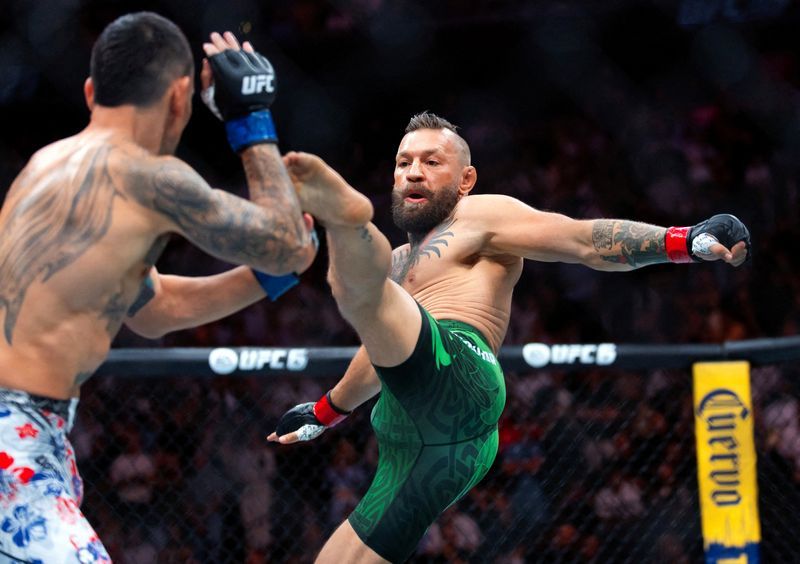
The comeback nobody wanted to see may already be over. Conor McGregor's much-anticipated return to mixed martial arts competition lasted barely more than a minute, ending in disappointment when a knee injury forced him to signal the referee and withdraw from his bout against Max Holloway in Las Vegas on Saturday. The former two-weight UFC champion, whose absence from the sport had stretched for years, now faces surgery and an uncertain path back to the octagon. McGregor confirmed on Monday through an Instagram post that he will proceed with the necessary surgical procedure and hopes to fight again, though the pattern of setbacks that have plagued his career suggests the road ahead remains treacherous.
The injury occurred in the opening moments of the fight when McGregor executed a jump kick but landed awkwardly, immediately compromising his knee. Rather than attempt to push through the pain, a decision that might have exacerbated the damage, McGregor made the pragmatic choice to exit the competition after only 69 seconds of action. The brevity of the encounter meant that for Malaysian and Southeast Asian fans who had waited months for his return, the spectacle ended almost before it began. This latest setback represents another chapter in a troubling saga that has increasingly defined McGregor's recent years more than his accomplishments inside the cage.
McGregor's statement reflected a mixture of optimism and religious conviction, posting that "all things work out for my good" and that surgery, rehabilitation, return to martial arts training, and another fight constitute the next phase of his journey. He specifically referenced a final contracted fight, suggesting that completing his existing deal with the UFC remains part of his calculation. Yet the words rang somewhat hollow given the context of his career trajectory over the past several years, which has seen more obstacles than opportunities.
The 37-year-old Irishman's recent history demonstrates why caution is warranted. McGregor last suffered a significant leg break against Dustin Poirier in their trilogy bout five years ago, a devastating injury that required an extended recovery period. The fighter was subsequently scheduled to face Michael Chandler in June 2024, a bout that appeared to signal his genuine return to serious competition. However, that fight never materialized when McGregor sustained a broken toe during training camp, forcing a cancellation that left fans wondering whether the former champion's injury troubles ran deeper than mere bad luck.
Beyond the physical injuries, McGregor has confronted substantial non-sporting obstacles that have fractured his focus and public image. In 2024, a jury in an Irish civil court determined that McGregor bore liability regarding allegations of rape connected to incidents involving Nikita Hand in 2018. The civil judgment carried profound implications for his reputation and personal life, adding a layer of controversy to his attempted comeback that extended far beyond the sporting domain.
Then, in October 2025, McGregor faced additional complications when he accepted an 18-month suspension from competition for "whereabouts failures." The ban stemmed from his inability or unwillingness to be located for three separate attempts by Combat Sports Anti-Doping to collect biological samples from him during 2024. Backdated to accommodate the time already served, the suspension ultimately expired in March, technically clearing McGregor to compete in the Las Vegas fight. Nevertheless, the incident highlighted recurring questions about his commitment to compliance with anti-doping protocols and regulatory obligations.
For Malaysian and regional readers following mixed martial arts, McGregor's situation illustrates the complex interplay between athletic ambition, personal circumstance, and regulatory compliance that increasingly defines elite sport. The fighter's trajectory from UFC superstar to embattled veteran competing more often outside the cage than within it offers a cautionary tale about the fragility of sporting careers and the consequences of conflicts both medical and otherwise.
The surgery McGregor now faces will determine whether his latest comeback attempt has any realistic chance of success. Knee injuries in combat sports carry particular significance, as the joint bears constant load throughout training, competing, and recovery. Depending on the extent of the damage and the surgical intervention required, rehabilitation could stretch across several months. For a 37-year-old athlete, the cumulative effect of multiple significant injuries compounds the challenge of returning to elite performance.
McGregor's reference to a "final fight of the contract" suggests he envisions one or perhaps two remaining bouts with the UFC before his professional tenure concludes. Whether he can remain healthy long enough to complete even that limited objective remains the central question. His previous setbacks have taught observers that predicting his timeline or capability has repeatedly proven unreliable. The mixed martial arts community, which once viewed McGregor as an unstoppable force, has grown accustomed to managing expectations and absorbing disappointments surrounding his participation.

