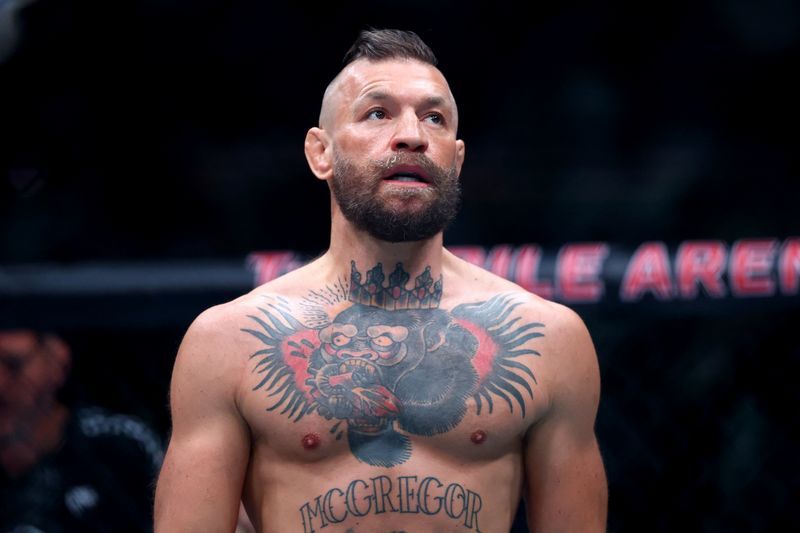
Conor McGregor's much-anticipated return to professional mixed martial arts competition came to an abrupt and disappointing end on Saturday when a catastrophic knee injury forced the Irish fighter to withdraw from his UFC 329 bout against Max Holloway in Las Vegas. The entire encounter lasted just over a minute, representing a stunning anticlimax to what had been billed as one of the sport's marquee comeback moments. In attempting to execute a flying kick early in the opening round, McGregor landed awkwardly and immediately signalled distress. After a brief struggle to continue, he looked directly at the referee to communicate that he could not proceed, bringing his return to fighting to an end almost as soon as it had begun.
The injury marks another significant setback in what has become a turbulent stretch for the 37-year-old fighter. McGregor, a former champion across two weight divisions in the UFC, had not competed since July 2021, when he suffered a leg fracture during his fight with Dustin Poirier. That four-year absence from competition had already raised questions about his readiness to return to the demanding world of elite-level combat sports. The Saturday incident will only intensify such concerns, as it raises doubts about whether his body remains capable of withstanding the rigorous demands of contemporary mixed martial arts competition at the highest level.
The path back to the octagon for McGregor has been fraught with obstacles extending well beyond the physical realm of sport. In June 2024, he was scheduled to face Michael Chandler in what would have been his first bout back, but those plans were scrapped when the Irishman sustained a broken toe during training camp. This recurring pattern of injury setbacks has become characteristic of his recent history, suggesting potential concerns about either his training methods or underlying physical vulnerabilities. Beyond these sporting injuries, McGregor has encountered significant legal and regulatory challenges that have further complicated his comeback timeline.
Legal troubles have persistently shadowed McGregor's attempts to rebuild his fighting career. An Irish civil court determined in 2024 that he was liable in connection with a 2018 incident, a finding that generated substantial negative publicity and raised questions about his standing both within the sport and in broader public perception. Additionally, combat sports anti-doping authorities imposed an eighteen-month ban on the fighter in October 2025 after he failed to make himself available for three separate attempts to collect biological samples in 2024. Although the ban was retroactively dated and expired in March, its imposition represented another embarrassment and further derailed his competitive timeline.
Max Holloway, McGregor's opponent on Saturday and a former featherweight champion himself, responded to his unexpected victory with the kind of measured professionalism expected of a seasoned competitor. Rather than celebrating McGregor's misfortune, Holloway indicated his willingness to face the injured fighter again once he recovers from his latest setback. The Hawaiian fighter expressed his intention to sit down with UFC leadership to discuss the possibility of rematching McGregor, acknowledging the enormous commercial appeal and public interest surrounding a potential future encounter. Holloway's comments reflected both his respect for competition and his recognition that such a matchup carries significant financial and promotional value for all parties involved.
This second encounter between McGregor and Holloway carried historical weight, as they had previously fought in 2013 with McGregor emerging victorious by unanimous decision. A potential rematch would follow this pattern of renewal, though under drastically different circumstances given McGregor's physical condition and extended absence from competition. The prospect of them meeting again assumes, of course, that McGregor can successfully rehabilitate from his latest injury and navigate whatever training regimen his recovery demands.
Saturday's card at the T-Mobile Arena in Las Vegas featured other dramatic action alongside McGregor's brief appearance. Britain's Paddy Pimblett secured an emphatic victory in the co-main event, submitting France's Benoit Saint-Denis in a lightweight bout that also concluded within less than a minute. Pimblett's dominance stood in stark contrast to McGregor's inability to compete, highlighting the unpredictability inherent in combat sports and the vast gulf that can exist in performance between fighters at even the highest level of professional competition.
The implications of McGregor's injury extend beyond the individual fighter. His struggles raise broader questions about athlete longevity in mixed martial arts and the physical toll that competition in such a demanding sport exacts on the human body. At 37 years old, McGregor's inability to return successfully may signal that his window for meaningful competition has closed, regardless of his historical achievements or marketability. The UFC and other stakeholders will need to reconsider their investment in his future, particularly given the pattern of setbacks that has characterized his recent career trajectory.
For Malaysian and Southeast Asian sports fans who have followed McGregor's controversial and compelling career with considerable interest, Saturday's outcome represents a disappointing conclusion to what many had anticipated would be a triumphant comeback narrative. The region has embraced combat sports enthusiastically, with many fighters from the area competing successfully at the highest levels of the UFC and other promotions. McGregor's failure to capitalize on his return opportunity serves as a sobering reminder that even the most celebrated athletes can succumb to injury and adversity, and that comeback stories in professional sports rarely unfold as planned.

