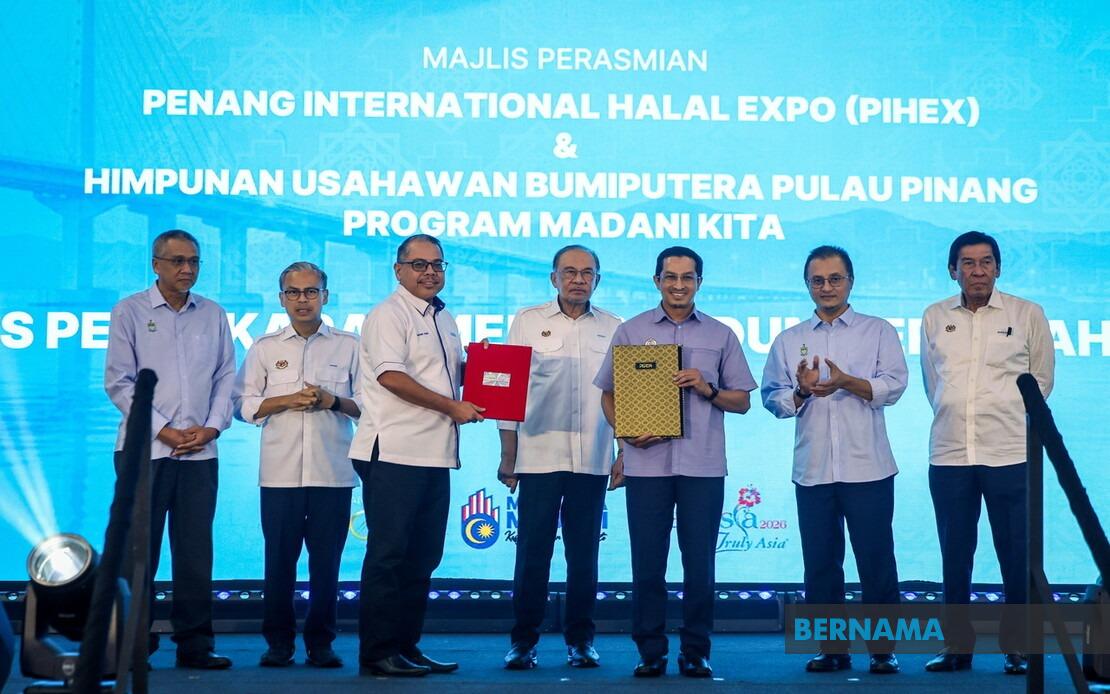
The Malaysian Communications and Multimedia Commission has partnered with Penang Halal International to deliver an integrated government services initiative at the Penang International Halal Expo 2026. The collaboration marks the first time MCMC's National Information Dissemination Centre has formally worked with PHI to coordinate the MADANI Kita Programme, a government-wide initiative designed to streamline access to public services. The partnership was officially launched at Seberang Perai Polytechnic in Bukit Mertajam by Prime Minister Datuk Seri Anwar Ibrahim, with Communications Minister Datuk Seri Fahmi Fadzil and MCMC chairman Tan Sri Mohamad Salim Fateh Din in attendance.
The MADANI Kita Programme, which operates under the coordination of the Performance Acceleration Coordination Unit within the Prime Minister's Department, represents a shift towards more efficient government service delivery. Rather than requiring citizens to navigate multiple agencies separately, the programme consolidates federal ministries and government bodies under a single event platform. This whole-of-government approach aims to simplify the citizen experience by offering comprehensive support and information services in one accessible location, reflecting broader efforts to modernise Malaysia's public administration.
Hosting the initiative alongside PIHEX 2026 creates a unique synergy between government service delivery and the halal industry sector. The expo, traditionally a platform for promoting Malaysia's halal credentials to international markets, becomes an opportunity to simultaneously reach entrepreneurs, business owners, and consumers with government support programmes. This dual-purpose approach expands the reach of both the government's MADANI agenda and the halal sector's promotional objectives, particularly relevant given Malaysia's positioning as a global halal hub and the growing significance of the halal economy to Southeast Asian trade.
The range of services available to visitors demonstrates the breadth of government engagement at the event. Health screenings provide immediate wellness access to attendees, while Rahmah Sales and Agro MADANI Sales bring subsidised goods and agricultural products directly to consumers. Multiple government agency booths allow citizens to inquire about and enrol in various programmes without scheduling separate appointments. Community services are co-located, enabling residents to address multiple administrative or support needs during a single visit. This consolidation acknowledges that many Malaysians face time and resource constraints when accessing scattered government services across different locations.
Digital inclusion forms a cornerstone of the collaboration's approach. The integration of free Wi-Fi facilities through NADI On Wheels ensures that visitors can access online government portals and services without connectivity barriers. The inclusion of the NADI E-Sports MADANI Legend competition adds a youth engagement dimension, recognising that digital natives increasingly expect interactive, technology-enabled access to government information and services. This gamification element also aligns with broader regional trends in Southeast Asia towards making public services more engaging and accessible to younger populations.
For Penang specifically, the partnership reinforces the state's role as a hub for both technological innovation and Islamic commerce. The state government and federal authorities jointly signal commitment to developing Penang as an integrated economic zone where digital infrastructure, halal certification, business support, and social services converge. This has implications for attracting businesses in the halal supply chain, from production through logistics to retail, particularly as regional demand for certified halal products continues expanding across Southeast Asia.
The MCMC's strategic decision to deepen partnerships with stakeholders like Penang Halal International reflects evolving thinking about how government agencies can achieve greater reach and impact through collaboration. Rather than operating independently, the commission recognises that working with established industry platforms and private sector partners multiplies the value of government initiatives. This model is increasingly relevant across Southeast Asia, where governments and private entities are exploring hybrid approaches to service delivery and public engagement.
The emphasis on local economic development within the programme addresses concerns about equitable growth distribution beyond Malaysia's major urban centres. By bringing government business support services, agricultural initiatives, and digital literacy programmes to Penang, the collaboration helps smaller entrepreneurs and rural communities access resources previously concentrated in Kuala Lumpur or other major cities. The Agro MADANI element particularly supports farmers and agribusiness operators in leveraging halal certification and export opportunities within the growing regional market.
Digital inclusion initiatives like NADI On Wheels represent recognition that physical and digital accessibility gaps persist across Malaysia. Many citizens in secondary cities or smaller towns still lack reliable broadband, limiting their ability to access online government services. Bringing these facilities to major events ensures that digital divides do not prevent citizens from benefiting from government programmes. As Malaysia continues pursuing its digital economy agenda, such initiatives become increasingly important for ensuring inclusive participation.
The collaboration also signals how Malaysia's MADANI framework—centred on prosperity, inclusivity, and anti-corruption principles—translates into practical government operations. Rather than remaining abstract policy objectives, the programme demonstrates concrete mechanisms through which multiple agencies align their services around citizen needs. This integration potentially improves government efficiency by reducing duplication and creating economies of scale in service delivery infrastructure.
For regional observers, the MCMC-PHI partnership illustrates how Southeast Asian governments are experimenting with new models of public-private collaboration in service delivery. The halal sector, increasingly important economically across the region, becomes a vehicle for broader government service integration. This approach may offer lessons for other ASEAN countries seeking to improve government accessibility while supporting emerging industries and economic sectors.

