The Malaysian Communications and Multimedia Commission fielded 29 complaints centred on problematic online content during the campaign phase leading up to the 16th Johor state election, according to Deputy Communications Minister Teo Nie Ching. The complaints spanned several categories of digital misconduct that have increasingly dominated electoral discourse across Southeast Asia, prompting authorities to intensify monitoring efforts ahead of major polling events.
Breaking down the complaint tally, fake news allegations constituted the largest segment with 17 cases, reflecting growing public concern about the spread of unverified claims during politically sensitive periods. Hate speech accusations numbered eleven, while a single complaint involved a fraudulent account and impersonation scheme. This distribution underscores the multifaceted nature of online electoral interference, where disinformation campaigns often intertwine with identity-based hostility and coordinated manipulation tactics.
Within the hate speech category, racial grievances dominated the discourse, with nine of the eleven cases touching on inflammatory content centred on race. The remaining two cases addressed separate sensitivities: one complaint involved religious-themed hate speech, whilst another targeted the monarchy, both categorised under Malaysia's contentious 3R framework governing race, religion and royalty. This breakdown illuminates the persistent tensions within Malaysia's diverse society, where electoral campaigns can inadvertently amplify divisive messaging if left unchecked by digital monitoring mechanisms.
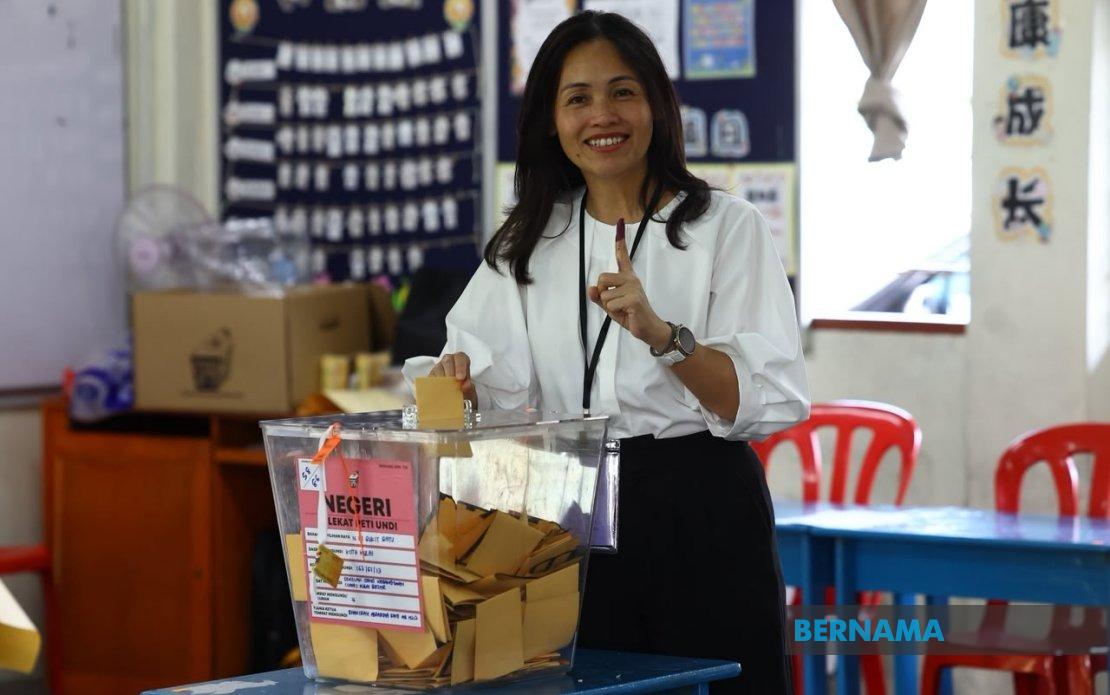
Teo, who simultaneously serves as the Member of Parliament for Kulai, used her position at a polling station to appeal directly to voters about digital literacy and online verification practices. She emphasised that citizens, particularly those exercising their electoral franchise, bear responsibility for critically evaluating information encountered on social platforms rather than passively accepting unverified claims. Her remarks reflect a broader strategic shift among Malaysian officials toward educating the electorate about media consumption habits rather than relying solely on regulatory enforcement.
The deputy minister specifically encouraged citizens to become discerning digital participants capable of distinguishing credible content from fabrications and inflammatory rhetoric. By framing digital literacy as integral to responsible voting, Teo positioned information awareness as a foundational democratic competency. This approach acknowledges that combating online electoral interference requires not merely detecting and removing problematic content, but cultivating population-wide resilience against manipulation through informed consumption practices.
The scale of complaints recorded during this campaign period warrants contextualisation within Malaysia's evolving digital landscape. With 2.6 million registered voters participating in the Johor election across 56 state assembly seats contested by 172 candidates, the absolute number of 29 complaints represents a relatively modest proportion of the total electorate. Yet this figure likely represents only reported cases; actual instances of misinformation, hate speech and fraud circulating on encrypted messaging platforms, closed social media groups and alternative digital spaces probably far exceed official complaint volumes.
The Johor election itself carried significance for Malaysian politics beyond the state level, as state elections often serve as barometers for national political sentiment and test grounds for electoral administration innovations. The relatively comprehensive online monitoring operation demonstrated by the MCMC suggested that federal authorities viewed this campaign as an opportunity to refine digital election management practices. Lessons learned could subsequently inform strategies during future national general elections, when online interference risks escalate dramatically given higher stakes and broader voter engagement.
Speaking from a polling centre, Teo also commended election personnel for executing their duties professionally throughout the voting process. Her acknowledgment of election workers reflected standard protocol for visiting officials but also underscored the logistical complexity of managing 2.6 million voters across a geographically dispersed state. The smooth administration of polling operations depends upon thousands of frontline workers maintaining procedural integrity despite external pressures and distractions, including the digital disruptions being monitored by communications authorities.
The breakdown of online complaints by category suggests that regulatory frameworks focusing narrowly on single offence types may prove insufficient for addressing the interconnected nature of modern electoral interference. False information and hate speech frequently reinforce one another, with fabricated narratives about particular communities generating hostility and polarisation that extends beyond individual fact-checking corrections. Malaysian authorities' apparent willingness to track multiple complaint categories simultaneously indicates recognition that holistic approaches may ultimately prove more effective than compartmentalised responses.
For Malaysian readers and observers across Southeast Asia, the Johor election experience offers instructive lessons about the persistent challenges of managing online political discourse during high-stakes electoral moments. As digital platforms become increasingly central to campaign communication and voter information gathering, the volume and nature of complaints will likely continue rising in future elections. The MCMC's capacity to process and analyse these complaints efficiently will determine whether Malaysia can maintain electoral integrity whilst protecting open digital expression, a balancing act that remains precarious across the region.

