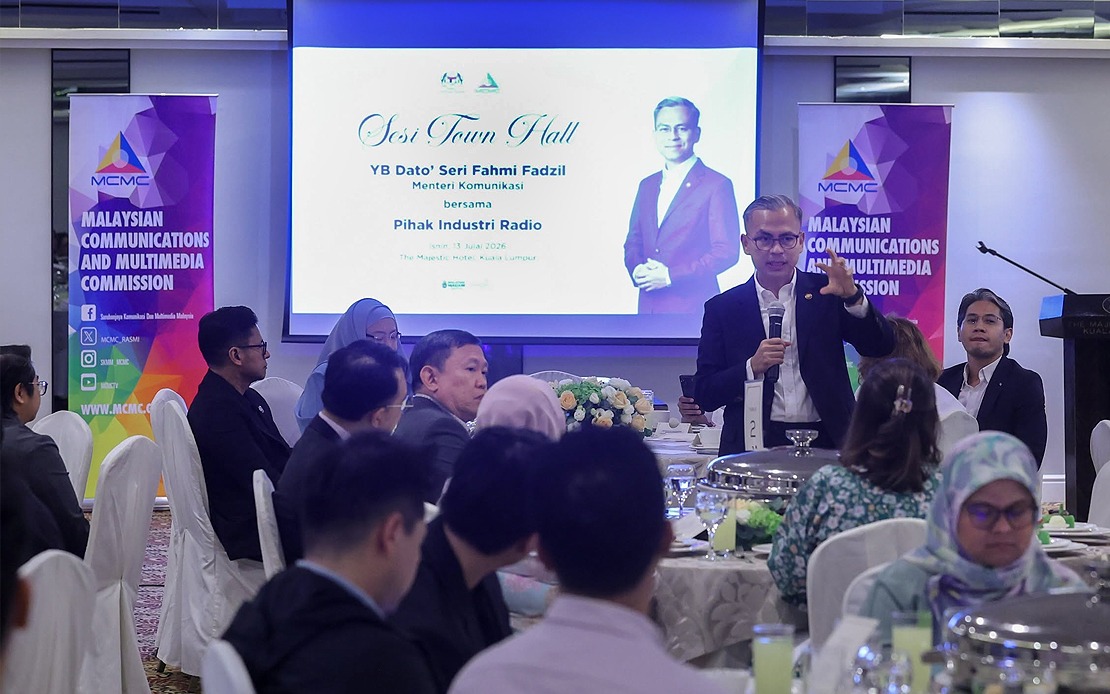
Malaysia's Communications Minister Datuk Seri Fahmi Fadzil has declared the government's intention to undertake a sweeping examination of the radio broadcasting sector through a policy review that will be spearheaded by the Malaysian Communications and Multimedia Commission (MCMC). The initiative forms part of a broader strategy to fortify the nation's broadcasting infrastructure and align the sector with contemporary economic priorities.
The review will be conducted under the aegis of the National Broadcasting Policy and is designed to complement ongoing national initiatives, particularly the National Creative Industry Policy and the strategic objectives outlined by the Orange Economy Council. This multi-layered approach underscores the government's recognition that radio broadcasting extends beyond traditional media functions—it constitutes a vital component of Malaysia's creative economy and cultural preservation framework.
The decision to commission this comprehensive review emerged from substantive discussions held during a town hall engagement that brought together Datuk Seri Fahmi with radio industry stakeholders, management representatives, and broadcasting operators. These consultations provided a platform for industry participants to articulate their operational challenges, present innovative suggestions, and offer candid assessments of the current regulatory environment. The forum demonstrated the government's commitment to incorporating grassroots perspectives into policy formulation.
Central to the review's scope are several interconnected issues that have assumed increasing importance as Malaysia's media landscape undergoes rapid transformation. Enhancement of locally-produced music content ranks prominently among these concerns, reflecting the sector's struggle to compete with streaming platforms and international content providers. The examination of existing licensing frameworks will determine whether current models adequately reflect market realities and encourage sustainable business practices among broadcasters of varying sizes and formats.
Industry sustainability represents another critical focal point for the inquiry. Malaysian radio operators face mounting pressure as audience engagement patterns shift toward digital platforms and on-demand services. The study aims to identify structural and regulatory obstacles that hamper profitability and listener retention, while simultaneously exploring mechanisms through which traditional radio can adapt without abandoning its core strengths as a localized, accessible medium. The analysis will necessarily examine how different business models—from advertising-dependent commercial stations to listener-supported community broadcasters—can achieve long-term viability.
The accelerating digitalization of the media landscape forms the contextual backdrop for this initiative. As consumers increasingly consume content across multiple platforms, radio broadcasters confront fundamental questions about format, distribution, and audience interaction. The MCMC review will assess whether current regulatory architecture facilitates innovation and multiplatform expansion or whether outdated restrictions limit industry participants' ability to evolve. This examination proves particularly significant given Malaysia's growing digital infrastructure and rising mobile internet penetration across diverse demographic segments.
Datuk Seri Fahmi's public commitment to maintaining radio as a culturally relevant and economically viable sector carries implicit recognition of broadcasting's role in national cohesion and cultural expression. Radio remains uniquely positioned to reach audiences during commutes, work hours, and domestic activities—moments when digital alternatives may prove less practical or desirable. The government's desire to ensure the medium remains "close to the people" reflects awareness that radio serves communities and demographic groups that may be underserved by more technology-dependent platforms.
The involvement of the Orange Economy Council signifies the administration's perception of broadcasting as an economic development lever rather than merely a regulatory concern. This framing potentially opens pathways for creative financing mechanisms, tax incentives, or investment structures that might otherwise remain unavailable under purely broadcasting-focused governance. It positions radio within a broader ecosystem of Malaysia's creative industries, suggesting opportunities for synergies with music production, podcast development, and digital audio ventures.
The MCMC's lead role in conducting this examination places significant responsibility on the communications regulator to balance multiple, sometimes competing objectives. The commission must weigh industry profitability against public interest considerations, innovation against stability, and commercial viability against cultural preservation. The outcome will shape broadcasting licensing practices, content regulations, and technical standards for years ahead, influencing investment decisions by both established operators and potential new market entrants.
For Malaysian radio audiences, the implications extend beyond corporate boardrooms and regulatory chambers. A healthier, more competitive broadcasting sector promises greater content diversity, innovative programming formats, and more responsive engagement with listener communities. Enhanced local music content production could provide meaningful platforms for Malaysian artists and songwriters, reducing dependence on international material while creating employment opportunities within the creative sectors.
The government's stated intention to collaborate continuously with industry participants suggests this review represents an opening phase in an ongoing dialogue rather than a unilateral policy imposition. This collaborative approach may yield more pragmatic, implementable recommendations than top-down regulatory reform. However, the success of this initiative will ultimately depend on the MCMC's willingness to translate stakeholder input into substantive policy modifications and the industry's readiness to embrace necessary transformations.
As the review progresses, regional observers will watch for lessons applicable to other Southeast Asian markets grappling with similar challenges. The approach Malaysia adopts could influence how neighbouring countries balance heritage media preservation with digital-age imperatives, particularly in jurisdictions where radio retains significant cultural and social importance.

