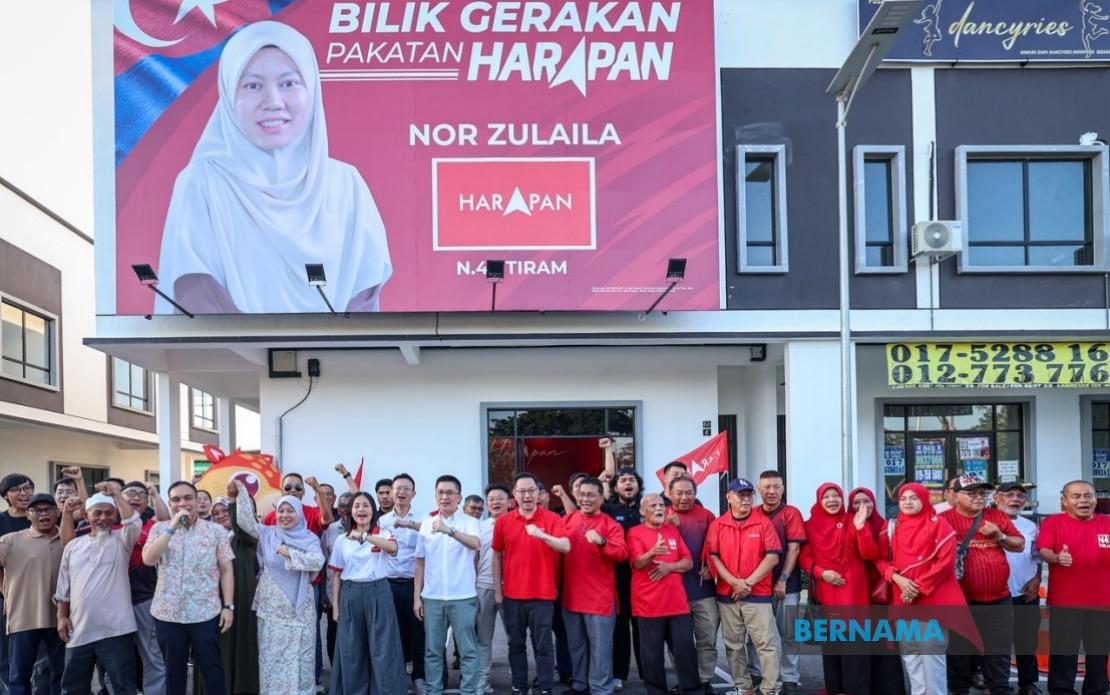
The Malaysian Communications and Multimedia Commission (MCMC) has been tasked with maintaining robust internet connectivity across Johor during the ongoing state election campaign, Deputy Communications Minister Teo Nie Ching announced on Wednesday at the launch of Pakatan Harapan's operations centre in Pasir Gudang. The directive underscores growing recognition among Malaysian political parties that digital infrastructure now forms a backbone for modern electioneering, particularly as candidates increasingly rely on online platforms to reach voters and coordinate campaign activities.
Teo stressed that dependable internet access represents a cornerstone requirement for executing political campaigns effectively during the polling period. She emphasised that strong connectivity enables rally organisers to stream events to broader audiences, allows candidates to communicate with constituents in real time, and supports volunteers coordinating ground-level activities. By positioning internet access as essential campaign infrastructure rather than a peripheral convenience, the Deputy Minister has highlighted how digital divides can meaningfully affect electoral fairness and accessibility across different regions of the state.
The MCMC has received instructions to conduct continuous surveillance of network performance, with particular attention devoted to locations anticipated to host significant voter gatherings. This targeted monitoring approach acknowledges that campaign hotspots often experience temporary surges in bandwidth demand, which can degrade service quality without advance planning and resource allocation. Such proactive oversight represents a shift toward treating election administration as a matter requiring coordination between political bodies and telecommunications regulators to ensure citizens encounter minimal disruptions when consuming campaign information online.
Teo's announcement came during a formal opening of the Pakatan Harapan campaign office for the N40 Tiram constituency, attended by Deputy Education Minister Wong Kah Woh, Bangi MP Syahredzan Johan, Tebrau MP Jimmy Puah Wee Tse, and Nor Zulaila Abdul Ghani, the coalition's candidate for the Tiram seat. This gathering reflected the coalition's commitment to methodical, structured campaigning in a state where Pakatan Harapan has fielded candidates across 17 seats, representing a significant presence in the 56-seat assembly.
From the coalition's internal assessment, feedback emerging from grassroots campaign activities has been decidedly encouraging. Voters across Johor have demonstrated what Teo characterised as notably positive receptiveness toward Pakatan Harapan's messaging and candidates. This perception contrasts with historical patterns where incumbent parties dominate state elections; positive early-stage feedback potentially signals shifting voter sentiment in a state that has long been governed by Barisan Nasional-aligned coalitions, making the Johor contest noteworthy for Malaysian electoral observers.
Particularly noteworthy in campaign discussions has been the unexpected enthusiasm among voters residing outside their registered constituencies who are preparing to return to their hometowns specifically to cast ballots. This mobility reflects what Teo identified as heightened voter responsibility and engagement, suggesting citizens across different regions of Malaysia recognise the election's significance and are willing to undertake travel to participate. For a country where voter turnout and participation rates have fluctuated considerably in recent years, this enthusiasm indicates genuine interest in the outcome of Johor's contest.
Regarding campaign strategy, DAP has adopted a deliberately cautious approach by refusing to designate any of its 17 contested seats as safe or guaranteed victories. This institutional discipline reflects lessons learned from previous elections where overconfidence in certain constituencies led parties to redirect resources toward marginal seats, ultimately undermining performance in areas where victory was presumed inevitable. Teo explicitly stated that complacency represents the primary threat to electoral success, and that maintaining consistent effort across all contested seats constitutes the coalition's governing principle.
The party's strategic framework emphasises recognising the distinct characteristics, demographic composition, and electoral challenges specific to each constituency. Rather than deploying identical campaign templates uniformly across all 17 seats, Pakatan Harapan intends to tailor messaging and organisational approaches to address the particular concerns and preferences of voters in different areas. This granular approach requires substantially more coordination effort and resource management but potentially delivers superior results compared to standardised campaigns.
Electoral timelines for the sixteenth Johor state election remain compressed, with nomination procedures scheduled for June 27, early voting designated for July 7, and polling day set for July 11. This condensed calendar means campaign teams have limited time to reach voters, making efficient coordination and reliable digital communication infrastructure increasingly valuable. The MCMC's role in ensuring internet reliability thus carries heightened practical importance given the accelerated timeline.
The Johor state election carries broader significance for Malaysian politics beyond the state's boundaries. As a traditionally Barisan Nasional stronghold with substantial economic importance, Johor's electoral outcome may signal broader shifts in voter preferences across the country. The coalition's capacity to mount competitive campaigns in such historically challenging terrain, supported by functional digital infrastructure and organised ground operations, will likely influence calculations about electoral viability in other states scheduled for future contests.
For Malaysian readers and businesses dependent on stable internet connectivity, the MCMC's heightened monitoring during the election period may have tangential effects on service performance and network availability. Campaign-related congestion in major urban centres during peak hours could temporarily affect commercial users, though this represents a manageable trade-off for ensuring robust democratic processes. The broader principle of regulatory bodies actively supporting electoral infrastructure reflects evolving understanding that modern elections require coordinated engagement across multiple government agencies and private sector operators.

