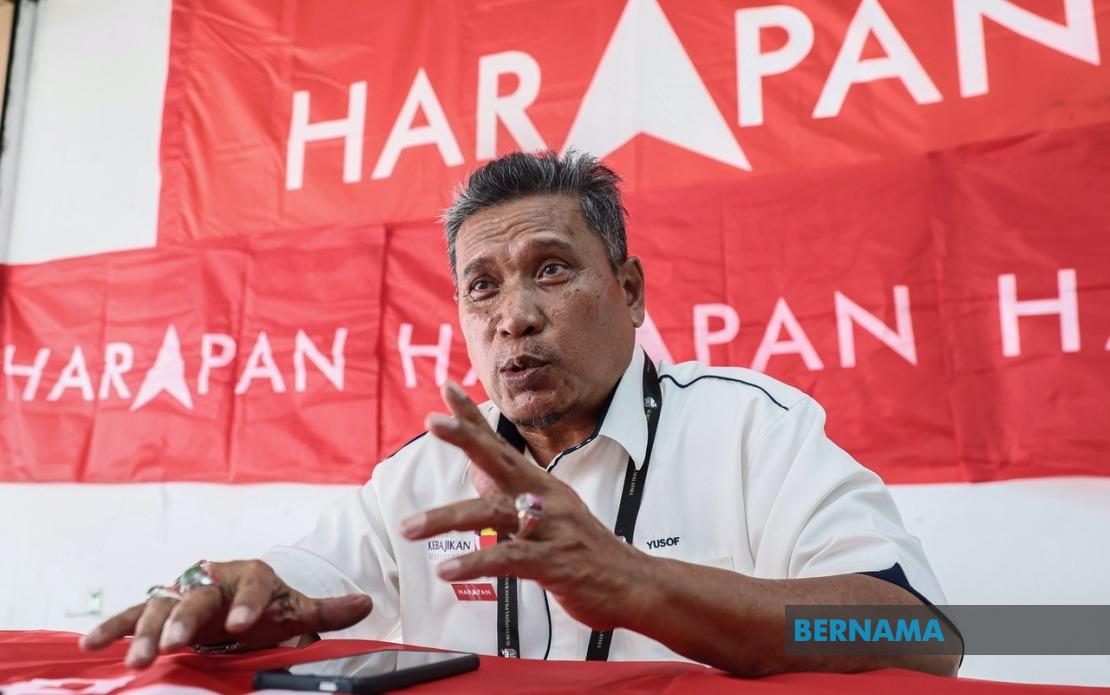
The Pakatan Harapan campaign for the Tenggaroh state seat is banking on addressing a generational crisis within Federal Land Development Authority settlements. Md Yusof Dawam, a 64-year-old retired educator contesting the seat, has identified young people's exodus from Felda communities as an urgent policy challenge that demands systematic intervention rather than ad-hoc solutions. His platform centres on retaining settler families within established schemes through coordinated housing development and targeted economic opportunities, recognising that demographic stability underpins the long-term viability of these communities.
The housing shortage for second-generation settlers represents perhaps the most visible manifestation of planning failures within Tenggaroh's Felda scheme, according to Md Yusof's analysis. Young adults whose parents settled in these schemes decades ago face an impossible arithmetic: family incomes insufficiently exceed the threshold for conventional mortgage qualification, yet insufficient affordable housing exists within their home communities. This structural constraint forces difficult choices between remaining dependent within parental homes or abandoning agricultural settlements entirely for urban employment markets. The candidate has framed this not merely as a social problem but as an economic one, arguing that family-operated oil palm plantations require succession planning to prevent assets from fragmenting or passing into external hands.
Md Yusof's proposed solution involves allocating ten to twenty acres of Tenggaroh land specifically for second-generation settlement development, with formal planning frameworks that acknowledge the distinct requirements of younger families. This approach differs markedly from informal accommodation arrangements, signalling an understanding that contemporary settlers expect the same institutional supports their parents received during the scheme's initial establishment phase. By treating housing as inseparable from agricultural continuity, his campaign appeals to settler concerns about preserving both family heritage and economic viability across generational transitions.
The economic stagnation of retail and commercial sectors within Felda communities compounds the migration pressures, in Md Yusof's assessment. Tenggaroh's commercial infrastructure has remained substantially unchanged since the 1980s, he noted, while surrounding areas experienced incremental modernisation. This frozen development creates functional disadvantages for residents: basic services require extended travel to Mersing town approximately seventy kilometres away, draining both money and time from the Felda economy. Younger residents lacking entrepreneurial opportunities gravitate toward towns offering established business ecosystems and employment diversity.
To counter this trend, Md Yusof proposes issuing temporary land grants enabling construction of modern business premises clustered within a planned "small town" concept. This strategy aims to concentrate retail and service activities within Tenggaroh itself, creating employment for younger entrepreneurs and retaining consumer spending within the settler community. The approach acknowledges that Felda residents desire contemporary amenities—including food service establishments serving local specialities like keropok lekor—without sacrificing community cohesion through dispersal to urban centres. By facilitating entrepreneurship among younger residents, the proposal intends to generate both income and purpose for those contemplating departure.
Mersing's tourism potential represents an underexploited economic avenue that Md Yusof believes can generate direct benefits for local youth. The district's island destinations—notably Pulau Besar, Pulau Tinggi and Pulau Aur—have attracted international film production companies seeking exotic locations, yet limited formalised tourism infrastructure exists to capture economic value from these activities. Foreign production teams hire external service providers for accommodation, catering and transport rather than engaging local operators, resulting in minimal spillover benefits for young Mersing residents.
The absence of locally-owned tourism enterprises and maritime transport operators represents a critical economic gap, according to Md Yusof's analysis. If younger residents possessed formalised businesses providing accommodation, hospitality and water transport services, they could capture a portion of spending currently flowing to external providers. This reorientation of tourism economics requires upfront investment in capability building and possibly regulatory reform to lower entry barriers for young entrepreneurs. His campaign implicitly argues that political leadership should actively facilitate such transitions rather than treating tourism development as an autonomous market process.
Md Yusof's campaign methodology emphasises direct community engagement through small-group meetings rather than mass rallies or conventional advertising, reflecting his belief that Tenggaroh residents' aspirations require personalised understanding. His background as an educator in Felda Nitar for sixteen years, combined with four decades residing in Mersing, provides established relationships within settler networks that formal campaigning cannot easily replicate. This "personal touch" approach assumes that electoral support follows from demonstrating genuine comprehension of lived experiences within these communities.
The Tangkak-born candidate's teaching background supplies an interpretive lens for understanding Felda dynamics that purely political credentials might lack. Educators directly encounter settler families' concerns through interactions with children, providing insights into housing pressures, economic anxiety and educational aspirations that administrative reports may obscure. His positioning emphasises accumulated local knowledge and established social credibility rather than external expertise or partisan credentials, suggesting that Tenggaroh voters value representatives with demonstrated commitment to community improvement over ideological positioning.
Within the broader context of the 16th Johor state election, the Tenggaroh campaign illustrates how electoral competition increasingly addresses structural economic challenges within Federal Land Development schemes. These communities, established in previous decades as rural development initiatives, now confront modernisation pressures their founders did not anticipate. As settler populations age and second generations face different economic circumstances, political candidates must demonstrate specific policy comprehension rather than generic development promises. Md Yusof's platform reflects this shift: rather than celebratory rhetoric about Felda's historical role, his campaign addresses concrete housing deficits and commercial stagnation requiring systematic intervention.
The 172 candidates contesting fifty-six seats in this election campaign across diverse constituencies with varying demographic and economic profiles. Tenggaroh's Felda character distinguishes it within this broader field, requiring candidates to articulate farming community-specific development visions. Md Yusof's emphasis on second-generation housing and localised economic development rather than redistributive welfare represents one template for addressing settler constituency concerns. Whether voters embrace this approach or prefer alternative proposals will partly reflect broader judgments about whether established schemes require modernisation or whether different governance priorities warrant attention.

