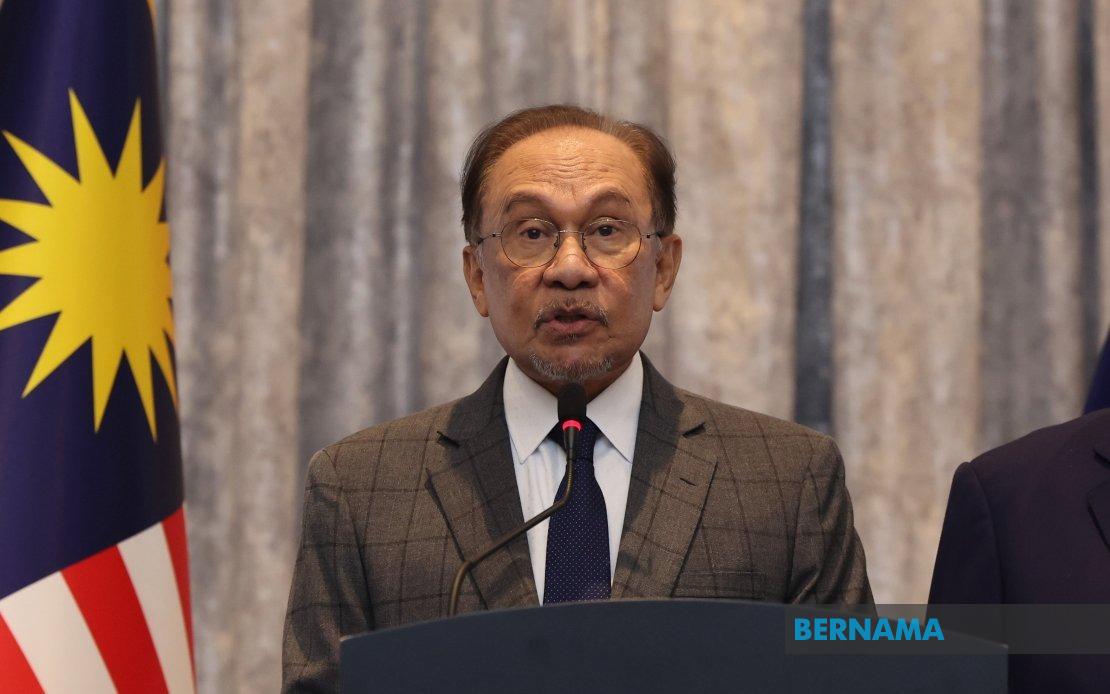
At the Malaysian Press Night 2025 ceremony in Kuala Lumpur on July 17, Prime Minister Datuk Seri Anwar Ibrahim delivered a carefully calibrated message to the nation's media practitioners: technological progress must never come at the expense of journalistic integrity, ethical standards, or Malaysia's distinctive identity. Speaking at an event that also celebrated the Malaysian Press Institute-PETRONAS Journalism Awards 2026, Anwar acknowledged the rapid evolution of information technology, digital platforms, and artificial intelligence while cautioning that this transformation requires vigilant stewardship of foundational values.
The Prime Minister's remarks reflected a broader concern about the relationship between media modernisation and national cohesion. He argued that without consistent attention to ethical principles and cultural identity, Malaysia risked becoming adrift in an increasingly complex information landscape. The warning carried particular weight given the regional context: Southeast Asia has witnessed numerous instances of digital misinformation, foreign interference in information ecosystems, and the weaponisation of platforms to undermine social stability. Anwar's framing positioned technological adoption not as an end in itself but as a means that must remain subordinate to enduring journalistic principles.
Critically, Anwar drew a distinction between defending freedom in technology—which he emphasised must be upheld—and allowing technological systems to operate divorced from ethical moorings. This nuance addresses a genuine tension facing modern newsrooms globally. The proliferation of algorithms, automated content generation, and data-driven editorial decisions has created scenarios where efficiency gains sometimes conflict with thoughtful journalistic judgment. The Prime Minister's call for columnists and opinion leaders to engage more deeply with this dimension suggested that the resolution requires not just institutional policy but intellectual engagement across the media profession.
The government's role in supporting this balance received explicit attention. Anwar highlighted Communications Minister Datuk Seri Fahmi Fadzil and the Malaysian Communications and Multimedia Commission as partners bearing shared responsibility for creating conditions where media could flourish technologically while maintaining ethical standards. This collaborative framing avoided heavy-handed regulation while signalling government commitment to the health of the media ecosystem. The Prime Minister's commitment to listening to media concerns and accepting criticism with an open mind suggested a pragmatic approach to sector-wide dialogue rather than top-down prescription.
A particularly significant portion of Anwar's address invoked historical lessons about media dominance and narrative control. He observed that Western hegemony in global media had historically allowed powerful nations to shape international narratives according to their own strategic interests and values. This historical observation carries particular resonance in Malaysia and Southeast Asia, where colonial-era information asymmetries remain a reference point in contemporary discussions about sovereignty and cultural preservation. However, Anwar extended the analysis beyond historical critique to contemporary threats.
The Prime Minister identified an emerging challenge: technological powers now employ digital systems and platforms to advance ideological and cultural frameworks that may be fundamentally misaligned with local societies and values. This analysis speaks to concerns across Southeast Asia about the concentration of technological power in relatively few global companies, the dominance of English-language content and Anglo-American cultural references in digital spaces, and the potential for technology-mediated influence to operate below the threshold of traditional foreign policy mechanisms. The metaphor of the "captive mind" gained new meaning in this technological context—whereas previous generations of captive minds resulted from political domination or colonial control, contemporary risks emerge from algorithmic curation, data-driven personalisation, and platform design that can subtly shape perception without obvious coercion.
Anwar commended the Malaysian Press Institute, supported by PETRONAS, and the Malaysian Media Council for their efforts to navigate these challenges. These institutions have increasingly focused on media literacy, innovative journalism, and mechanisms to ensure that technological adoption serves the public interest rather than corporate or geopolitical agendas. The recognition implied that addressing the tension between technology and values requires not just government action but active engagement from professional media bodies and industry leaders committed to self-regulation and continuous improvement.
The broader context of the address suggested recognition that Malaysia's media sector stands at a critical juncture. The country has invested substantially in digital infrastructure and technological capability, positioning itself as a regional hub for media and communications innovation. Simultaneously, the sector faces pressures common throughout Asia: economic consolidation, competition from digital platforms that operate outside traditional media regulatory frameworks, audience fragmentation, and the challenge of sustaining quality journalism amid declining advertising revenues. Anwar's emphasis on values and identity retention appeared to acknowledge that technological advancement alone cannot guarantee that Malaysian journalism serves Malaysian interests and communities.
The Prime Minister's appreciation for media practitioners who maintain commitment to press freedom and democratic principles carried particular significance. In an era when journalist safety, editorial independence, and the sustainability of quality newsrooms face genuine threats globally, this affirmation of professional journalists' role in democratic governance reinforced that technological progress should enhance rather than diminish journalism's capacity to investigate, explain, and serve public accountability. His specific gratitude for media provision of views, constructive criticism, and recommendations alongside news coverage acknowledged that journalism encompasses more than factual reporting—it includes the interpretive, analytical work that helps societies understand themselves and their challenges.
The event itself, bringing together Bernama (Malaysia's national news agency), journalism award recipients, and senior government officials, reinforced institutional commitment to these principles. The presence of figures including Bernama Chairman Datuk Seri Wong Chun Wai and Malaysian Press Institute President Datuk Yong Soo Heong underscored that this conversation engages not just theoretical frameworks but practical sector leadership. For Malaysian readers and the regional media community, Anwar's address signalled that the government recognises media health as essential to national wellbeing and that technological transformation must be guided by thoughtful attention to the values that give journalism its legitimacy and social purpose.

