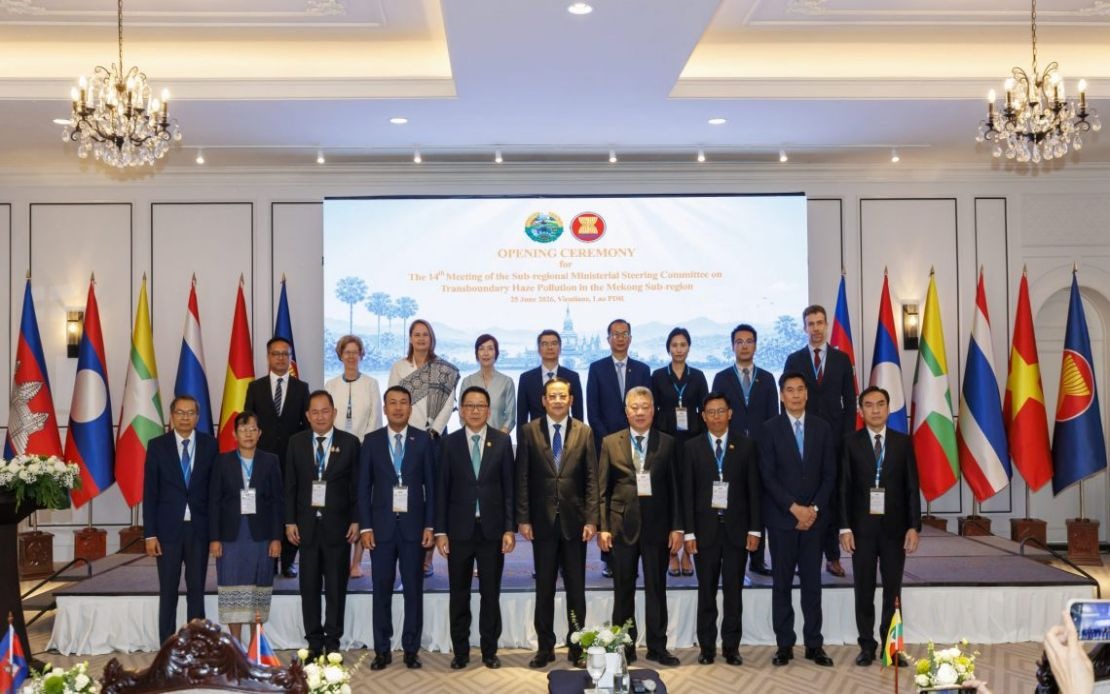
Governments across the Mekong region are accelerating coordinated action to prevent a repeat of devastating transboundary haze episodes, as climbing temperatures and the prospect of a strong El Niño phenomenon create ideal conditions for widespread forest and peatland fires. At the 14th Meeting of the Sub-Regional Ministerial Steering Committee on Transboundary Haze Pollution held in Vientiane on June 25, ASEAN member states acknowledged the mounting crisis and pledged to reduce fire hotspots and control air pollution during the critical dry seasons ahead.
The warning signals are already visible across major urban centres. Bangkok is enduring oppressive heat conditions, whilst Ho Chi Minh City struggles with intense temperatures despite the monsoon season being underway. These anomalous weather patterns reflect the compounding effects of climate change layered atop cyclical El Niño systems, creating a dangerous convergence that meteorologists fear could intensify further. Weather scientists have cautioned that conditions may deteriorate into a potential Super El Niño event this year, a prospect that has alarmed regional policymakers tasked with protecting both livelihoods and public welfare.
Lao Prime Minister Sonexay Siphandone articulated the scale of the challenge at the Vientiane meeting, describing forest fires and transboundary air pollution as major existential threats to the subregion. The consequences extend far beyond visible smoke and reduced air quality. Ecosystems have suffered biodiversity losses, public health systems have strained under respiratory illness outbreaks, and economies across the Greater Mekong Subregion have absorbed significant financial damage from previous haze crises. The interconnected nature of the region means that fires ignited in one nation rapidly affect neighbouring countries, making unilateral action insufficient and rendering cross-border cooperation essential.
The statistical trajectory is concerning. Data presented at the Vientiane meeting revealed that fire hotspot counts between December 2025 and May 2026 increased by approximately eight percent compared to the equivalent period the previous year. This upward trend contradicts efforts to suppress fire activity and suggests that current prevention and enforcement mechanisms may be outpaced by environmental pressures and underlying risk factors. The rise occurs despite heightened regional awareness and previous commitments to haze mitigation, indicating that the challenge is intensifying beyond what existing protocols alone can manage.
Climate patterns are creating particularly hazardous conditions. The Lao Ministry of Agriculture and Environment has issued forecasts projecting temperatures in certain areas could climb to between 35 and 38 degrees Celsius during the rainy season—an unusually severe scenario. Rainfall patterns are anticipated to be erratic and insufficient, with extended dry spells interrupting the normally wet months and water levels declining across multiple regions. These conditions directly amplify fire ignition risk, whether from natural sources or anthropogenic causes such as agricultural clearing or negligence. Critically, water scarcity also undermines firefighting capabilities, rendering emergency response efforts less effective when fires do occur.
The agricultural and pastoral sectors face acute vulnerability. Prolonged dry spells combined with elevated temperatures jeopardise crop yields and livestock viability across the Mekong nations, threatening food security and rural livelihoods. Smallholder farmers, who constitute a substantial portion of the rural population across Laos, Thailand, Cambodia and Vietnam, lack the financial buffers to absorb major production losses. Water shortages threaten irrigation systems that many communities depend upon, creating cascading impacts through supply chains and local economies. The prospect of drought spreading across the region compounds these pressures, potentially displacing agricultural populations and destabilising rural communities.
For Malaysian observers, the Mekong haze phenomenon carries direct relevance. Transboundary air pollution from Southeast Asian sources has historically drifted across maritime boundaries, affecting Malaysia's air quality and public health particularly during peak burning seasons. Malaysia's geographic position means it remains vulnerable to haze episodes originating in the Mekong region, making regional cooperation not merely a neighbourly gesture but a matter of national interest. The success or failure of prevention efforts upstream directly influences air quality outcomes in Malaysia.
The regional response articulated in Vientiane reflects recognition that fragmented national approaches cannot adequately address a transnational phenomenon. By establishing coordinated protocols and shared commitments to hotspot reduction, the Mekong nations are attempting to create accountability mechanisms that transcend individual borders. However, implementation remains the critical challenge. Enforcement of fire prevention regulations, monitoring of agricultural burning practices, and rapid response capabilities require significant resource investment and political will, particularly in nations with limited budgetary capacity or competing development priorities.
The El Niño wildcard introduces unpredictability into planning efforts. If the anticipated Super El Niño materialises as meteorologists warn, the combined effect of cyclical climate oscillation and anthropogenic climate change could generate fire conditions exceeding anything the region has previously encountered. Historical precedent from past El Niño episodes demonstrates that such events can trigger catastrophic fire seasons across the region, sometimes burning for months and creating health emergencies that overwhelm medical systems. The prospect haunts regional planners and has evidently concentrated minds at the policy level.
Moving forward, the pledges announced in Vientiane require translation into concrete action. This demands enhanced funding for fire detection and suppression infrastructure, stronger cross-border intelligence sharing about fire risk areas, capacity building for emergency response personnel, and enforcement of regulations governing land clearing and agricultural practices. Many Mekong nations lack the technical resources to implement sophisticated monitoring systems independently, suggesting that regional cooperation mechanisms and potentially international technical assistance will prove essential. The stakes are substantial—the region's environmental health, economic vitality, and public welfare all hang in the balance.

