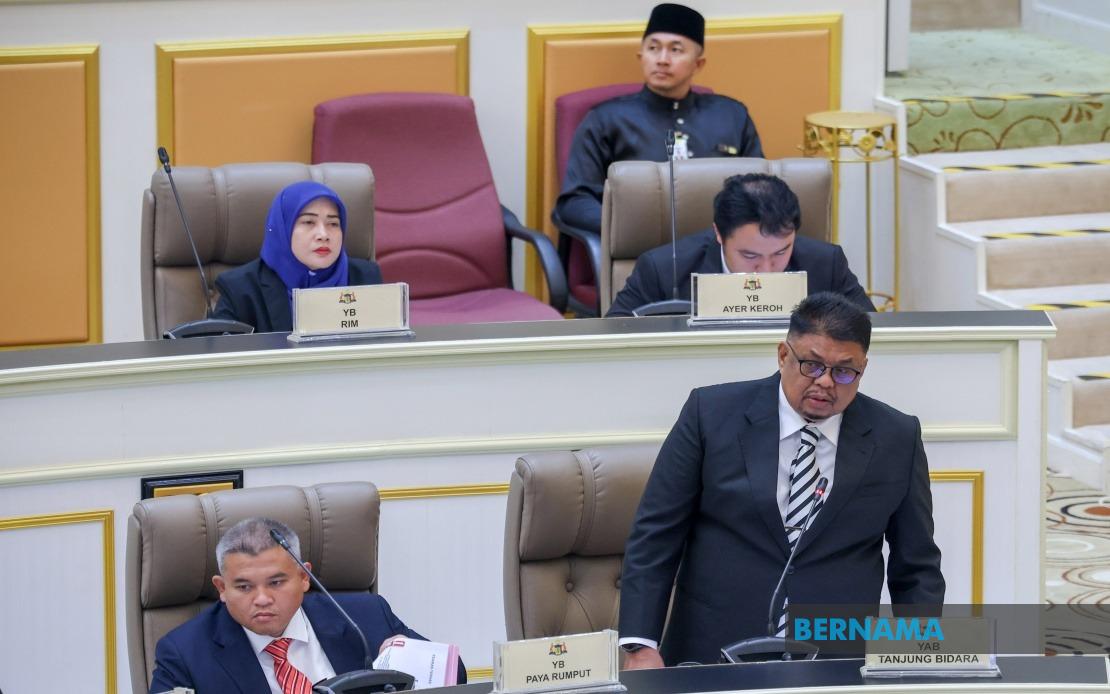
The Melaka State Legislative Assembly has taken a significant step toward broadening its parliamentary composition by approving a constitutional amendment that will permit the appointment of nominated members to the assembly. On July 14, lawmakers voted 23 to 5 in favour of the Melaka State Constitution (Amendment) Bill 2026, marking a watershed moment for the state's legislative framework. Chief Minister Datuk Seri Ab Rauf Yusoh championed the measure, with backing from Senior State Executive Councillor for Housing, Local Government, Drainage, Climate Change and Disaster Management Datuk Rais Yasin, reflecting broad cross-party consensus on the initiative's strategic value.
The constitutional change permits the appointment of up to seven individuals to sit as state assemblymen, a provision that represents a meaningful expansion of the assembly's membership and operational capacity. This mechanism mirrors practices at the federal level, where the Dewan Negara includes appointed members who bring specialized knowledge to legislative proceedings. For Malaysian governance observers, the move signals a growing acceptance of hybrid appointment models that complement electoral representation, particularly when designed to address representational gaps that traditional voting processes may not adequately fill.
Chief Minister Ab Rauf articulated a comprehensive rationale for the amendment, emphasizing that appointed members would be selected for their professional credentials and substantive expertise in critical domains including law, economics, education, investment, technology and state development. Rather than simply augmenting the assembly's size, the proposal positions nominated assemblymen as subject-matter specialists whose contributions during debates and policy deliberations could elevate the technical rigour of legislative scrutiny. This approach reflects an emerging recognition across Malaysian state governments that technical competence and sectoral knowledge—particularly in rapidly evolving fields such as technology and investment—warrant explicit institutional accommodation within legislative processes.
A significant dimension of the amendment concerns its potential to enhance representation of constituencies that face structural barriers to electoral success. The Chief Minister specifically highlighted that appointed seats could facilitate meaningful participation from women, young professionals, Orang Asli representatives, minority ethnic communities, and industry specialists whose talents might otherwise remain disconnected from state-level policymaking. In the Malaysian context, where certain demographic groups remain underrepresented in elected assemblies despite comprising substantial portions of the population, this targeted approach offers a pragmatic avenue for inclusion without requiring immediate electoral reform.
The mechanism also addresses concerns about the quality and depth of legislative debate in state assemblies. By introducing members selected primarily for technical acumen rather than political viability, the amendment could foster more objective examination of government proposals and administrative decisions. Appointed members, theoretically insulated from electoral pressures that might incentivize political positioning over substantive analysis, might contribute a more dispassionate evaluative lens to bills and policy initiatives. This dimension carries particular resonance for Southeast Asian democracies grappling with balancing representative legitimacy against institutional effectiveness.
During the assembly debate, the opposition acknowledged the amendment's potential merit, with Melaka Opposition Leader Dr Mohd Yadzil Yaakub endorsing the Bill contingent upon transparent implementation mechanisms grounded in public interest considerations. His invocation of the Dewan Negara model as a functional precedent—where appointed members have demonstrably contributed substantive input on constitutional and legislative matters—provided empirical grounding for the assembly's vote. This cross-partisan support, despite the five dissenting votes, suggests relative consensus that appointment-based representation, when properly structured, can serve complementary functions within Malaysia's federal democratic architecture.
The amendment fulfills a specific commitment from the Barisan Nasional coalition's 2021 Melaka state election manifesto, filed under Thrust 1 focusing on Political Stability and mature political practice. This pedigree indicates that the measure had been subject to electoral consultation and manifesto deliberation, lending democratic legitimacy to its implementation. For Malaysian voters and analysts, the translation of electoral pledges into legislative action—even if delayed by several years—demonstrates institutional follow-through on campaign undertakings, though the timing gap also reflects the procedural complexity of constitutional amendment in federalized systems.
The passage of this amendment positions Melaka as a potential institutional innovator within Malaysia's state governance landscape, though similar mechanisms exist in other jurisdictions. The practical implications remain contingent upon the quality of nomination procedures that ultimately govern selection of appointed assemblymen. Transparent, merit-based criteria emphasizing professional qualification rather than factional loyalty could substantially enhance the amendment's legitimacy and effectiveness. Conversely, if appointments devolve into patronage arrangements rewarding political connections, the institutional credibility of the appointed seats would diminish considerably.
For Southeast Asian governance scholars and regional policymakers, Melaka's innovation reflects broader tensions between representative democracy's inclusivity and expert-driven governance's efficiency. Many democracies across the region continue exploring mechanisms to incorporate specialized knowledge within legislative structures without sacrificing electoral accountability. This amendment provides a case study in how appointed representation can be integrated into existing frameworks, though its success ultimately depends upon implementation rigour and the political culture surrounding nomination decisions.
The amendment also carries broader implications for Malaysia's federal relationship between state and national governments. As states exercise constitutional flexibility to adapt their legislative compositions, such decisions create informational asymmetries and comparative governance models that may influence policy discussions at the federal level. Melaka's approach could inform discussions about enhancing legislative technical capacity elsewhere in the federation, particularly in states aspiring to more sophisticated economic development strategies requiring specialized expertise in their deliberative institutions.

