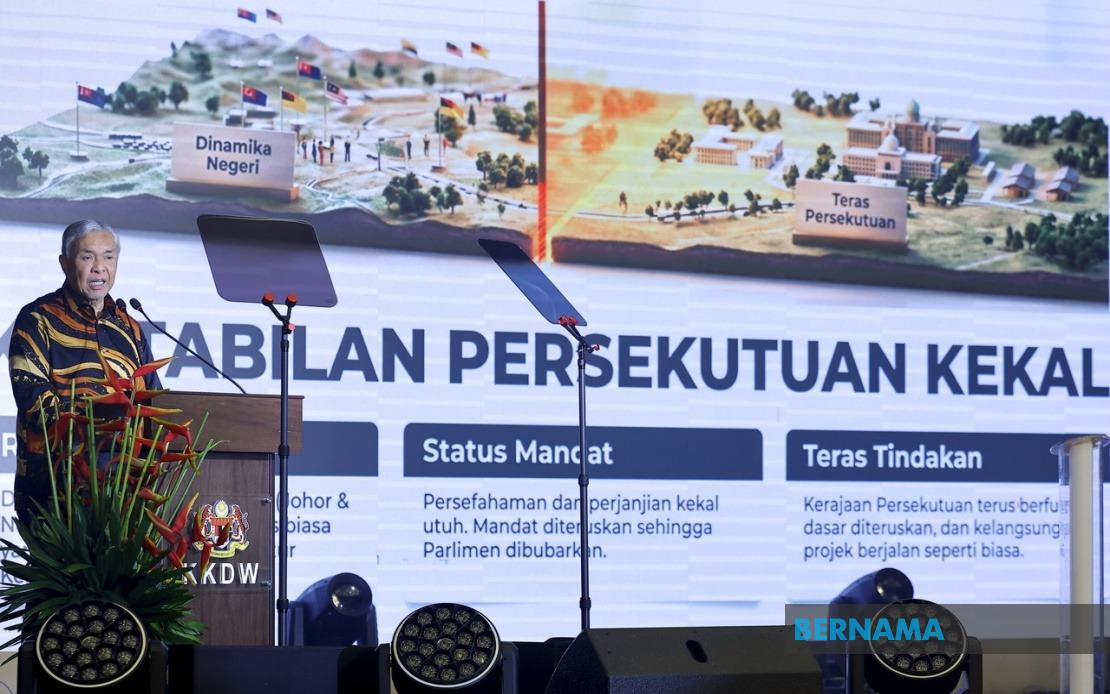
Melaka's Barisan Nasional coalition has declared its intention to contest and retain every one of the 21 state seats it presently commands in the forthcoming 16th state election, according to BN chairman Datuk Seri Dr Ahmad Zahid Hamidi. The announcement, made in Putrajaya on August 6, reflects the ruling coalition's confidence in its current standing in the southern state, where it has maintained a strong political grip through successive electoral cycles.
The ambitious defence strategy comes directly from Melaka Chief Minister Datuk Seri Ab Rauf Yusoh, who simultaneously holds the chairmanship of the state BN machinery. According to Ahmad Zahid, the chief minister personally conveyed this target during discussions between state and federal party leadership, demonstrating unified resolve within the coalition ahead of the electoral campaign. This unified messaging from both the state executive and federal party hierarchy suggests serious preparation and resource allocation for what could prove a gruelling contest across all constituencies.
For Malaysian political observers, such blanket-seat ambitions reflect a broader pattern among incumbent coalitions seeking to maximise electoral gains rather than consolidate existing strongholds. The psychology of contesting every seat differs markedly from defensive campaigning; it signals offensive intent and confidence in the party machinery's ability to mobilise voters and deliver results across diverse demographics and geographic areas. However, this strategy also carries inherent risks, as spreading resources thinly across all constituencies can sometimes leave particular battleground seats vulnerable to well-organised opposition challenges.
Yet Ahmad Zahid's statement revealed a crucial caveat to this seemingly rigid position: the BN remains fundamentally open to negotiating electoral pacts with other coalition partners or aligned parties, contingent upon approval from the central BN leadership. This flexibility reflects the complex realities of Malaysian coalition politics, where formal alliances and informal understandings frequently emerge during the pre-election phase. The chief minister himself has reportedly demonstrated openness to such discussions, suggesting that the "defend all 21 seats" target may represent an opening negotiating position rather than an immutable commitment.
The distinction between defending all seats and actually contesting all seats represents an important nuance in Malaysian electoral strategy. While BN intends to field candidates in every constituency, potential agreements with allies like BERSATU or independent candidates might involve seat-sharing arrangements, where one coalition partner cedes certain constituencies to another to avoid splitting the anti-opposition vote. Such arrangements have become increasingly common in recent electoral cycles as coalitions recognise the mathematical advantages of concentrated voter support in critical seats.
Melaka's political significance extends beyond its 21 seats and local governance implications. The state serves as a crucial testing ground for BN's broader national electoral strategy, offering valuable data about voter sentiment, campaign effectiveness, and opposition momentum before potentially larger contests. Recent state elections in Malaysia have demonstrated that incumbent advantage, while still meaningful, can be eroded by organised opposition campaigns and voter fatigue with long-ruling coalitions. The performance in Melaka could thus provide important signals about BN's preparedness for any future general election.
The decision to maintain such an aggressive electoral posture also reflects confidence in Ab Rauf Yusoh's leadership and popularity in Melaka. State chief ministers who command genuine grassroots support and delivery records can generate significant coattail effects, helping party candidates across their respective constituencies. Conversely, unpopular chief ministers can drag down even strong candidates in their own constituencies. By projecting confidence in defending all seats, BN simultaneously projects confidence in its leadership at state level, a crucial psychological element in electoral competition.
For opposition parties contesting Melaka, this announcement presents both challenges and opportunities. A coalition determined to defend every seat means well-funded, organised resistance across all 21 constituencies, requiring opposition parties to distribute their limited resources across an equally broad battlefield. However, it also means BN cannot concentrate overwhelming force in marginal or strategically important seats, potentially creating openings for opposition gains in specific areas where local issues resonate strongly or where incumbent representatives face particular vulnerabilities.
The central BN leadership's role as final arbiter in any coalition negotiations introduces another strategic layer. Federal BN headquarters maintains significant leverage over state-level decisions, particularly regarding candidate selection and electoral pacts. This hierarchical decision-making structure, while ensuring party discipline, sometimes creates tensions between state-level political realities and federal strategic calculations. Any coalition agreement reached at state level must clear the federal leadership's assessment of national political implications, a requirement that can either facilitate or complicate negotiations with potential partners.
The timing of this announcement also merits consideration. Pre-election statements by ruling coalitions typically serve multiple audiences simultaneously: demonstrating strength to supporters, warning opposition of a well-prepared machine, and signalling to potential coalition partners the party's confidence and negotiating position. By announcing the "defend all 21 seats" target before finalising any coalition agreements, BN signals that it negotiates from a position of strength rather than desperation, potentially influencing the terms of any subsequent arrangements.
As Melaka moves toward its state election, the trajectory of negotiations between BN and potential partners will reveal much about contemporary Malaysian coalition dynamics. Whether BN ultimately contests all 21 seats or enters strategic arrangements with allies will provide crucial insights into how Malaysia's ruling coalition balances electoral ambition with coalition pragmatism. The outcome in Melaka could establish precedents influencing seat-sharing discussions for subsequent state and federal elections, making this seemingly regional contest a significant indicator of national political trends.

