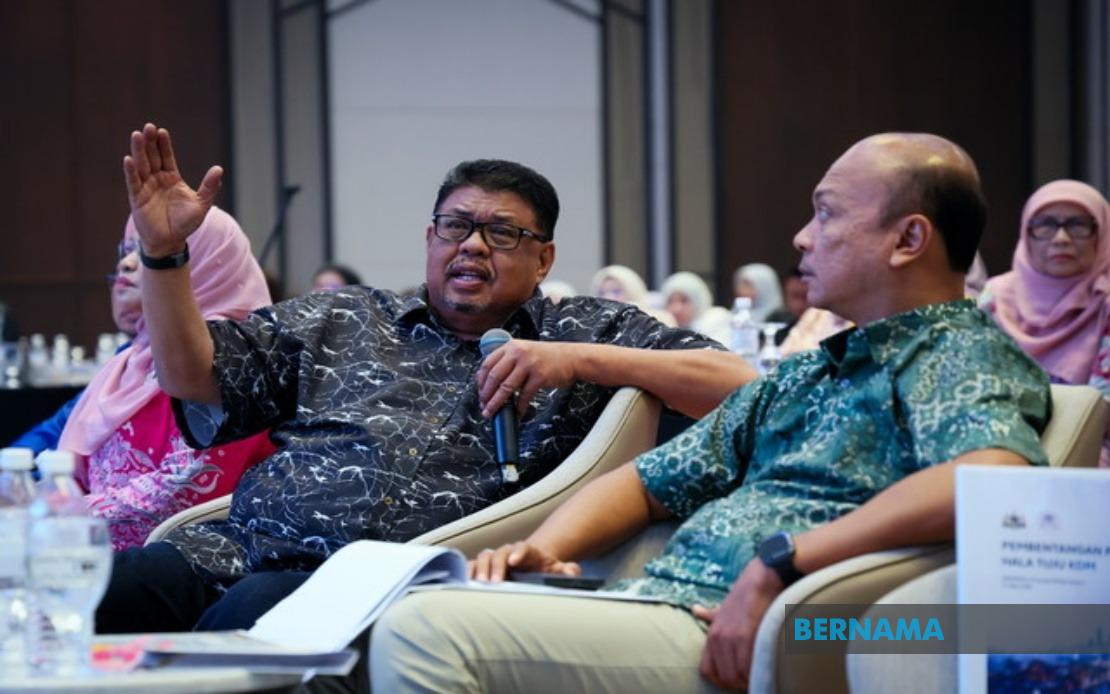
Melaka Barisan Nasional has drawn a clear line in the sand regarding its electoral ambitions, committing itself to defending the full complement of 21 State Legislative Assembly seats the coalition presently occupies. Datuk Seri Ab Rauf Yusoh, who serves as both Melaka BN chairman and the state's Chief Minister, articulated this position unequivocally during remarks made at the Melaka Digital Kampung Directional Alignment Workshop, emphasizing that the party views this target as fundamental to its negotiating stance with potential coalition partners.
The 21-seat threshold represents far more than mere aspiration for the BN machinery in Melaka. According to Ab Rauf, this figure functions as the essential foundation upon which any coalition discussions must rest, effectively establishing it as the price of entry for other political entities seeking to align with BN in the state contest. His phrasing—"we will not compromise on the 21 seats; that is our boundary for negotiations"—underscores the coalition's determination to protect its existing legislative foothold and suggests little flexibility in preliminary discussions with prospective partners.
The significance of this stance becomes apparent when contextualised within Melaka's recent political trajectory. The coalition achieved its 21-seat majority during the 15th state election, which resulted in BN forming the government while Pakatan Harapan secured five seats and Perikatan Nasional obtained two. This distribution means BN currently commands a decisive advantage in the 28-seat chamber, a position the party clearly intends to preserve and potentially strengthen. The political calculus in Malaysia's southern state thus hinges substantially on whether BN can maintain this grip on legislative power.
While Ab Rauf projected openness toward discussions with other parties, particularly responding to reports suggesting three PAS senior leaders might seek meetings with him this week, his welcoming rhetoric contained a significant caveat. He indicated that any substantive negotiations would require both reasonable justification and clearance from UMNO's Supreme Council, the apex decision-making body within the coalition's dominant component. This requirement ensures that no individual leader can unilaterally commit the party to arrangements without securing buy-in from the broader organisational hierarchy, a safeguard against unauthorised concessions.
The timing of these declarations carries particular weight given persistent speculation about the imminence of state assembly dissolution. When pressed on whether the legislature might be dissolved in September, Ab Rauf adopted a characteristically coy stance, indicating that dissolution could occur "at any time" without divulging specific intentions. His comment that he lacked "any inspiration about the date yet" and his playful reference to not wishing to spoil the "thrill" suggest calculated uncertainty—a common tactic employed by state leaders to maintain tactical surprise while managing opposition preparation and public expectations.
From a constitutional standpoint, the Chief Minister's flexibility on timing operates within clear parameters. The current Melaka state government's mandate expires on December 31, establishing the absolute deadline by which elections must be called. This five-month window—stretching from late August through year-end—theoretically permits the government to dissolve at any moment and still conduct polling within the constitutionally mandated period. September dissolution would indeed provide ample runway for electoral processes while potentially catching opposition forces mid-preparation during the year's final quarter.
The broader political context surrounding Melaka's upcoming contest extends beyond the state's borders, resonating throughout Malaysian politics. The success or failure of BN's 21-seat defence will signal the coalition's capacity to maintain provincial strongholds in an era when its national dominance has substantially eroded. For opposition blocs and emerging political forces, Melaka represents a potential opportunity to either chip away at BN's remaining power bases or, alternatively, provide a cautionary tale about the coalition's continuing resilience in certain constituencies.
The PAS overtures mentioned in reports reflect evolving coalitional dynamics within Malaysia's conservative political landscape. PAS's interest in discussing electoral arrangements with BN in Melaka suggests the party views potential seats within the state as achievable objectives, yet BN's unyielding position on its current 21 seats leaves limited room for territorial expansion by Islamic-aligned partners. This tension between PAS's apparent ambitions and BN's defensive posture will likely define the character of negotiations in coming weeks.
For Malaysian observers and regional analysts tracking domestic political developments, the Melaka situation encapsulates broader questions about coalition durability, seat-sharing arrangements, and the mechanics through which electoral pacts are negotiated across Malaysia's federal system. The state's relatively concentrated electorate and manageable 28-seat legislature make it a microcosm through which larger political trends can be examined. Whether BN ultimately succeeds in its ambition to retain all 21 seats while potentially accommodating allied partners will provide instructive lessons about the contemporary viability of grand coalitions in Malaysian governance.
Ultimately, Ab Rauf's unwavering commitment to defending Melaka's 21 seats represents a significant marker in the state's political calendar. The Chief Minister has positioned the BN coalition as a party fundamentally confident in its ability to mobilise support across these constituencies while simultaneously establishing clear boundaries for partnership negotiations. As the state moves toward what appears to be an inevitable electoral test before year's end, this stated position will shape the conduct of campaigning, the tenor of inter-party discussions, and potentially the configuration of Melaka's governing coalition for the next five years.

