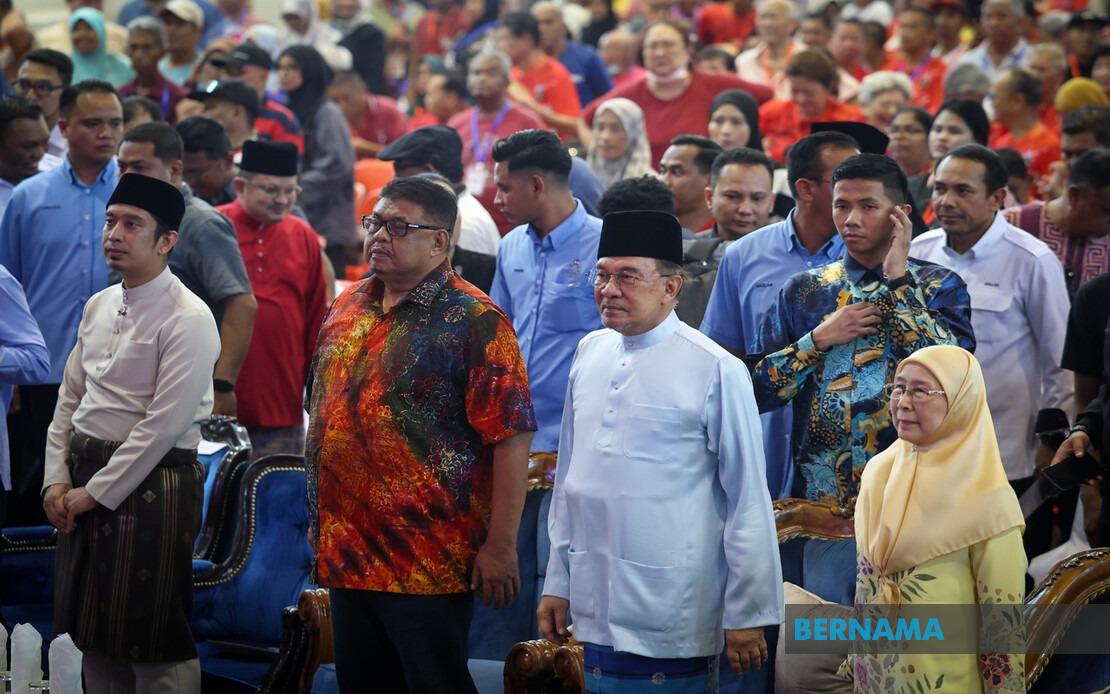
Melaka is positioning itself as a model for environmental stewardship in Malaysia through an integrated approach to landscape management that combines regulatory oversight, technological innovation, and community engagement. Chief Minister Datuk Seri Ab Rauf Yusoh outlined the state's multifaceted strategy during the National Landscape Day 2026 celebration, which drew close to 3,000 participants from across the country, signalling growing national interest in how local authorities are addressing environmental sustainability amid rapid urban development.
The foundation of Melaka's approach rests on the enforcement of the Tree Preservation Order under the Town and Country Planning Act 1976, a mechanism designed to protect significant trees that contribute to the state's ecological and heritage value. This regulatory framework represents a critical safeguard against indiscriminate tree removal during development projects, a persistent challenge across Malaysian cities where commercial pressures often override environmental considerations. By institutionalising protection for high-value trees, Melaka demonstrates how existing legislation can be effectively weaponised to serve conservation goals without necessarily requiring new legal structures.
The introduction of the Melaka State Landscape Guidelines in 2022 elevated this regulatory foundation by establishing systematic standards that guide implementation agencies, local authorities, developers, and other stakeholders in conducting landscape work that prioritises quality, sustainability, and distinctive character. These guidelines represent a departure from ad-hoc approaches to urban greening, instead creating a coherent vision that treats landscape development as a strategic component of broader urban planning rather than an afterthought or cosmetic addition to development projects.
Central to Melaka's innovation agenda is the MyTrees@Melaka system, a digital platform developed since 2017 that transforms tree management from manual record-keeping into systematic data-driven governance. With 70,753 tree inventory records compiled across the state's four local authorities and the Melaka Forestry Department, this system enables real-time monitoring, maintenance scheduling, and evidence-based decision-making regarding tree health, replacement cycles, and species diversity. The accumulation of such granular data creates unprecedented transparency about the state's green assets and allows officials to identify gaps in canopy coverage or species distribution that might otherwise remain invisible.
The practical outcome of these frameworks is visible in Melaka's planting achievements. As of June, the state government had successfully planted 10,588 trees throughout its municipalities, with each addition recorded within the MyTrees@Melaka system to ensure continuous monitoring and maintenance. This integration of tree planting data into the broader management ecosystem means that new plantings are not simply celebrations of environmental activity but become part of an ongoing accountability structure where survival rates, growth patterns, and contribution to ecosystem services can be tracked and optimised.
Beyond immediate greening efforts, Melaka is pursuing the Aspiring Melaka Geopark project, an initiative that positions geological heritage, biodiversity, cultural assets, and local identity as interconnected elements of a comprehensive tourism and education offering. This approach recognises that landscape preservation holds economic value when integrated into place-based tourism strategies, enabling communities to derive sustainable income from their natural and cultural heritage while simultaneously incentivising its protection. The geopark framework transforms conservation from a cost centre into a potential economic driver, particularly relevant for a state seeking to diversify its economy beyond traditional manufacturing and services.
The state's commitment to landscape development extends beyond preservation into active recreation and community benefit. Three major projects implemented in the past year—SDG Park @ Sungai Melaka, Kampung Felda Air Kangkung Recreation Park, and Taman Kejiranan Pulai Indah—represent efforts to create functional public spaces that integrate environmental features with community utility. The continuation of this trajectory through additional MADANI Recreational Park projects, including upgrades to Dataran Sejarah Ayer Keroh, Ayer Keroh Art Lanai, and Bukit Beringin Masjid Tanah, indicates sustained commitment to landscape as a vehicle for improving quality of life rather than merely enhancing aesthetic appeal.
AbRauf's articulation of landscape development as inseparable from progress reflects a philosophical shift in how state governments are approaching urbanisation. By emphasising that advancement cannot be measured solely through physical infrastructure but must encompass ecosystem preservation and enhanced quality of life, Melaka is challenging the assumption that development and environmental conservation exist in zero-sum opposition. This framing has particular relevance for Malaysian policymakers grappling with balancing growth imperatives against mounting environmental pressures and climate vulnerabilities.
The participation of twelve local authorities in the National Landscape Day celebration, each showcasing distinct landscape innovations and initiatives, suggests that Melaka's approach is resonating with other state governments and encouraging knowledge sharing across municipal boundaries. The exhibition of pavilions highlighting creativity and best practices creates horizontal learning opportunities where officials and professionals can benchmark their efforts against peers and identify transferable strategies applicable to their own jurisdictions.
For Southeast Asia more broadly, Melaka's systematic approach to landscape governance offers instructive lessons. Many regional cities struggle with integrating environmental management into planning and development processes, often treating green infrastructure as an afterthought rather than a foundational component of urban strategy. Melaka's combination of regulatory enforcement, digital management systems, community engagement, and economic incentives through nature-based tourism provides a replicable model that accommodates rapid urbanisation while maintaining environmental integrity.
The significance of Prime Minister Datuk Seri Anwar Ibrahim's participation in the National Landscape Day celebration, alongside Housing and Local Government Minister Nga Kor Ming, underscores federal government alignment with landscape-focused development. This political endorsement may facilitate scaling of Melaka's innovations to other states and embedding landscape considerations into national development frameworks and budgetary allocations.
Moving forward, the effectiveness of Melaka's approach will depend on sustained commitment to the systems and guidelines established, consistent funding for maintenance and expansion of initiatives, and willingness to enforce regulations against developers seeking shortcuts. The MyTrees@Melaka system and associated frameworks represent significant institutional investments that will generate value only if maintained and continually updated. Similarly, public parks and recreational landscapes require ongoing stewardship to prevent deterioration and maintain community engagement.
Melaka's trajectory in sustainable landscape development demonstrates that environmental stewardship and urban progress are not mutually exclusive when approached with systematic planning, technological support, and genuine commitment to quality over mere quantitative expansion. As Malaysian states compete to attract investment and talent, landscape quality and environmental sustainability increasingly function as competitive advantages, making Melaka's strategic positioning both environmentally responsible and economically prudent.

