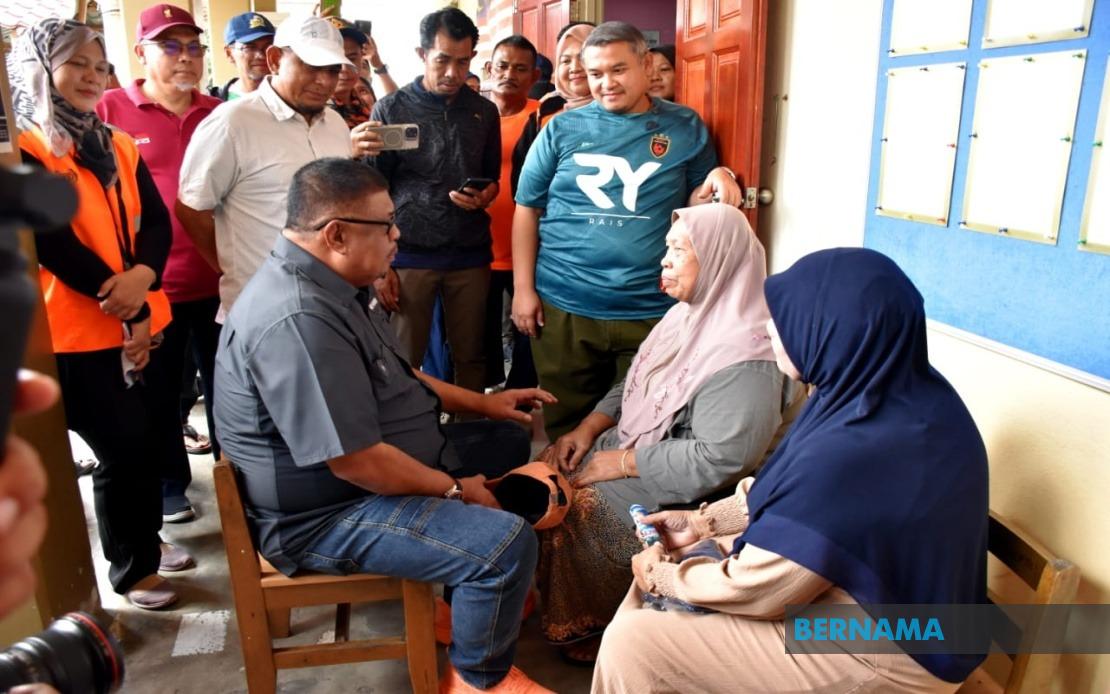
Melaka Chief Minister Datuk Seri Ab Rauf Yusoh has pledged to tackle the chronic flooding crisis afflicting Tanjung Minyak, a community that has endured inundation for more than three decades. The commitment came as the state government coordinated relief efforts for over 900 evacuees representing approximately 300 families sheltering across multiple relief centres throughout Melaka following unprecedented rainfall that struck the region in early July.
The Chief Minister's undertaking represents a significant political commitment to address infrastructure failures that have long tested the patience of Tanjung Minyak residents. During a visit to flood evacuees at Sekolah Kebangsaan Tanjung Minyak 2 temporary relief centre, Ab Rauf acknowledged the urgency of the situation and outlined plans to systematically evaluate all technical proposals and recommendations from relevant agencies. This comprehensive review process is intended to identify sustainable, long-term engineering solutions rather than applying temporary fixes that have characterized previous intervention attempts.
The scale of the recent flooding event underscores the vulnerability of the affected area to extreme weather conditions. Meteorological data revealed that exceptionally heavy rainfall exceeding levels normally recorded across a 20-year period triggered the overflow of water retention systems, transforming residential neighbourhoods into temporary water bodies. The Melaka Irrigation and Drainage Department director, Mohd Adnan Ahmad Fauzi, noted that cumulative rainfall surpassing 100 millimetres fell in both Melaka Tengah and Alor Gajah districts by 2.30 pm, readings that exceeded precipitation measurements during Tropical Storm Senyar in the previous year.
The severity of this incident reflects broader climate volatility affecting Peninsular Malaysia, where traditional drainage infrastructure designed decades ago increasingly struggles to accommodate intense rainfall events. For residents of Tanjung Minyak, the repetitive cycle of evacuation and recovery has become an unwelcome seasonal reality, with each major rainfall episode prompting emergency mobilizations and temporary displacement. The Chief Minister's recognition that excessive rainfall continues to trigger flooding indicates acknowledgment that the region's hydrological challenges require sophisticated remedial engineering rather than routine maintenance.
Ab Rauf emphasized that the state government will prioritize determining the most effective approach to resolving a problem that has persisted largely unaddressed for more than three decades. His commitment to giving detailed consideration to methods and suggestions from relevant technical agencies suggests a multi-disciplinary approach involving hydraulic engineers, urban planners, and drainage specialists. This represents a departure from previous approaches that may have treated the flooding issue as a localized drainage problem rather than a systemic infrastructure deficiency requiring comprehensive redesign.
The welfare of displaced residents has been established as an immediate priority, with the District Office coordinating immediate assistance and the state government channelling support through established welfare frameworks. The Melaka Social Welfare Department, represented by director Halyjah Muhamad during the Chief Minister's visit, is monitoring conditions at multiple relief centres to ensure evacuees receive adequate provisions and accommodation until floodwaters recede and residents can safely return to their homes. State Senior Housing, Local Government, Drainage, Climate Change and Disaster Management Committee chairman Datuk Rais Yasin's participation in relief coordination reflects the high-level government attention the situation commands.
The involvement of multiple state agencies signals that addressing Tanjung Minyak's flooding challenges will require integrated action across drainage management, housing and local government coordination, and disaster risk reduction frameworks. This institutional mobilization suggests recognition that flooding in residential areas represents not merely an engineering problem but a multifaceted governance challenge spanning physical infrastructure, emergency response protocols, and long-term community resilience planning. The elevation of the issue to committee level indicates that solutions will likely involve coordinating actions across several government departments rather than concentrating responsibility within a single agency.
For Malaysian readers following development in Melaka, the Chief Minister's pledge carries implications for broader state infrastructure investment priorities. Resolving Tanjung Minyak's persistent flooding would require substantial capital expenditure on redesigned drainage systems, potentially including enlarged storm water channels, upgraded pumping stations, or retention basin reconstruction. Such investments must be balanced against competing infrastructure priorities across education, healthcare, and transportation sectors, creating budgetary pressures that require careful fiscal management.
The incident also highlights how climate variability is increasingly testing the adequacy of infrastructure systems built to historical rainfall standards. As extreme weather events become more frequent across Southeast Asia, Malaysian municipalities face mounting pressure to retrofit aging drainage systems and water management infrastructure designed for twentieth-century precipitation patterns. Tanjung Minyak's three-decade flooding history exemplifies how deferred infrastructure investment can accumulate into chronic community hardship, making decisive action both economically and socially imperative.
The Chief Minister's statement that all relevant agencies have been placed on high alert ensures that response protocols are activated immediately when future rainfall events threaten the region. This operational readiness framework provides essential emergency management capability, though it addresses symptom management rather than root cause resolution. The distinction between rapid emergency response and permanent infrastructure solutions defines the political and technical challenge confronting Melaka's state government: immediate humanitarian obligations must be fulfilled while longer-term engineering interventions are designed and implemented.
Moving forward, the Melaka state government faces the technical and financial challenge of designing drainage solutions capable of accommodating the rainfall intensities now evidenced by recent meteorological events. Whether this involves constructing larger storm water detention facilities, enhancing pump station capacity, or fundamentally redesigning the area's flood management infrastructure remains to be determined through the review process the Chief Minister has initiated. The commitment to evaluate all available options suggests openness to innovative approaches, though the extended timeframe already associated with Tanjung Minyak's flooding problem indicates that implementation will likely require sustained political will and substantial public investment over several years.

