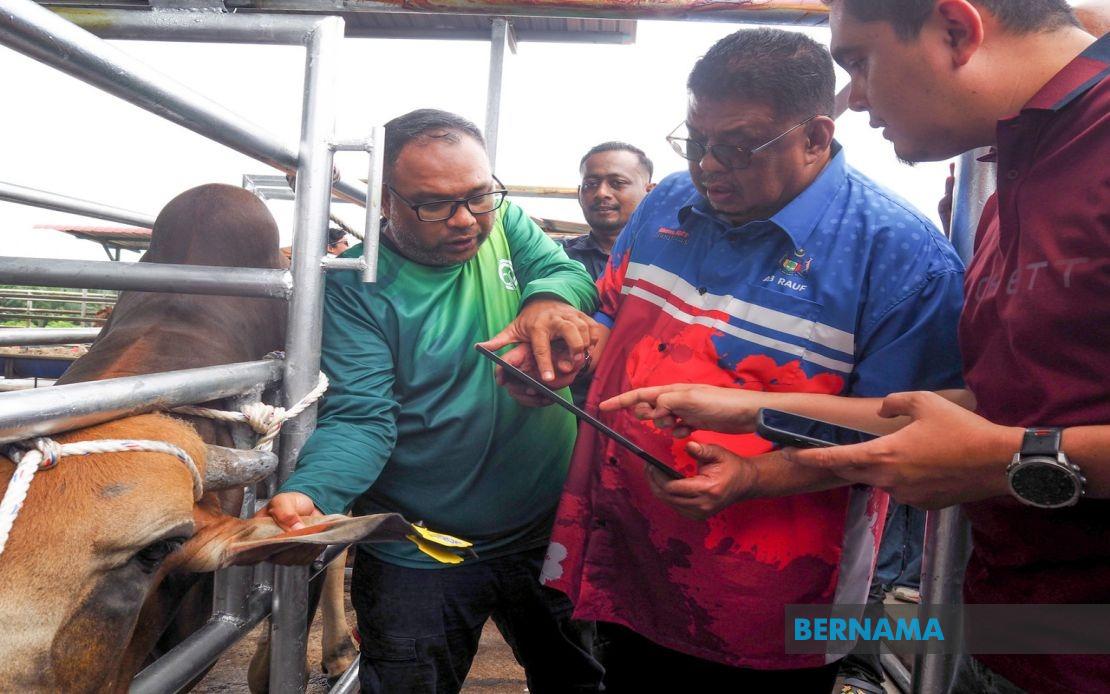
Melaka's state government has embraced digital innovation to address a mounting public safety problem by introducing a Livestock QR Tag system designed to streamline animal monitoring and swiftly identify owners when livestock-related incidents occur. The scheme represents a significant shift toward technology-driven governance in the agricultural sector, marking an effort to bring livestock management into the digital age across the peninsula's smallest state.
Spearheaded by the Melaka Chief Minister Department and executed in partnership with the Melaka Veterinary Services Department, the initiative emerged from a directive by Chief Minister Datuk Seri Ab Rauf Yusoh and forms part of the broader state digitalisation agenda. According to Mahathir Mustafa, chief assistant secretary of the Local Government Unit, the system transcends simple identification by fostering greater accountability among farmers and creating a systematic, efficient framework for managing the state's livestock population in line with aspirations to position Melaka as a technologically advanced and livable state.
The mechanics of the system are straightforward yet powerful. Each registered livestock animal receives a physical tag embedded with a unique QR code and identification number. When scanned with a smartphone, the code instantly provides access to essential farming information, enabling authorities and concerned parties to determine ownership and locate responsible individuals with minimal delay. This direct digital linkage eliminates the time-consuming investigative processes that previously hampered official responses to livestock-related complaints and accidents.
Rollout progress has been modest but deliberate. As of early June, approximately 2,000 head of cattle and buffalo had received the tags, representing only a fraction of Melaka's registered livestock population estimated at over 32,000 animals. The state government intends to expand implementation incrementally across all registered cattle and buffalo herds, establishing a comprehensive tracking network that would ultimately cover the entire commercial livestock base in the state.
The urgency behind this digitalisation initiative becomes evident when examining the severity of the stray livestock problem. Since 2023, Melaka recorded 835 accidents involving livestock and fielded more than 50 formal complaints concerning stray animals. These figures underscore a genuine public safety concern—uncontained animals pose genuine hazards to motorists, pedestrians, and community members. The QR Tag system offers authorities a mechanism to rapidly identify and contact owners when animals escape confinement, theoretically enabling faster recovery and reducing property damage and injury risks.
Beyond immediate incident response, the system addresses broader livestock management challenges. Movement monitoring becomes feasible through centralised data, disease surveillance and control efforts gain precision, and enforcement actions against negligent owners become substantially more viable. The permanent nature of the tags—they remain affixed to individual animals throughout their lives regardless of ownership changes—ensures continuity of identification and creates an auditable history of animal movements and care across the state.
Ownership transfer procedures have been streamlined within this framework. Rather than replacing tags, new owners need only update their information in the eVetPermit Malaysia system, maintaining accurate and contemporaneous ownership records without the expense and logistical burden of retag operations. This elegant design acknowledges the realities of the livestock trade while preserving the integrity of the identification system.
Farmer response has reportedly been positive, with breeders viewing the initiative as protective of their economic interests and beneficial to the livestock industry's reputation. This acceptance is crucial for successful implementation, as voluntary participation and widespread adoption depend substantially on stakeholder confidence. The state government's decision to subsidise tag installation has clearly incentivised participation during the launch phase.
To encourage uptake and overcome initial resistance, Melaka will absorb the RM6.50 installation cost per animal through the end of 2026. During this promotional window, farmers need only register their livestock with the Melaka Veterinary Services Department to receive tags at no charge. From 2027 onward, new installations or replacements will cost breeders RM5 per head, creating a modest ongoing cost that likely reflects administrative and material expenses while remaining financially accessible to most operations.
The collaborative framework supporting the system deserves attention. Close coordination among the Local Government Unit, Veterinary Services Department, and municipal authorities emerges as essential to smooth implementation and objective achievement. This horizontal integration across agencies mirrors best practices in digital governance implementation, where technical systems depend equally on institutional alignment and personnel training.
For Malaysian observers beyond Melaka, this initiative offers a replicable model for technology-enabled livestock governance. The approach addresses specific challenges—stray animals, ownership accountability, disease monitoring—that plague multiple states across the peninsula. The relatively modest cost structure and straightforward technology platform make expansion to other jurisdictions economically feasible and administratively manageable. As Melaka refines implementation and documents results, other states may examine the system's effectiveness and consider similar deployments.
The QR Tag system ultimately reflects a broader governmental commitment to expanding technology adoption across multiple economic sectors. Melaka's framing emphasizes efficiency, transparency, and service delivery improvements, positioning agricultural digitalisation as integral to modern state governance. Whether measured through reduced accident rates, faster owner identification, or improved disease surveillance outcomes, the initiative's success will likely shape perceptions of technology's role in addressing traditional agricultural challenges throughout Southeast Asia.

