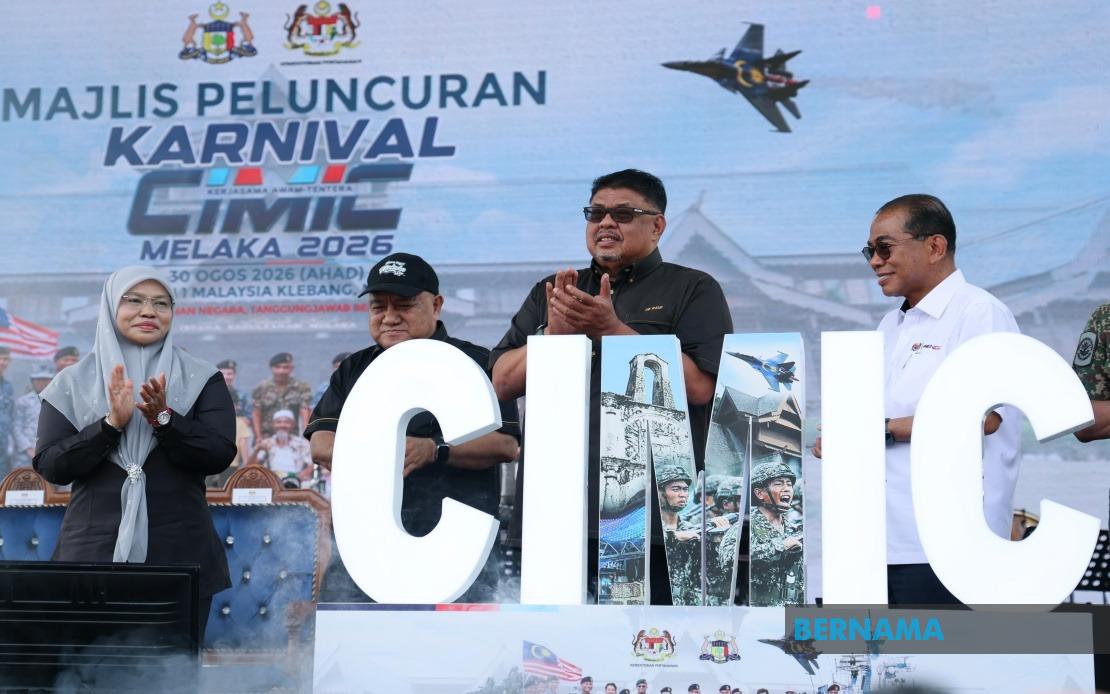
The Malaysian government is examining the feasibility of relocating the Langkawi International Maritime and Aerospace Exhibition (LIMA) to Melaka in coming years, Defence Minister Datuk Seri Mohamed Khaled Nordin revealed during a visit to the state. The proposal represents a strategic rethink of where one of Southeast Asia's premier defence and maritime showcases should be held, prompted by considerations of venue accessibility and regional development.
Mohamed Khaled outlined the geographical and logistical advantages that position Melaka as a credible alternative to the northern state. The Klebang area, he noted, offers proximity to both Batu Berendam Airport and established port facilities capable of berthing naval vessels—essential infrastructure for an exhibition that showcases maritime capabilities and aerospace technologies. The Defence Minister's observations were made during the launch of the Civil-Military Cooperation Carnival (CIMIC) at Dataran 1Malaysia in Klebang on August 30.
Central to the rationale for considering Melaka is the accessibility challenge that has long constrained LIMA's reach. When the exhibition remains anchored in Langkawi, the minister acknowledged, geographical remoteness deters many potential visitors from across Malaysia. Relocating to Melaka, situated in the peninsula's western corridor with better transportation links and proximity to the nation's economic heartland, would substantially lower barriers to attendance. This would enable broader public engagement with military technological advancements and strengthen awareness of Malaysia's defence capabilities across different states and demographic groups.
However, any relocation hinges on substantial capital investment to develop the necessary infrastructure. Mohamed Khaled emphasised that the government would need to commit significant resources to upgrade facilities in Melaka before the exhibition could be successfully accommodated. This caveat reflects the practical reality that hosting an international-standard biennial exhibition demands considerable preparation, including venue improvements, security infrastructure, accommodation logistics, and transportation systems capable of managing large-scale attendance.
Melaka's Chief Minister Datuk Seri Ab Rauf Yusoh expressed the state government's preparedness to shoulder the hosting responsibilities while flagging the need for comprehensive assessment. Ab Rauf outlined a measured approach, indicating that local authorities must first evaluate their capacity to deliver an exhibition of LIMA's stature and analyse the tangible benefits that would accrue to both the state and federal government. He suggested that such evaluations would inform discussions at the federal level regarding the viability and mutual advantages of the relocation proposal.
The prospect of hosting LIMA reflects broader thinking about how Melaka can leverage its existing assets and strategic positioning. Beyond its historical significance as a UNESCO World Heritage Site and maritime heritage destination, the state possesses genuine transportation and port infrastructure that provides practical advantages for logistics-intensive events. The presence of active naval and commercial facilities creates natural synergies with an exhibition focused on maritime and aerospace sectors.
This initiative drew inspiration from Melaka's participation in national defence exercises and celebrations. The deployment of six Royal Malaysian Navy (RMN) vessels to the state during this year's National Day festivities demonstrated both the capacity of local infrastructure to accommodate naval assets and the potential for defence-related activities to integrate meaningfully with civilian-focused celebrations. Such demonstrations serve as proof-of-concept for larger-scale military exhibitions.
For Malaysia's wider defence and aerospace industries, the relocation would carry significant implications. Melaka's location offers enhanced opportunities for domestic suppliers, contractors, and technology companies to engage with international participants and buyers. The improved accessibility could increase regional and international attendance compared to Langkawi's isolated position, thereby amplifying networking opportunities and commercial exposure for Malaysian defence technology sectors.
The CIMIC carnival itself underscored the government's emphasis on strengthening civil-military relations and public understanding of armed forces capabilities. Running from August 29 to 31, the event functioned as a platform for the Malaysian Armed Forces (MAF) to communicate their mission and technological advancements to civilian audiences. Such engagement initiatives complement the broader strategic objective of increasing public awareness regarding Malaysia's defence posture and military modernisation efforts.
The proposal also reflects evolving considerations about Langkawi's continued suitability as a permanent exhibition host. While the northern island has hosted LIMA for decades and established infrastructure for the biennial event, changing circumstances—whether related to accessibility, capacity expansion, or strategic geographic distribution of major national events—may warrant reassessment. Melaka offers an opportunity to decentralise major national showcases beyond established venues and stimulate development in other regions.
For Southeast Asian defence observers, any relocation would potentially reshape the regional dynamics around this significant exhibition. Langkawi's traditional hosting role has created institutional and logistical patterns affecting international delegations' participation patterns. Repositioning LIMA in Melaka could alter attendance demographics, exhibitor participation patterns, and the exhibition's profile within regional defence circles, with implications extending beyond Malaysia to surrounding nations' military-industry connections.
Moving forward, both federal and state authorities must balance strategic ambitions against practical constraints. Investment requirements, timeline feasibility, and coordination between multiple government agencies will determine whether Melaka eventually hosts LIMA. The dialogue between Defence Ministry and Melaka's leadership suggests serious intent to explore the possibility, though transformation from concept to implementation remains contingent on resource availability and political consensus on prioritising this relocation among competing infrastructure and defence investment demands.

