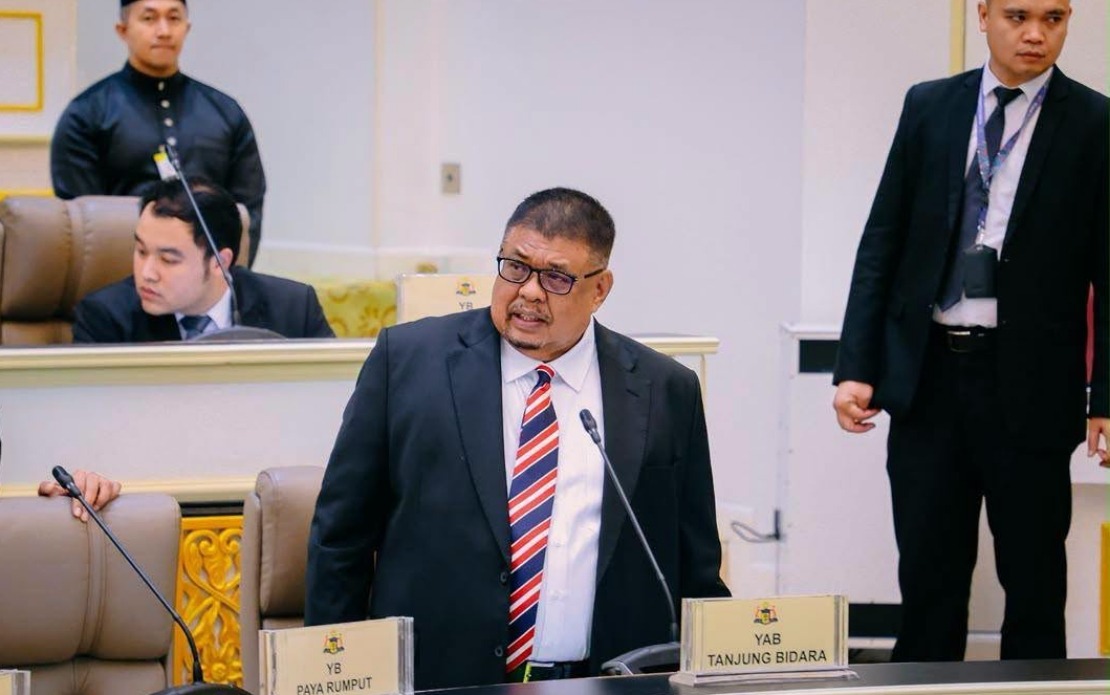
Melaka's Chief Minister Datuk Seri Ab Rauf Yusoh has moved quickly to stabilize confidence in the state administration following the Democratic Action Party's abrupt departure from the governing coalition. At a press conference held at the Seri Negeri Complex in Ayer Keroh, he delivered a message of continuity aimed at reassuring the public, civil servants, the business community, and potential investors that state operations would proceed without disruption despite the significant political realignment.
The DAP's decision to withdraw represents a substantial shift in Melaka's political landscape. Four state assemblymen from the party—Allex Seah Shoo Chin representing Kesidang, Low Chee Leong from Kota Laksamana, Leng Chau Yen of Banda Hilir, and Kerk Chee Yee from Ayer Keroh—submitted their resignations immediately following a State Legislative Assembly vote to amend the state constitution. The amendment permits the appointment of additional assemblymen, a development that triggered the DAP's exit from the administration it had been part of since the previous election cycle.
Ab Rauf emphasized that the departure would not impede the delivery of services, infrastructure development, or administrative functions that Melaka residents depend upon. His public posture reflects a deliberate strategy to prevent the political transition from becoming a focal point of uncertainty that might deter investment or create bureaucratic friction. By speaking directly to multiple stakeholder groups—including those in government, business, and civil administration—the Chief Minister sought to maintain confidence in institutional stability during what could otherwise appear as a destabilizing moment.
Notably, the Chief Minister adopted a measured tone regarding the DAP's departure, declining to criticize the party's decision or to prolong what he characterized as unhelpful political recrimination. He stated that different political organizations retain the right to make decisions according to their own principles, and that disagreement about governance approaches need not translate into adversarial relations. This language suggests a desire to preserve the possibility of future cooperation on specific state matters affecting Melaka's citizens, even as the formal coalition partnership has ended.
Regarding the vacant executive council position left by the DAP's withdrawal, Ab Rauf announced that no immediate appointment would be made. Instead, the responsibilities previously held by the departing representative would be distributed among existing administrative members. This approach avoids introducing new political complications while the state government adjusts to its altered composition. The distribution of duties among current officials also signals that governance capacity remains intact and that the loss of one or more cabinet positions does not render the administration unable to function.
The timing of the DAP's exit followed Prime Minister Datuk Seri Anwar Ibrahim's public request that the party reconsider its position, with the Prime Minister emphasizing the importance of maintaining focus on development and public welfare rather than internal political disputes. However, the DAP proceeded with its resignation announcement after holding its own press conference, submitting formal letters of resignation that, according to Ab Rauf, precluded any possibility of negotiation or reversal. This sequence of events underscores the finality of the party's decision and suggests that ongoing dialogue between Kuala Lumpur and the DAP's leadership did not yield a resolution.
The Chief Minister's commitment to maintaining strong relations with the federal government carries particular significance for Melaka's development agenda. State governments in Malaysia depend substantially on federal cooperation for major infrastructure projects, funding allocations, and policy coordination. By publicly reaffirming his intention to preserve productive relations with Putrajaya despite the DAP's departure, Ab Rauf positioned the state government to continue accessing support mechanisms that might otherwise be affected by political shifts.
For Malaysian observers, the Melaka situation illustrates the ongoing complexity of coalition governance in the country's state assemblies. The amendment that triggered the DAP's departure—relating to appointed assemblymen—touches on fundamental questions about representation and the composition of legislative bodies. The fact that such constitutional changes can provoke the sudden withdrawal of coalition partners indicates the fragility of multi-party arrangements that lack strong institutional or ideological cohesion.
The incident also demonstrates how state-level political developments can quickly attract federal-level attention and intervention. The Prime Minister's public appeal to the DAP reflected an understanding that political stability in any state carries implications for national governance and economic sentiment. However, the failure to persuade the DAP to maintain its participation suggests limits to the federal government's leverage in state-level coalition negotiations.
Moving forward, Melaka's government will operate with a narrower coalition base than before. How the Chief Minister manages this reduced parliamentary support may determine whether the state can maintain policy momentum on significant development initiatives or whether legislative deadlock emerges on contentious issues. The distribution of vacant cabinet duties among existing officials will test the capacity of the remaining administrative structure and may require more intensive coordination among remaining coalition partners.
The DAP's departure also raises questions about the stability of similar coalition arrangements in other Malaysian states. If parties become willing to withdraw over constitutional or procedural disagreements, this could introduce greater unpredictability into state governance and potentially trigger frequent reshuffles in coalition composition. The precedent set in Melaka may inform calculations by coalition partners elsewhere regarding the costs and benefits of remaining in formal partnership arrangements.

