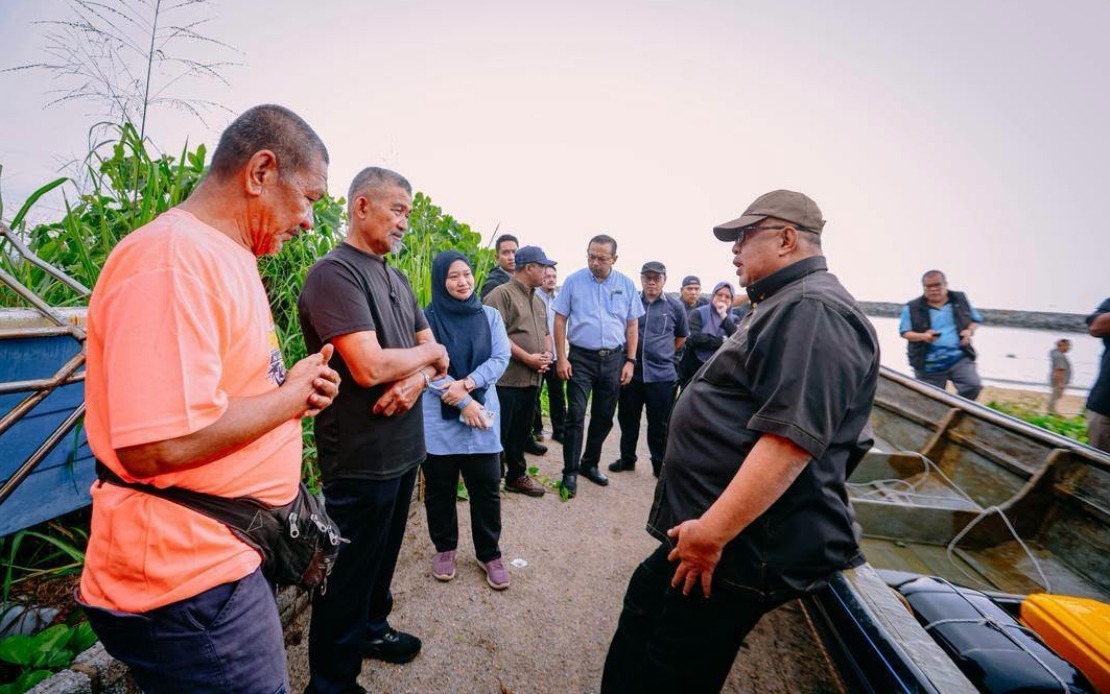
Melaka Chief Minister Datuk Seri Ab Rauf Yusoh has moved decisively to address longstanding infrastructure and environmental concerns affecting fishermen in Pasir Gembur, Tanjung Bidara, directing the Public Works Department (JKR) and Drainage and Irrigation Department (DID) to implement immediate remedial measures. The announcement follows a direct visit to the coastal settlement where Ab Rauf surveyed the developing fishermen's complex and engaged with local stakeholders to understand their pressing difficulties.
The problems confronting the fishing community at Pasir Gembur reflect broader challenges facing Malaysia's coastal communities as they navigate competing pressures between economic development, environmental protection, and livelihood preservation. Fishing communities throughout the region increasingly struggle with inadequate infrastructure, marine access complications, and vulnerability to tidal and weather-related disruptions. For a state like Melaka with significant maritime heritage and ongoing economic dependence on fisheries, these issues carry both practical and symbolic weight.
Central to the state government's response is a multi-agency coordination framework designed to tackle discrete but interconnected problems. DID has been assigned responsibility for conducting a feasibility assessment regarding channel deepening between Pasir Gembur and Batu Tenggek, which would improve navigational access for fishing vessels and reduce operational constraints during varying tidal conditions. This technical evaluation represents the first stage in addressing a chronic friction point for local fishermen whose livelihoods depend on efficient maritime movement.
Simultaneously, JKR has been tasked with identifying and preparing an alternative location for the fishermen's complex that would mitigate recurring seawater intrusion and flooding hazards during high tide periods. The existing site's vulnerability to tidal effects represents a significant challenge for facility planning and operational continuity. Relocation of the complex to a more strategically positioned area could substantially reduce infrastructure damage, maintenance costs, and disruptions to fishing operations that presently characterize the community's experience.
Governance frameworks surrounding coastal development have been tightened through new restrictions on private construction within the coastal wave-breaker zone. Ab Rauf's directive prohibits additional private structures in this sensitive area, addressing concerns about unauthorised development that may have compromised environmental resilience and navigation corridors. Existing and future structures within the coastal reserve must now obtain Temporary Occupation Licences (TOL) from the Land Administrator and secure clearance from relevant technical departments, establishing clearer regulatory oversight.
The decision to implement this licensing regime responds to a pattern observed across Malaysian coastal regions where inadequate permitting procedures and insufficient inter-agency coordination have permitted encroachment into sensitive marine zones. This creates cascading problems including compromised navigation, reduced wave protection, and increased flooding vulnerability for settled communities and fishing operations. Melaka's new requirement establishes accountability mechanisms that should prevent further deterioration of these critical ecological buffers.
Ab Rauf's characterisation of the site visit as substantive engagement rather than ceremonial gesturing reflects a growing emphasis among Malaysian political leadership on demonstrating responsive governance through direct community contact. The Chief Minister's decision to conduct consultations with residents and fishing operators alongside agency representatives ensured that bureaucratic solutions would be grounded in lived experience and practical community knowledge. This consultative approach, while commonplace in established democracies, still carries significance within Malaysian governance contexts where top-down decision-making has traditionally dominated.
The coordination meeting bringing together Alor Gajah Municipal Council and various state agencies represents the type of horizontal administrative collaboration that developmental challenges increasingly demand. Fishing community concerns cannot be resolved through isolated departmental action; they require integrated approaches spanning infrastructure development, environmental management, regulatory oversight, and land administration. The documented commitment to such inter-agency cooperation suggests institutional learning regarding complexity management in coastal governance.
For Malaysian fishers navigating an increasingly constrained operating environment marked by resource pressures, climate variability, and infrastructure limitations, state-level interventions addressing access, facilities, and environmental protection signal recognition of their continuing economic and social importance. Melaka's fishing sector, while diminished from historical significance, remains culturally embedded and economically consequential for particular communities and represents the type of traditional livelihood that policymakers increasingly emphasise within narratives of inclusive development.
The state's commitment to resolving these challenges carries implications extending beyond Pasir Gembur. As Malaysian states confront mounting pressures from urbanisation, industrialisation, and climate impacts, the mechanisms and governance approaches applied to coastal fishing communities provide templates for broader developmental challenges. Whether Melaka's coordinated inter-agency approach produces sustained benefits or remains a discrete intervention will illuminate the state's capacity for managing complex, multi-sectoral community concerns.
The announcement also reflects electoral considerations within Melaka's competitive political environment, where demonstrating tangible delivery to distinct communities remains consequential for political sustainability. However, the substantive nature of the proposed interventions—channel deepening studies, facility relocation planning, and regulatory framework establishment—suggests commitments extending beyond symbolic gestures. Implementation and outcome monitoring will ultimately determine whether Ab Rauf's pledge of decisive action translates into material improvements for Pasir Gembur's fishing community.

