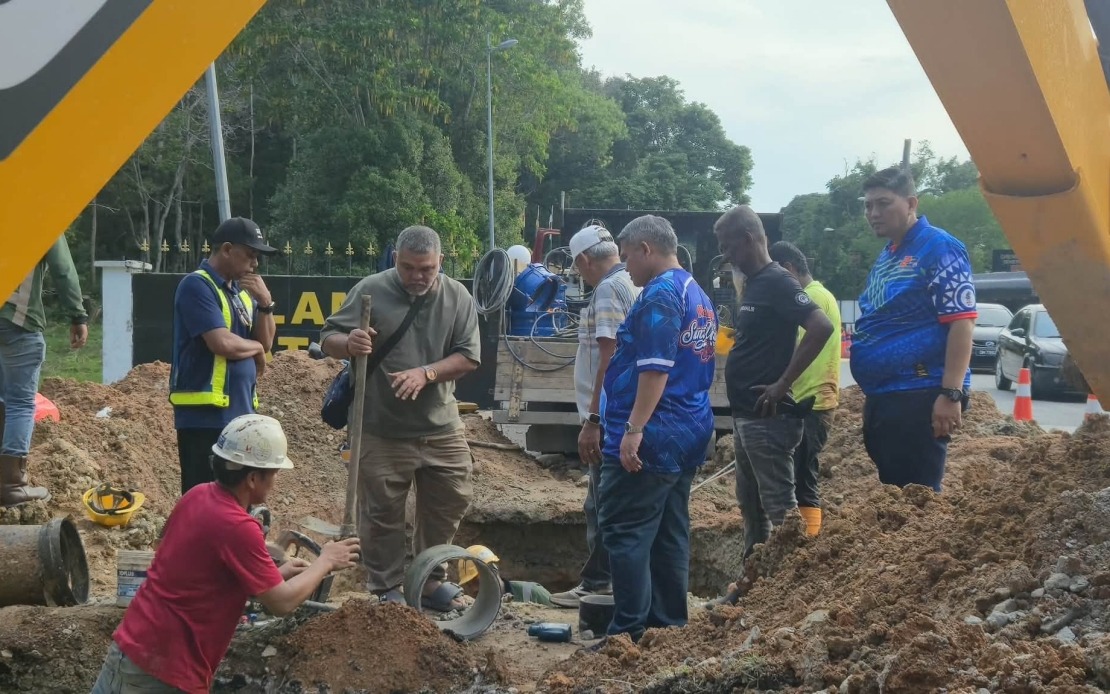
The Melaka state government has unveiled plans for a temporary water storage facility at Kem Terendak in Sungai Udang as part of efforts to resolve persistent water shortages at the military installation. The initiative, announced by Housing, Local Government, Drainage, Climate Change and Disaster Management senior exco Datuk Rais Yasin, represents a bridging measure designed to provide immediate relief while longer-term infrastructure improvements proceed. The proposal underscores the strain that water supply interruptions have placed on military operations and residential quarters within the camp over recent weeks.
Datuk Rais Yasin, who also represents the Sungai Udang state assembly seat, acknowledged that implementation of the temporary tank hinges on obtaining clearance from the Ministry of Defence. The project falls technically under the jurisdiction of both the Public Works Department and Mindef, creating a coordination challenge that requires inter-agency cooperation. Despite these bureaucratic hurdles, the state government has signalled determination to move forward, framing the initiative as a concrete demonstration of commitment to supporting the military community and residents dependent on camp facilities. The involvement of Syarikat Air Melaka Berhad (SAMB), the state water authority, reflects a proactive stance in addressing infrastructure gaps.
The immediate crisis stemmed from a significant pipe rupture along Jalan Kampung Payasum in Sungai Udang, which disrupted supplies to approximately 2,000 military personnel, civilian households, and five educational institutions within the camp, including a MARA Junior Science College. Initial repair estimates suggested the break would be fixed by evening, though complete restoration of normal water pressure and flow was projected to require an additional one to two days. This five-day disruption illustrated the vulnerability of infrastructure serving the camp and highlighted cascading effects when major supply lines fail—affecting not just residential water needs but also educational programmes and military operational readiness.
In response to the acute shortage, SAMB mobilised an emergency water distribution programme deploying 25 tanker lorries delivering approximately 25,000 gallons daily. While commendable in scale, Datuk Rais acknowledged that this emergency supply fell short of actual demand among the affected population. The state authority also distributed water containers to schools within the camp to maintain educational continuity and essential services. These interim measures, though labour-intensive and costly, bought time for permanent repairs while emphasising the inadequacy of existing infrastructure to serve the camp's needs reliably.
The temporary tank proposal forms part of a broader, longer-term remediation strategy. SAMB and state authorities are pursuing a Development and Upgrade of the Water Reticulation System project specifically designed for Kem Terendak, with completion targeted for April 2028. This multi-year programme aims to modernise and expand the entire water distribution network serving the installation, addressing systemic vulnerabilities beyond the immediate pipe burst. The timeline, however, means residents and military personnel face continued exposure to service interruptions for nearly four years, making interim solutions essential for operational stability and quality of life.
The temporary tank represents a pragmatic response to this extended wait. Datuk Rais outlined plans to identify a suitable location within the camp for the facility, complementing mobile tanker deliveries to create a layered approach to supply security. Such hybrid strategies are increasingly common in Malaysian infrastructure management, where budget constraints and developmental timelines necessitate bridging solutions. The temporary facility would provide buffer storage, reducing dependency on continuous tanker runs and offering some resilience during distribution gaps or additional demand spikes.
The incident at Kem Terendak exemplifies broader water infrastructure challenges affecting military installations across Malaysia. Defence facilities often operate older, inherited infrastructure networks designed for smaller populations or different operational demands. Aging pipes, combined with increased personnel numbers and expanded educational facilities, create recurring vulnerability points. The Melaka camp situation is not isolated; similar pressures affect other military bases where infrastructure upgrades have lagged behind operational evolution. Regional commanders increasingly advocate for modernisation programmes, framing reliable water supply as essential to maintaining readiness and personnel welfare.
For Melaka state government, the situation also reflects the complexities of providing municipal-style services within federal military reservations. While SAMB maintains responsibility for water authority functions statewide, ultimate authority and land control rest with Mindef. This split jurisdiction can slow decision-making, as evidenced by the need for Defence Ministry approval before construction proceeds. The proposal process itself becomes a diplomatic exercise, with state officials framing assistance as collaborative support rather than assertion of authority. Such dynamics shape the pace and scope of infrastructure improvements across Malaysia's military estates.
Datuk Rais's public apology to affected camp residents underscores official recognition of service failures and the hardship imposed by prolonged disruptions. Military families living on base, unlike civilian residents with alternative access points, face particular vulnerability to supply interruptions. Schools and medical facilities within the camp also depend entirely on reliable water services. The acknowledgment of these impacts and the commitment to resolution help maintain public confidence in government capacity, even when infrastructure problems prove persistent. It also signals to military leadership that state authorities recognise the operational importance of the installation.
Looking ahead, the temporary tank proposal, pending Mindef approval, offers a concrete intermediate step between emergency tanker operations and the 2028 completion of permanent upgrades. If approved and implemented, it could substantially reduce operational burden and improve living conditions for thousands of camp residents. Success would also provide a model for addressing similar challenges at other military installations facing infrastructure constraints. The case demonstrates how state and federal authorities, despite jurisdictional complexities, can collaborate on practical solutions when political will aligns with technical need. For residents and military personnel currently enduring intermittent supply disruptions, the proposed measures signal that relief, while not immediate, remains actively pursued through multiple channels.

