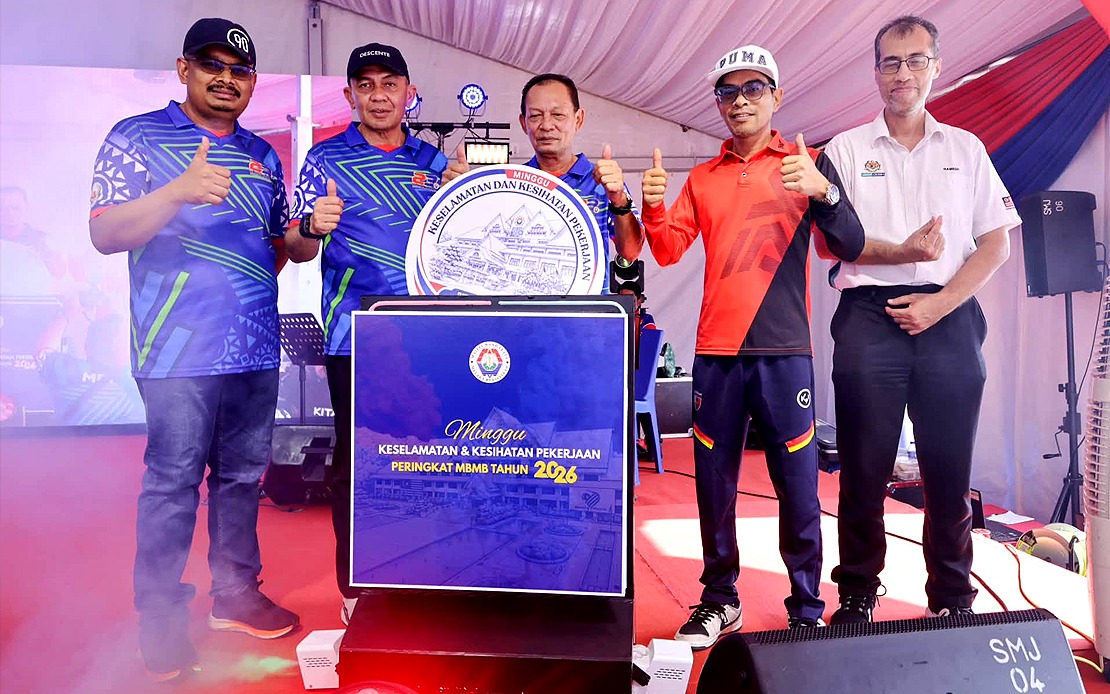
Melaka has recorded a concerning tally of 277 workplace accidents during the opening six months of 2026, with incidents spanning multiple economic sectors and resulting in both permanent and temporary disablement among workers. The state's Department of Occupational Safety and Health disclosed this figure whilst launching its annual safety awareness campaign, underscoring persistent workplace hazards even as regulatory oversight intensifies across the manufacturing and services landscape.
Three workers lost their lives in workplace incidents during the same period, with two deaths occurring within the construction industry and a single fatality in the manufacturing sector. The gravity of these outcomes prompted renewed emphasis on employer accountability and adherence to established safety protocols. Ramesh Zakir Shamsul, who heads the Melaka DOSH office, characterised the overall accident rate as comparatively contained, though this measured assessment masks underlying vulnerabilities within high-risk operations that continue to demand intensive supervision.
The disclosure came during ceremonies marking the state-level observance of the 2026 Occupational Safety and Health Week, an annual initiative designed to galvanise commitment to workplace protection standards. The event drew participation from senior state officials, including Datuk Zulkiflee Mohd Zin, who holds responsibility for housing and local government matters, alongside Melaka's municipal leadership. This convergence of administrative authority reflected the cross-institutional approach necessary for embedding safety culture throughout the urban and industrial landscape.
Under the framework of the Occupational Safety and Health Act 1994, all workplace incidents must be formally documented and subject to thorough examination by regulatory personnel. Ramesh Zakir underscored this statutory obligation, noting that employers bear primary responsibility for timely notification of accidents and cooperation with investigative processes. This legal architecture provides the foundation for identifying systemic failures and prescribing remedial measures, though enforcement effectiveness depends substantially on workplace compliance and worker vigilance in reporting hazards.
The construction sector's disproportionate representation in fatal outcomes—accounting for two of three deaths—reflects longstanding patterns observed across Malaysia and throughout Southeast Asia. High-altitude work, heavy machinery operation, and structural complexity create compounding risk factors that training and supervision alone cannot entirely eliminate. Manufacturing environments similarly present concentrated hazard exposure through repetitive processes, chemical handling, and equipment operation, areas where momentary inattention or inadequate safeguarding can precipitate serious injury or fatality.
Melaka's DOSH operates within a broader national framework coordinated from federal level, yet regional variations in industrial composition and regulatory capacity shape local outcomes. The state's economy, anchored significantly in tourism, light manufacturing, and construction-related services, generates distinct occupational health profiles compared to industrial concentrations elsewhere in Malaysia. Understanding these sector-specific vulnerabilities enables targeted intervention and resource allocation.
Ramesh Zakir emphasised that DOSH's role extends beyond reactive investigation to proactive partnership with employers and local authorities in fostering systemic improvements. The agency collaborates with municipal councils and business associations to deliver training workshops and educational seminars—termed ceramah in local parlance—that disseminate safety best practices and regulatory expectations. This cooperative model recognises that sustainable risk reduction emerges through shared commitment rather than enforcement alone, particularly given the diversity of workplace environments and employer sophistication across Melaka's economic base.
The Melaka Historic City Council's participation in safety promotion demonstrates how municipal governance can amplify regulatory messaging and embed occupational health considerations within local policy frameworks. By endorsing and facilitating DOSH initiatives, the council extends reach into smaller enterprises and informal operations that might otherwise escape systematic oversight. This multi-level engagement reflects international best practice in occupational health administration, wherein local government serves as crucial intermediary between national regulatory bodies and dispersed workplace communities.
Employer participation remains fundamental to accident prevention, as organisational cultures prioritising safety directly correlate with incident reduction. Ramesh Zakir's acknowledgment that employers bear responsibility for promoting safety awareness signals expectation that workplace leadership must translate regulatory compliance into tangible operational practices. This includes hazard assessment protocols, maintenance schedules, worker training programmes, and incident reporting systems that create organisational memory and facilitate continuous improvement.
For Malaysian businesses and workers, the Melaka figures provide a regional snapshot of occupational health challenges that mirror patterns documented in other states. The concentration of fatalities in construction and manufacturing sectors aligns with national injury surveillance data, suggesting that targeted interventions addressing these high-risk industries could yield meaningful reductions in preventable deaths. Enhanced pre-employment screening, competency certification, and equipment maintenance standards represent evidence-based approaches to risk mitigation.
The broader implications for Southeast Asia's rapid industrial expansion warrant attention, as workforce growth outpaces safety infrastructure development in numerous jurisdictions. Melaka's approach—combining regulatory enforcement with collaborative stakeholder engagement—offers a replicable model for neighbouring economies wrestling with similar occupational health challenges. Investment in local DOSH capacity, employer incentive programmes recognising safety excellence, and worker education initiatives demonstrate commitment to protecting human capital whilst sustaining economic competitiveness.
Looking forward, Melaka's occupational safety community faces the challenge of translating awareness campaigns into sustained behavioural change. The annual safety week provides a momentum point, yet preventing recurrence of the 277 accidents and three fatalities documented in 2026's first half requires institutional consistency, resource adequacy, and cultural evolution within workplaces. Whether current monitoring intensity and collaborative frameworks prove sufficient to reverse trajectory in construction and manufacturing sectors will emerge through H2 2026 reporting and comparative analysis with preceding years.

