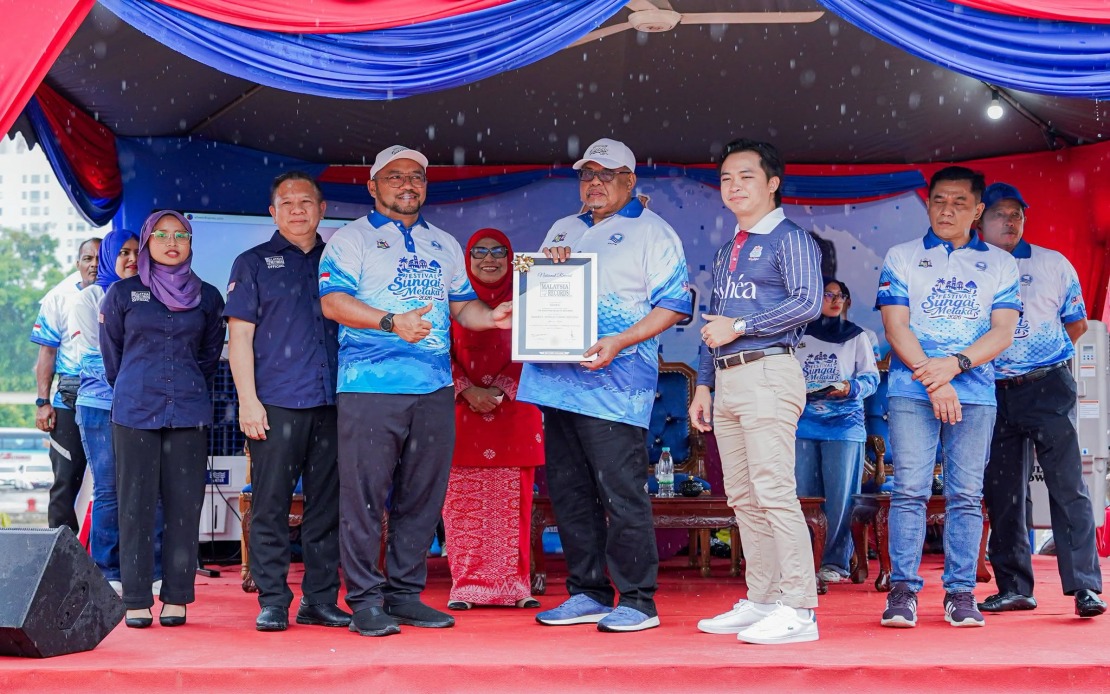
Melaka's tourism sector has secured its fourth Malaysia Book of Records (MBOR) recognition in just three years, signalling sustained momentum in the state's efforts to establish itself as a major regional destination. The latest title was officially presented at a ceremony held at Dataran Pengkalan Rama during the Sungai Melaka Festival 2026, underscoring how the state continues to translate creative initiatives into record-breaking achievements that draw both domestic and international attention.
Chief Minister Ab Rauf Yusoh emphasised that these accolades represent more than symbolic victories. Speaking at the event, he articulated a vision where recognition certificates serve as catalysts for tangible economic activity rather than mere wall decorations. His remarks reflect a pragmatic approach increasingly common among Southeast Asian regional leaders: leveraging record-setting achievements as springboards for sustainable tourism product development and revenue generation.
The string of four MBOR titles within 36 months demonstrates Melaka's deliberate strategy to differentiate itself within Malaysia's competitive tourism landscape. As a state already trading on its UNESCO-listed historic core and cultural heritage, pursuing record-breaking tourism initiatives allows Melaka to appeal to experience-seeking visitors who seek novelty alongside tradition. This dual positioning—preserving historical authenticity while fostering contemporary attractions—addresses a gap in regional tourism offerings increasingly valued by younger, more adventurous travellers.
The ceremony also highlighted the Sungai Melaka Festival's 17th iteration, which features more than 30 programmes distributed across all three of the state's districts. This decentralised approach to tourism activity differs markedly from the concentration-heavy model adopted by some Malaysian states. By spreading festivals and competitions across Melaka, Bukit Beruang, and Alor Gajah, the state government ensures that tourism revenues and visitor traffic reach beyond the crowded heritage zones of historic Melaka town, benefiting smaller communities and broadening the economic base.
Particularly noteworthy is the freshwater fishing competition integrated into this year's festival, which attracted 1,123 anglers from both within and beyond Melaka's borders. The competition distributed RM30,000 in prize money, with the top winner receiving RM10,000—a purse substantial enough to draw serious competitors and create media interest. Chief Minister Yusoh's observation that this turnout signals a dedicated fishing community speaks to an underexploited tourism niche in Malaysia's overall strategy. While fishing tourism is well established in countries like Thailand and Indonesia, Malaysian destinations have relatively underinvested in freshwater angling experiences and competitions as standalone attractions.
The Chief Minister's public commitment to elevate the fishing competition into a larger-scale tourism product carries implications beyond Melaka itself. If successfully developed, a flagship fishing tournament could establish a new category of sports tourism in Malaysia—one that caters to enthusiasts willing to travel domestically and extend their stays. Such events generate secondary spending across accommodation, food services, and entertainment sectors while requiring modest infrastructure investment compared to other tourism projects.
The involvement of the Melaka River and Beach Development Corporation (PPSPM), represented by chief executive officer Shaharul Azuar Idris, indicates institutional coordination between state government bodies and development agencies. This structural alignment is crucial for translating festival successes into permanent tourism infrastructure and programming. PPSPM's role suggests that Sungai Melaka itself—historically a commercial and cultural lifeline—is being systematically repositioned as a contemporary recreational and touristic hub rather than remaining a heritage backdrop.
Melaka's achievement of four MBOR recognitions in three years also reflects broader patterns in Malaysian state-level competition for tourism leadership. With the federal government prioritising tourism as a post-pandemic economic driver, individual states now actively pursue record-setting initiatives to generate publicity and distinguish themselves. However, the sustainability of these achievements depends on converting one-time records into recurring events and permanent attractions—a transition that requires sustained funding, marketing, and infrastructure development.
For Malaysian travellers and regional visitors, Melaka's expanding tourism portfolio presents an increasingly compelling proposition. Rather than offering solely heritage-based experiences, the state now combines historical exploration with contemporary festivals, sports competitions, and river-based recreation. This diversification addresses a common criticism of heritage tourism: the perception that it lacks engaging, interactive elements for younger demographics or repeat visitors seeking novelty on subsequent trips.
The Chief Minister's insistence that recognition certificates should catalyse further innovation rather than serve as terminal achievements reflects realistic understanding of tourism market dynamics. MBOR titles generate short-term publicity but lack inherent staying power without sustained execution and continuous enhancement. By publicly committing to expand the fishing competition and develop additional tourism products stemming from these records, Yusoh has effectively set performance benchmarks for his administration and signalled to the tourism industry that Melaka intends to maintain momentum.
Looking forward, the template established through the Sungai Melaka initiatives—decentralised programming, community engagement, skill-based competitions with attractive prizes, and institutional coordination—could inform tourism development strategies across other Malaysian states. As Southeast Asian destinations compete intensely for visitor share, particularly as intra-regional travel recovers post-pandemic, the ability to generate record-breaking moments while sustaining underlying infrastructure and programming becomes increasingly determinative of long-term success.

