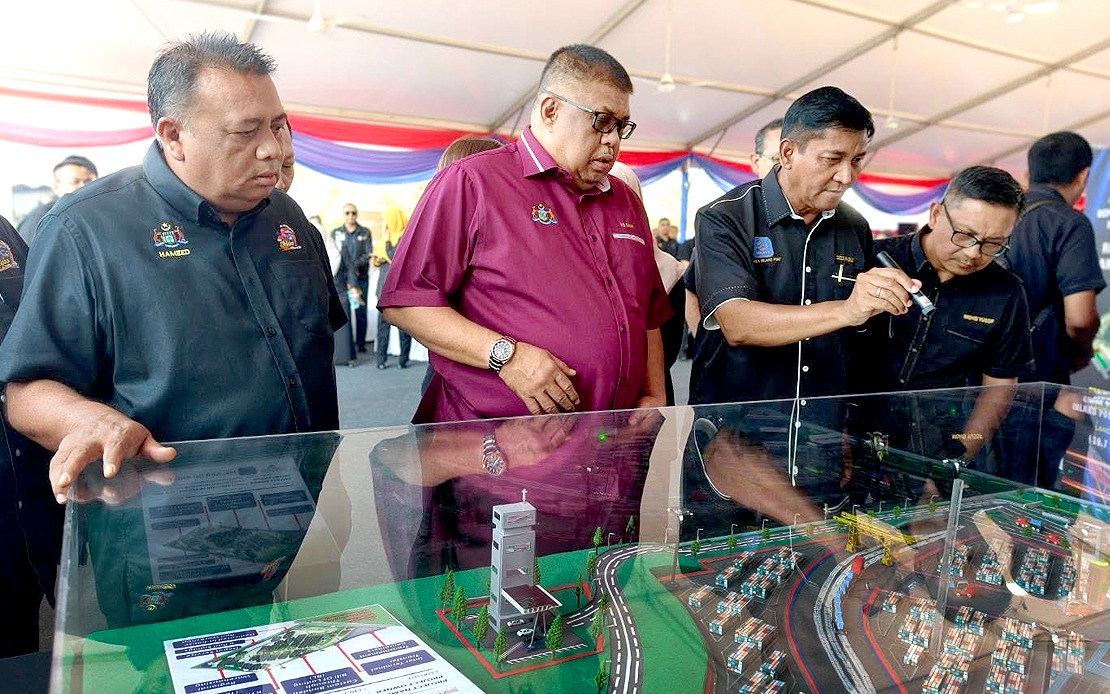
Melaka's state government has unveiled an ambitious infrastructure project designed to reshape the peninsula's logistics landscape through targeted port connectivity improvements. The centrepiece is a new 12-kilometre road linking Kuala Linggi International Port (KLIP) to Ayer Molek and Kuala Sungai Baru, at an estimated cost of RM129 million. The project represents a strategic shift towards consolidating the state's competitive advantage as a major regional shipping hub, particularly as trade routes through Southeast Asia become increasingly congested and competition between Malaysian ports intensifies.
According to Datuk Hameed Mytheen Kunju Basheer, chairman of Melaka's Public Works, Infrastructure, Public Facilities and Transport Committee, the road will strategically traverse the Melaka Inland Port (MIP) area, creating a seamless logistics corridor across multiple port facilities. This routing approach reflects deliberate planning to maximize the synergies between existing port infrastructure and encourage cargo consolidation. By designing the route to pass through the inland port zone, planners aim to create a unified transportation ecosystem rather than isolated port terminals, potentially reducing operational redundancy and enhancing throughput capacity across the entire network.
The current design phase, managed by the Works Ministry, will progress through quotation, tender evaluation, and contractor selection procedures during 2024. This timeline suggests the project will face competitive bidding, likely attracting interest from major construction firms operating across Malaysia. The phased development approach allows for refinement of engineering specifications and cost estimates before capital commitment, though it also extends the overall project duration. Implementation is anticipated to commence following the completion of procurement processes, with full deployment expected to span several years.
One of the project's most compelling advantages lies in its substantial distance reduction. The new route will compress travel distances from the existing 28 kilometres to just 12 kilometres, cutting journey times significantly for heavy vehicles transporting containers and bulk cargo. For logistics operators dealing with time-sensitive shipments, this efficiency gain translates directly to reduced fuel consumption, lower labour costs, and faster inventory turnover. The compounding effect across thousands of shipments annually could generate substantial savings for the region's trading community, indirectly enhancing Melaka's competitiveness against rival ports such as Port Klang and Port of Tanjung Pelepas.
Beyond the primary route, Melaka is pursuing a comprehensive port infrastructure upgrade programme. Improvements to road networks connecting various port facilities with the inland port are in motion, particularly the widening initiative from Tangga Batu to Sungai Udang, which links to Tanjung Bruas Port. These complementary projects demonstrate a multi-faceted approach rather than reliance on a single corridor. The government recognizes that true logistics optimization requires addressing bottlenecks across the entire transportation system, not merely between specific terminals.
A secondary project under development involves a six-kilometre road from Telok Gong to Kampung Pulau and Paya Lebar, budgeted at RM49 million. This initiative is in an earlier development stage than the primary route, with the Paya Lebar to Kampung Pulau segment currently undergoing quotation procedures while the Kampung Pulau to Telok Gong alignment remains in design phase. Expected completion around 2028 or 2029, this route will provide alternative access pathways to the inland port, potentially distributing traffic loads across multiple corridors and reducing congestion on any single artery.
A distinctive feature of the secondary road project is its deliberate routing to avoid traditional settlements. By creating a bypass around established villages, planners aim to mitigate social disruption and environmental impact while maintaining smooth cargo flows. This consideration reflects evolving best practices in infrastructure development, balancing economic growth imperatives with community welfare concerns—an approach gaining traction across Southeast Asia as countries seek sustainable development pathways.
These infrastructure investments must be understood within Malaysia's broader competitive context. Regional ports compete fiercely for transshipment cargo and container traffic, with Singapore's Port of Singapore Authority and Thailand's Map Ta Phut continuously improving their facilities. For Melaka, enhanced logistics connectivity represents a pathway to capture incremental traffic volumes from landlocked regions and from shippers seeking alternatives to congested Klang Valley corridors. The state's geographic position on the eastern shore of the Malacca Strait presents inherent advantages if supported by efficient inland connections.
The Melaka Inland Port groundbreaking, which prompted these infrastructure announcements, signals broader port development ambitions. Chief Minister Datuk Seri Ab Rauf Yusoh's ceremonial involvement underscores the state government's prioritization of logistics as an economic growth pillar. As manufacturing increasingly relocates beyond the Klang Valley and as e-commerce drives demand for diversified distribution networks, secondary logistics hubs become strategically valuable. Melaka's investments position it to capture these emerging opportunities.
Implementation challenges remain substantial. The RM129 million primary project and RM49 million secondary project together represent significant capital expenditure requiring careful financial management. Contractor selection will be critical, as project execution quality directly impacts long-term operational efficiency. Cost overruns—common in Malaysian infrastructure projects—could strain state finances, while delays would defer the economic benefits these routes promise.
For Malaysian businesses, particularly those in logistics, manufacturing, and retail, the implications extend beyond Melaka. Successful port infrastructure development in the state may relieve pressure on Port Klang and Batu Tiga, potentially lowering congestion and improving service standards region-wide. Additionally, as competition stimulates service improvements and rate optimization, shippers benefit from expanded choices and improved operational flexibility.
The projects also reflect changing patterns in Southeast Asian trade. As supply chains diversify away from single chokepoints and as environmental concerns push toward more distributed logistics networks, investment in secondary ports and improved connectivity becomes economically rational. Melaka's strategic positioning makes it an natural beneficiary of these structural shifts, provided infrastructure investments are executed effectively and complemented by supportive port operational policies.

