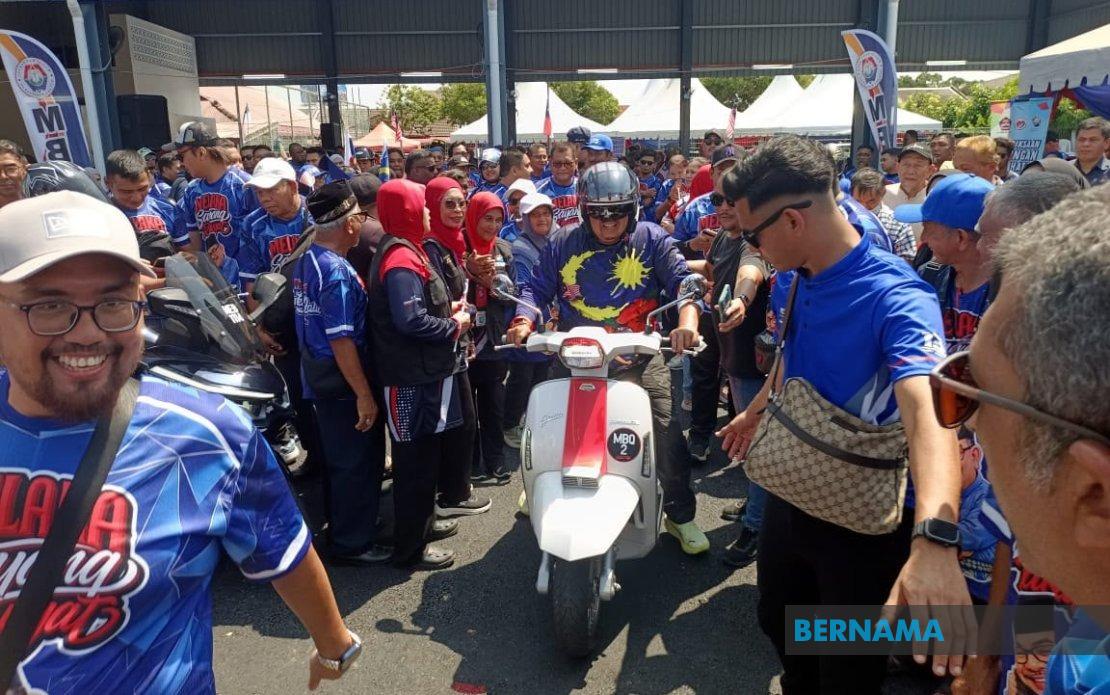
Melaka Chief Minister Datuk Seri Ab Rauf Yusoh has positioned the ongoing 'Jelajah Ketua Menteri Sayang Rakyat' tour as an embedded component of the state government's broader engagement framework, rather than a time-bound campaign initiative. Speaking after the 10th series of the tour at Pengkalan Batu state constituency, Ab Rauf emphasised that the programme builds on the 'Wakil Rakyat Untuk Rakyat' (WRUR) initiative launched two years prior, reflecting a consistent commitment to identifying and resolving community grievances at the grassroots level.
The approach, according to Ab Rauf, allows the state administration to respond to public complaints with greater immediacy and precision. By conducting direct engagements with residents through structured tours, the government creates a mechanism for rapid assessment and resolution of issues that might otherwise languish in bureaucratic channels. This methodology aligns with contemporary governance trends across Southeast Asia, where state leaders increasingly emphasise direct constituent contact as a means of enhancing administrative responsiveness and legitimacy.
Ab Rauf's assertion that the initiative predates any electoral campaign reflects an attempt to distance the programme from electoral positioning—a rhetorical move that holds particular significance in Malaysia's context, where opposition parties frequently characterise government tours as electioneering. The Chief Minister's claim that the framework originated from a pre-election governance principle underscores the state government's framing of the tours as policy-driven rather than politically opportunistic. Whether this timing coincides with electoral cycles remains a matter of broader political discourse, but the stated rationale centres on systematic welfare protection rather than campaign mobilisation.
During the Pengkalan Batu tour, eight issues identified through earlier WRUR and 'Hari Exco Bersama Rakyat' (HEBAT) programmes were reported as resolved. Among the more symbolic outcomes was the resolution of a cemetery land acquisition matter, wherein a Chinese landowner offered a 50 per cent discount on a plot intended for Muslim burial purposes. Such inter-religious cooperation, when highlighted in the political narrative, carries cultural and community relations significance beyond the land transaction itself, demonstrating practical interfaith goodwill within urban constituencies.
The housing interventions documented represent another dimension of the programme's material outcomes. Five dilapidated residences underwent repairs, whilst a single dwelling valued at RM100,000 was provided through the 'Baiti Jannati' programme, a housing initiative operated in partnership with Tenaga Nasional Berhad (TNB). These housing interventions target vulnerable populations typically underserved by formal property markets, addressing shelter security—a fundamental development indicator across Malaysian states. The scale of such interventions, though limited in absolute numbers, signals a targeted approach to poverty alleviation within individual constituencies.
Community infrastructure development formed another component of the tour's accomplishments. The Melaka Historic City Council (MBMB) completed construction of a multi-purpose hall within the Pengkalan Batu constituency, transferring the facility for community use. Such multipurpose spaces serve diverse functions in Malaysian constituencies—from religious gatherings to local association meetings—and their availability directly influences community social cohesion and civic engagement capacity. The handover ceremony itself functioned as a symbolic demonstration of government service delivery to the assembled public.
The WRUR programme's progression to its 25th series, with only five constituencies remaining unvisited, reflects either comprehensive coverage planning or a phased approach extended across multiple electoral cycles. For Malaysian readers, this metric carries implications regarding equitable attention distribution across constituencies, a concern that frequently surfaces in state-level political discourse where rural and urban areas sometimes experience differential government engagement intensity. Melaka's apparent systematic coverage across all state constituencies suggests a blanket approach to public consultation rather than selective engagement with politically favourable constituencies.
Ab Rauf's emphasis on the programme's role in enabling elected representatives to deepen understanding of constituent needs addresses a structural governance challenge common across Malaysian states. The devolution of welfare provision and issue resolution to assemblyman and councillor levels sometimes results in information asymmetries, wherein local elected officials lack comprehensive insight into the full scope of community grievances. Structured tour programmes potentially mitigate these gaps by creating formalised information-gathering mechanisms that supplement routine constituent feedback.
The broader implications for Melaka's governance trajectory centre on institutionalising direct engagement as a permanent administrative feature rather than episodic initiative. This positioning challenges the conventional separation between election cycles and routine governance, instead proposing that continuous public dialogue should characterise state administration. For Southeast Asian governance comparisons, such approaches increasingly distinguish high-performing state administrations, suggesting that responsive governance mechanisms may enhance institutional legitimacy independently of partisan affiliation.
The framing of concern resolution as a preventive mechanism against prolonged bureaucratic delays addresses citizen frustration commonly documented in Malaysian governance studies. By creating expedited pathways for issue resolution during these tours, the state potentially reduces the accumulated grievance burden that typically accumulates between formal electoral cycles. This dimension holds particular relevance for constituencies with historically limited political voice or access to decision-making apparatus.
Moving forward, the completion of the 25-series cycle will determine whether the programme transitions into a renewed iteration or concludes its current format. The Chief Minister's commitment to continued listening to constituent feedback positions the framework as foundational to ongoing policy refinement, suggesting the tours function as input mechanisms for state-level policy development rather than solely addressing individual grievances. This structural integration within policy-making processes, if substantiated through subsequent policy documentation, would distinguish the initiative as governance infrastructure rather than campaign positioning.
For readers across Malaysia and the broader region, Melaka's tour programme exemplifies state-level experimentation with direct democratic engagement mechanisms. Whether such approaches meaningfully enhance development outcomes, reduce corruption, or improve service delivery—as proponents contend—remains contingent on transparent reporting of outcomes and systematic evaluation against measurable governance indicators. The state government's continued investment in the framework suggests institutional conviction regarding its utility, though independent assessment would strengthen empirical foundations underlying such governance innovation.

