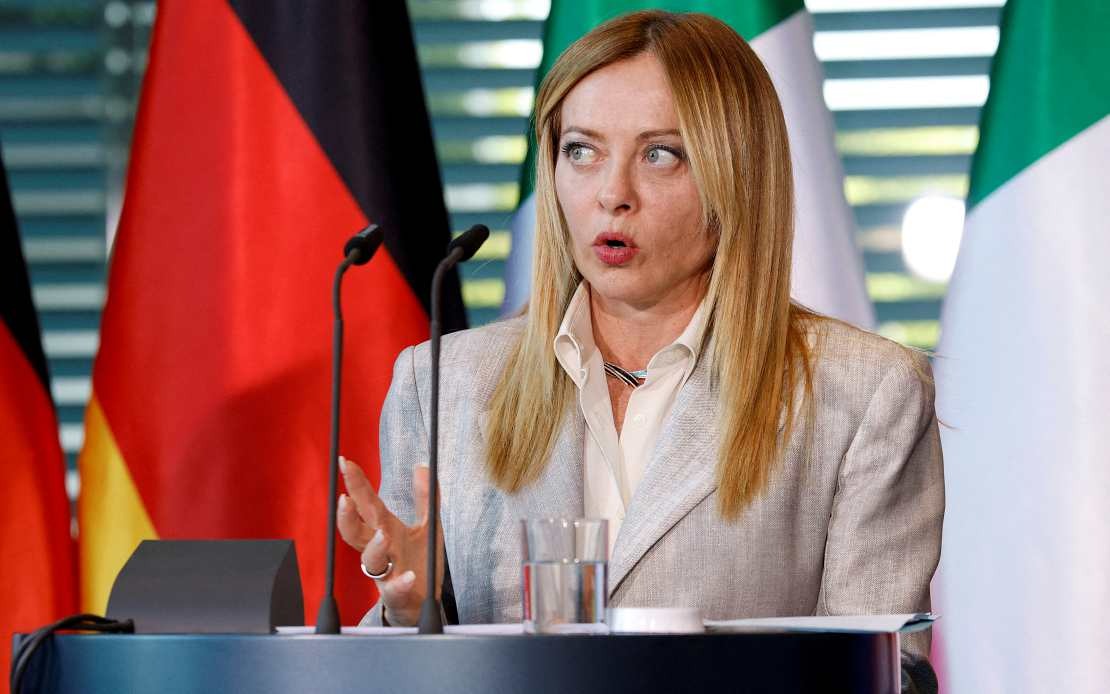
Italian Prime Minister Giorgia Meloni has tabled a controversial proposal to establish migrant return and processing centres in countries outside the European Union, with operations potentially commencing as early as 2027. The initiative represents a significant escalation in Rome's strategy to manage migration flows and shifts responsibility for processing asylum claims and deportations beyond EU borders. The proposal will feature prominently during an informal online meeting of EU home affairs ministers this week, with Italy's Interior Minister Matteo Piantedosi representing the country in discussions that underscore the continent's deepening frustration with irregular migration.
The Italian government aims to conclude agreements with third countries modelled on its existing arrangement with Albania by year's end, with EU funding designated to support the operational costs of these centres. This model reflects a growing preference among European states to externalise migration processing, removing asylum seekers from EU territory during the evaluation phase. The approach has gained substantial traction, evidenced by the fact that 22 EU member states recently sent a joint letter to European Commission President Ursula von der Leyen and European Council President Antonio Costa advocating for new mechanisms to combat illegal migration. Danish Prime Minister Mette Frederiksen has emerged as a key ally, signalling broad Northern European support for such externalization strategies.
Rwanda and Uganda are currently the most advanced African partners in these negotiations, reflecting Europe's turn towards distant third countries for migration management. Denmark, Austria, the Netherlands and Germany are leading the diplomatic push, indicating that border security concerns transcend traditional political divides within the Union. Greece has similarly committed to launching its own experimental programme by 2027, demonstrating that even Mediterranean nations experiencing direct migration pressure view offshore processing as a viable solution. This convergence of interest across diverse EU member states reveals the intensity of domestic political pressure surrounding immigration.
Italy's existing migrant processing infrastructure abroad operates entirely at Rome's expense and under Italian jurisdiction, handling asylum applications whilst simultaneously detaining and facilitating the expulsion of undocumented migrants. However, the Italian model has encountered significant obstacles from the domestic judiciary. Courts have repeatedly intervened to prohibit migrant detention, ordering individuals returned to Italian territory and challenging expedited border procedures applicable to nationals from ostensibly safe countries. These judicial interventions have created a fundamental tension between the executive's migration control ambitions and constitutional protections, complicating implementation of tough policies.
The Albanian experiment provides instructive evidence of the practical challenges ahead. Between May 2025 and mid-July 2026, Italian authorities transferred 685 individuals to Albania for processing, yet fewer than 15 percent were ultimately repatriated. This low deportation rate raises questions about the actual effectiveness of externalisation strategies and suggests that third-country agreements do not automatically translate into successful returns. The financial dimension compounds these concerns; maintaining the centre at Gjader in 2025 cost approximately €50 million, an expenditure yielding minimal repatriation outcomes and raising accountability questions about resource allocation.
The recent crisis in Ceuta precipitated the acceleration of these discussions and illuminated the scale of pressure confronting European border states. In late July, the Spanish autonomous city on Morocco's coast experienced an unprecedented influx of migrants when roughly 60,000 people crossed into its territory within a 24-hour period. Given that Ceuta's permanent population comprises approximately 85,000 residents, this represented a population-scale emergency that overwhelmed local capacity and triggered an immediate security response. Spain rapidly deployed additional police units, Civil Guard personnel and military troops to the enclave, attempting to stem the extraordinary flow of people attempting to reach European soil.
The Ceuta crisis encapsulates the geopolitical vulnerabilities that drive European governments towards offshore processing models. The incident demonstrated that existing border enforcement mechanisms can be rapidly overwhelmed when neighbouring countries experience internal instability or deliberate border management policies shift. From the European perspective, establishing processing centres beyond the continent's borders reduces the operational burden on frontline states like Spain, Italy and Greece whilst creating a filtering mechanism upstream. For countries like Malaysia and other Southeast Asian nations, the European strategy carries implications regarding international cooperation frameworks; if Europe successfully institutionalises third-country processing, it establishes a precedent that other regions might emulate.
The legal and diplomatic complexities surrounding such arrangements, however, remain substantial. Third countries must formally consent to hosting these facilities, requiring negotiations that balance EU incentives—typically financial support and development aid—against sovereignty concerns and humanitarian considerations. Rwanda and Uganda's advanced negotiating status suggests receptiveness among some African nations, yet questions persist about accountability standards, treatment protocols and the legality of processing asylum claims outside the EU's legal framework. International human rights organisations have raised concerns about outsourcing migration control to countries with different governance standards.
For Malaysia and the broader Southeast Asian region, the European framework offers both cautionary lessons and strategic opportunities. Should the EU successfully establish offshore processing centres, it would validate an approach that several Asian governments have explored or considered. However, the technical difficulties encountered by Italy—particularly low repatriation rates despite substantial expenditure—suggest that externalization alone does not resolve migration pressures but rather displaces them. Southeast Asian nations managing significant migrant populations should observe whether European funding mechanisms and governance models might eventually extend eastward, creating new regional partnerships.
The fundamental challenge underlying Meloni's proposal reflects a broader European acknowledgment that traditional border enforcement and domestic asylum processing cannot adequately manage contemporary migration volumes. Rather than expanding reception capacity or reforming asylum procedures, political leaders across the continent increasingly favour preventing migrants from reaching EU territory entirely. This prevention-first approach, implemented through agreements with third countries, represents a significant shift in European migration policy philosophy. Whether offshore centres prove effective depends critically on whether third countries maintain adequate processing standards, whether deportation procedures function reliably, and whether the financial commitments remain politically sustainable across electoral cycles.

