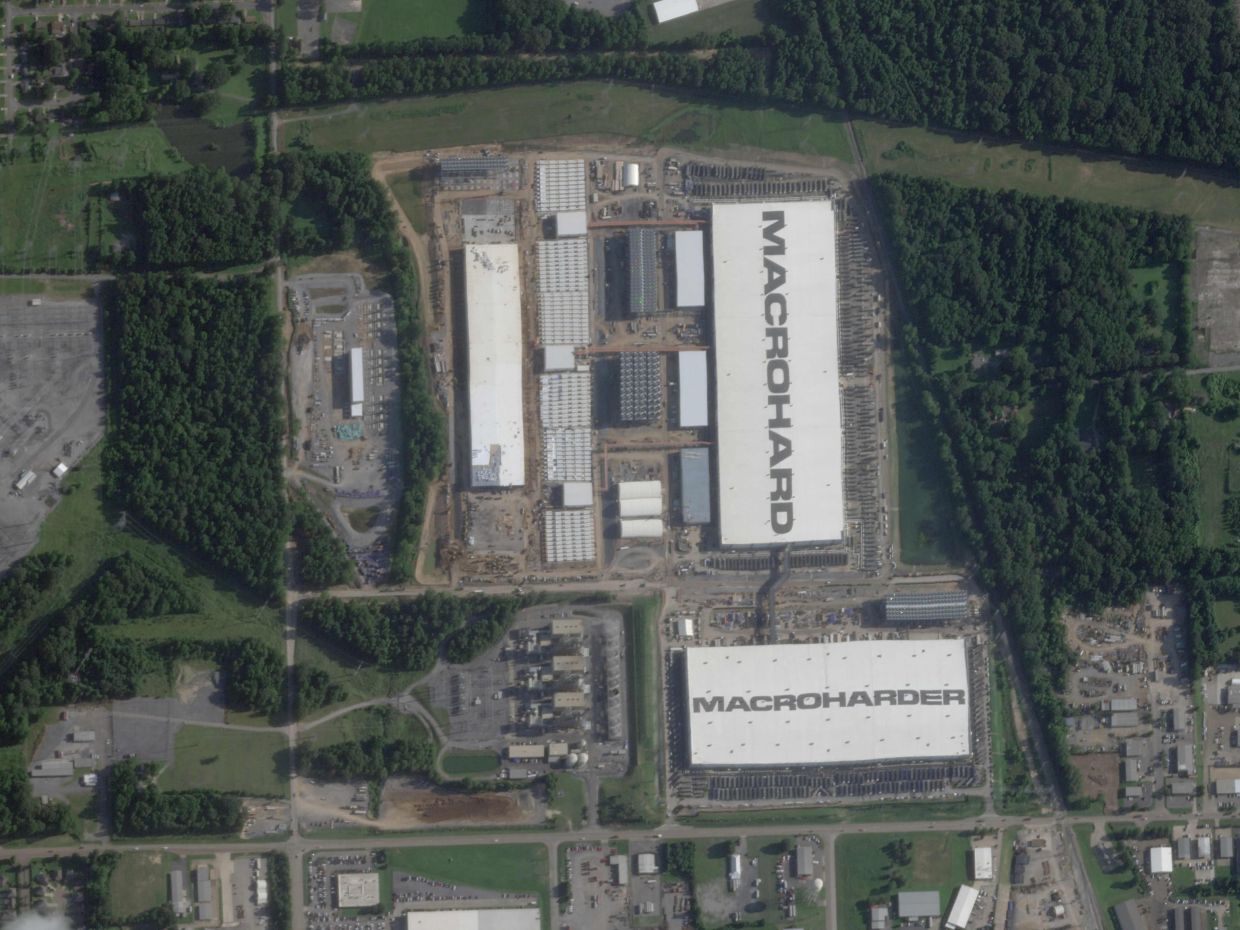
The race to dominate artificial intelligence has created a new geography of environmental injustice in America's heartland. In Memphis, Tennessee, a sprawling data centre complex built in just four months has become the flashpoint in a broader struggle over who bears the costs of technological progress. The facility, housing Elon Musk's AI supercomputer infrastructure, sits squarely adjacent to Boxtown and South Memphis—communities that have shouldered disproportionate pollution burdens for generations, and whose residents now face mounting health risks from the facility's constant operations.
Boxtown itself carries deep historical weight. Founded by formerly enslaved people following the Emancipation Proclamation of 1863, the neighbourhood has long served as a repository for noxious industries that wealthier, whiter areas rejected. Over more than a century and a half, factories and heavy manufacturing have embedded themselves in the area, leaving a legacy of contaminated soil and chronically degraded air quality. Today, residents of South Memphis face a cancer risk four times higher than the national average—a stark measure of cumulative environmental trauma. Into this context came Colossus I, the AI data centre that now pumps millions of gallons of groundwater daily to cool its servers while discharging emissions that activists and residents insist violate both the spirit and letter of environmental law.
For Jasmine Bernard, a 17-year-old activist, the data centre represents an unbroken chain of systemic neglect. After two years of organising against the gas turbines that power the facility, she articulates what many in her community feel: that Boxtown and South Memphis have been treated as sacrifice zones where rules that protect other neighbourhoods simply do not apply. "This community of Boxtown and South Memphis as a whole historically just has been the subject of environmental neglect," she told reporters. "It's deeply tied to the history... it's been a Black community for centuries." Her words capture the essence of environmental racism—the pattern whereby communities of colour are systematically exposed to greater pollution loads while having less political power to resist.
The water consumption issue adds another dimension to the crisis. Every single day, Colossus I extracts 1.2 million gallons of groundwater from the aquifer that supplies drinking water to Memphis residents. This massive draw occurs against a backdrop of climate change and increasing water stress across much of the American South. SpaceXAI had pledged to construct a water recycling facility to mitigate this impact, but that project has been indefinitely suspended—leaving residents uncertain about long-term aquifer depletion. For a region already grappling with water security concerns, the facility's thirst represents a troubling prioritisation of corporate computing power over community needs.
KeShaun Pearson, co-founder of Memphis Community Against Pollution, has emerged as a leading voice in the resistance, crisscrossing the country to publicise the dangers posed by data centres concentrated in vulnerable communities. Pearson characterises the situation as a textbook case of broken promises around economic development. "They don't listen or involve the community or the people who are going to be directly impacted," he said, referring to how local elected officials failed to meaningfully consult Boxtown residents before the facility's construction commenced. This pattern—of decisions made behind closed doors with promised community benefits that never materialise—echoes a long history of development projects imposed on Black neighbourhoods without genuine democratic participation.
The noise pollution extends the facility's footprint of harm beyond air and water concerns. In neighbouring Mississippi, near Colossus II (a sister facility near Southaven built to power the Grok AI assistant), resident Krystal Polk describes an incessant drone from 69 turbines that creates a constant ambient vibration. "The noise is 24/7," she told reporters. "If you're out here too long, the vibrations – that wave sound makes you nauseous." This sensory assault, which never ceases, represents another form of environmental degradation that regulatory frameworks often fail to address adequately. The experience of living in proximity to such facilities means accepting a fundamentally altered quality of life with no realistic option for escape.
Legal experts argue that SpaceXAI has systematically circumvented established environmental protections. Under the Clean Air Act, corporations must secure permits demonstrating that facilities will not endanger surrounding communities before construction begins. Rather than following this procedure, SpaceXAI installed what it termed "temporary" turbines while simultaneously pursuing the formal permitting process. This strategic manoeuvre allowed the company to avoid a "power gap" during operations while skirting full environmental review. As Laura Thoms from the nonprofit Earthjustice explained, the company simply decided not to wait for regulatory approval. By labelling the turbines temporary, SpaceXAI created legal ambiguity that has complicated enforcement efforts.
In late July, facing legal pressure, the company announced it would dismantle the contested turbines and replace them with a properly permitted power plant. However, the agreement—negotiated in what critics describe as backroom dealings with city officials—grants SpaceXAI until July 2027 to complete this transition. For residents breathing polluted air today, a promise to fix the problem three years hence provides little comfort. Memphis Mayor Paul Young did announce a US$3.35 million (RM13.7 million) initiative to redirect tax revenue generated by the facility toward affected communities, but activists question whether compensation can truly address systemic health impacts. The facility itself generated US$12 million in tax revenue in 2026 alone, raising questions about whether token community investments represent genuine accountability.
The national security dimension adds a troubling layer to the dispute. In June, the U.S. Justice Department asked that the NAACP's lawsuit against SpaceXAI be dismissed on national security grounds. This invocation of security concerns to shield a private corporation's operations from accountability represents a dangerous precedent—one that essentially privileges AI development infrastructure over the constitutional rights and health protections of American citizens. When national security claims become a routine tool to silence environmental and civil rights challenges, the legal system ceases to function as a check on corporate power.
The situation extends beyond Colossus I and II. A third data centre has already been constructed near Colossus II, and a fourth is currently under construction in the region. Residents and advocacy organisations say they have received no information about how these additional facilities will be powered or what environmental safeguards will apply. This expansion pattern suggests that the AI industry views the Memphis area—specifically its historically Black neighbourhoods—as an optimal location for industrial concentration. The previous success of Boxtown residents in defeating a pipeline project in 2021 demonstrates that community organising can win victories, yet activists fear that the scale and speed of data centre proliferation may overwhelm their capacity to mount effective resistance. As AI demand explodes globally, the question becomes whether communities like Boxtown will be permitted to determine their own environmental futures or whether they will remain, as they have for nearly two centuries, zones where others' progress is purchased with their suffering.

