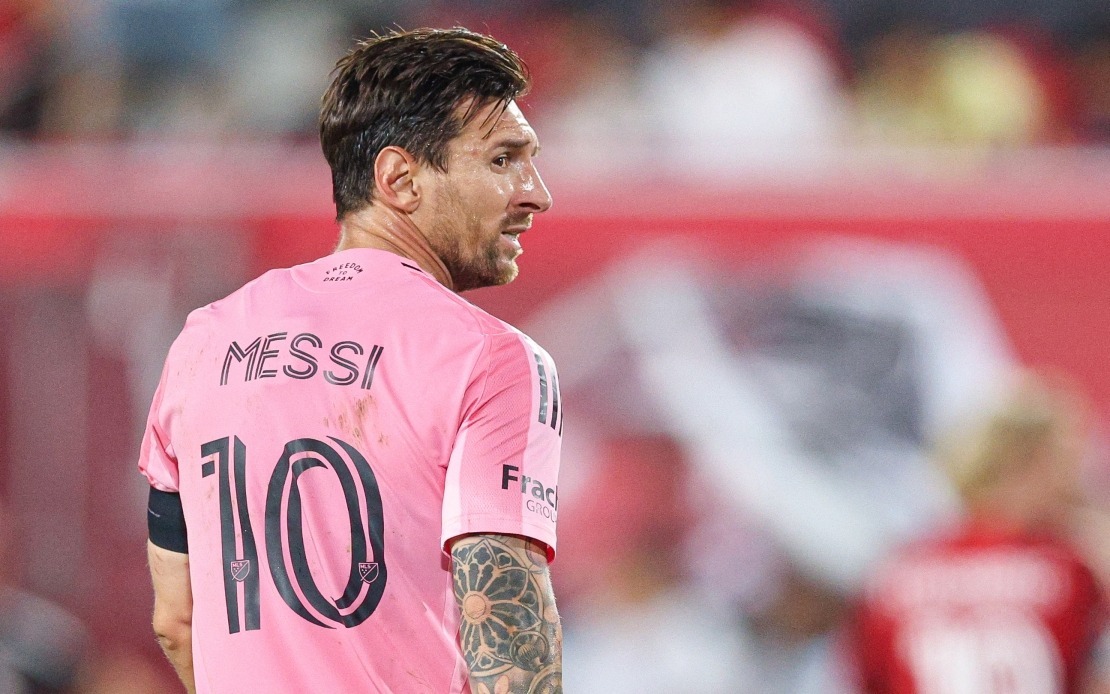
Lionel Messi took the field for Inter Miami on Wednesday as a half-time substitute in a 3-2 defeat to Leon, marking his first appearance for the club in the days following his father's death. The Argentina captain had withdrawn from his team's prior match against Monterrey on Saturday and attended a private funeral service at a cemetery in Perez, a town outside his Rosario hometown, the following day. His return to play comes just over a week after Jorge Messi passed away, an event that prompted an outpouring of grief from the football icon who expressed profound uncertainty about his professional future.
The emotional weight of his loss became evident through a statement Messi shared on social media in the aftermath of his father's death. Writing with raw vulnerability, Messi reflected on his father's lifelong presence and questioned whether he could continue his career without him. "You were by my side from the beginning; there was so little left until the end. Why couldn't you hold on just a little longer so we could finish it together?" he wrote, capturing the anguish of someone suddenly facing life without a foundational figure. His words suggested that the sport which had defined his existence might no longer hold the same meaning, as he grappled with grief and the prospect of moving forward.
The relationship between father and son extended far beyond the typical parent-child dynamic. Jorge had served as Messi's agent from the time the young player was fourteen years old, shepherding him through his rise to become widely regarded as one of football's greatest ever athletes. Beyond the professional realm, Jorge was present for Messi's most triumphant moments, including when he captained Argentina to victory at the World Cup in Qatar in 2022. The World Cup triumph represented a culmination of years of dedication and sacrifice, achievements that Jorge had witnessed and supported throughout.
Arguably, Jorge's influence on his son's recent career decisions loomed large during Argentina's disappointing performance at this summer's Copa América tournament. Despite his deteriorating health, Jorge had encouraged Messi to participate in one final World Cup competition, a request that shaped the player's thinking about his international career trajectory. When Argentina reached the Copa América final but fell to Spain 1-0 in extra time, it represented a bitter conclusion to what might have been another chance at glory. Now, with Jorge gone, Messi faces both the immediate grief of loss and the larger existential questions about his life in football without his father's guidance.
Inter Miami coach Guillermo Hoyos acknowledged the magnitude of what his star player was enduring, drawing from personal experience with paternal loss. Hoyos spoke candidly about the profound nature of losing a father, describing it as "a very painful thing" that required considerable time to process. He characterised Jorge Messi as not merely a family member but a guide who had been essential to his son's navigation through life. "When I lost my father, it was hard. He was my guide. I needed him in many cases and I felt alone," Hoyos reflected, offering perspective that extended beyond sporting achievement to the fundamental human experience of loss.
The coach's remarks underscored that Messi's situation transcended typical professional challenges. Hoyos framed the loss as "a big blow in a man's life, for an extraordinary man and an extraordinary family," suggesting awareness that the personal dimensions of Messi's grief carried particular weight given his status and the integral role Jorge had played throughout his life. This recognition of Messi as a complete person rather than merely a football commodity reflected the broader context in which the player was now attempting to return to competition while processing profound loss.
Messi's decision to take the field against Leon, despite his emotional turmoil, demonstrated the complicated relationship between personal suffering and professional obligation that athletes often navigate. The Leagues Cup match, a final group-stage encounter, represented a competitive obligation that the player seemingly felt compelled to meet. By appearing in the second half, Messi signalled that he would attempt to continue his career despite the uncertainty he had expressed. Yet his subdued performance and the team's defeat suggested the emotional toll remained significant.
Leon's coach Javier Gandolfi offered an outsider's perspective on Messi's resilience, speaking to both his technical brilliance and his character. Gandolfi's assertion that Messi was "the best player in history, inside the pitch, and also with some other actions I would see at a distance," acknowledged not only his footballing genius but also his broader human qualities. The coach observed that Messi "demonstrated once more what he's made of," suggesting that even in grief, the Argentina captain carried an intrinsic quality that separated him from his peers. This assessment captured how Messi's legacy transcends statistics and trophies.
The broader implications of Messi's situation extend beyond Inter Miami's immediate competitive needs. For Malaysian and Southeast Asian football fans who have followed Messi's career across multiple continents and competitions, his return to play while grieving represents a moment of genuine human vulnerability from a figure often discussed in abstract terms of excellence. The reminder that even the world's greatest athletes must navigate profound personal tragedy offers a sobering counterpoint to the glamour typically associated with professional football at the highest levels.
Looking forward, questions remain about whether Messi can sustain his commitment to Inter Miami while processing his father's absence. The club acquired him with the expectation that his star power would elevate their profile in Major League Soccer and across the region. Yet circumstances have fundamentally shifted the equation surrounding his participation. Whether he will ultimately retire or continue playing appears to depend significantly on his emotional journey in the coming weeks and months. For now, his presence on the field against Leon suggested a determination to persevere, even as the depth of his loss became increasingly apparent.

