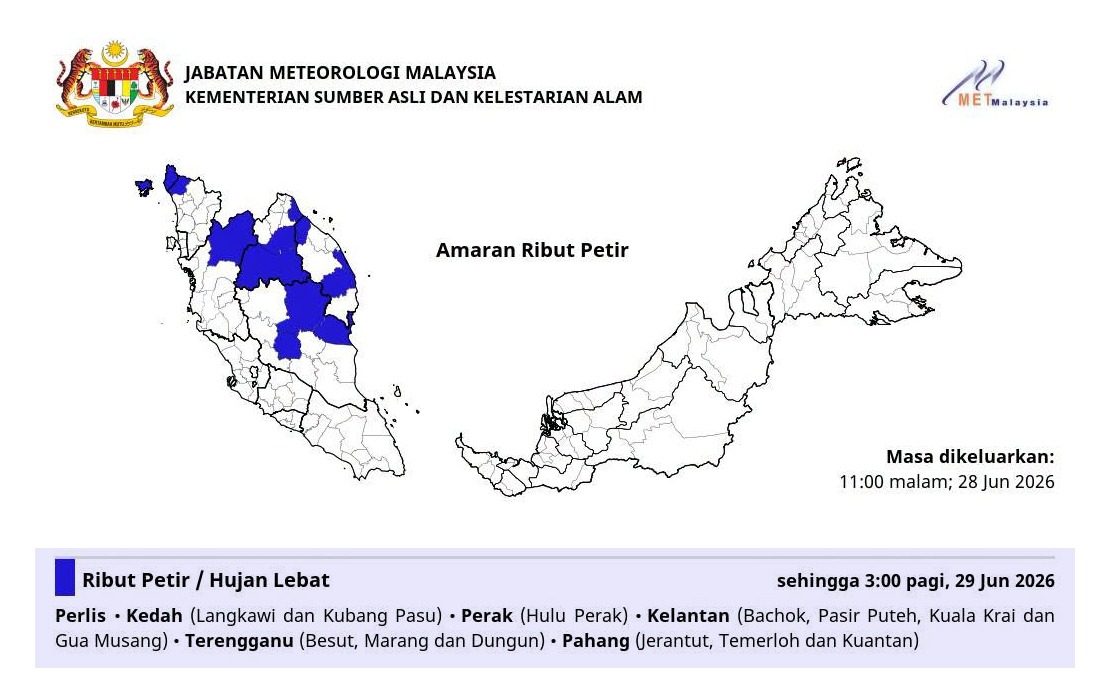
The Malaysian Meteorological Department has issued an alert for severe weather conditions expected to persist across six states until 3 am tomorrow morning, with forecasters warning of thunderstorms, heavy precipitation and strong winds that could impact residents and transport networks across affected regions.
The warning encompasses a significant portion of Malaysia's northern corridor and east coast, presenting a coordinated meteorological challenge that requires public awareness and preparedness. The affected zones stretch from Perlis in the far north down through the east coast, reflecting an active weather system that has developed across the peninsula's windward regions.
In the northern states, MetMalaysia has targeted specific districts where conditions are expected to be most severe. Perlis faces the full extent of the warning, while in Kedah, the danger zones are confined to Langkawi and Kubang Pasu. Across the Perak border, heightened alert levels apply specifically to Hulu Perak, the state's interior highland region where terrain-driven precipitation could amplify the effects of the broader weather pattern.
Kelantan's warning covers four districts along its coastal and interior zones: Bachok and Pasir Puteh face maritime influences that may intensify rainfall, while Kuala Krai and Gua Musang represent the inland extent of the alert area. These districts encompass varied topography and population density, suggesting impacts could range from urban flooding in township areas to isolated disruptions in more remote communities.
Terengganu's coastal and near-coastal districts of Besut, Marang and Dungun have been flagged for monitoring, indicating that the weather system carries particular risk for the state's maritime zone. These areas serve as fishing and trading hubs with significant economic activity, making the disruption potential considerable for daily commerce and marine operations.
Pahang, the peninsula's largest state, faces warnings in three districts: Jerantut, Temerloh and Kuantan. This alert pattern suggests the weather system's influence extends into the state's interior regions as well as its coastal areas, potentially affecting river systems and transportation corridors that link the peninsula's central zone with other regions.
The timing of the alert through 3 am represents the meteorological department's assessment of when the active phase of the weather system should subside. This overnight window carries particular concern as visibility decreases and response capabilities become more constrained, though many residents will be sheltering indoors. Drivers and night-shift workers remain vulnerable, particularly on highways and arterial roads traversing the affected districts.
Thunderstorms in Malaysian tropical conditions frequently develop intensity rapidly and can produce hazardous phenomena beyond rainfall alone. Strong wind gusts accompanying such systems create risks for structures, vegetation and outdoor installations, while electrical activity poses direct safety hazards. Heavy rain accumulation in vulnerable catchment areas may trigger secondary effects including flash flooding in low-lying zones and landslides in hilly terrain.
The geographical distribution of the warning reflects the monsoon and inter-monsoon wind patterns that dominate Malaysia's meteorology. The northern and east coast regions frequently experience the first impact from shifting wind regimes and moisture-laden air masses approaching from the South China Sea and the Indian Ocean. This warning exemplifies the seasonal vulnerability that characterises these zones during transitional weather periods.
Public authorities in the affected states should coordinate response preparations, particularly for areas prone to water-related incidents. Residents are advised to secure loose outdoor items, avoid unnecessary travel during peak thunderstorm hours and monitor official updates as the situation develops. Communities in flood-prone zones may wish to review evacuation procedures and maintain contact with local emergency services.
The Malaysian Meteorological Department's alert system serves as the primary mechanism through which weather risks are communicated to the public and to emergency management agencies. The specificity of the warning—naming particular districts rather than entire states—reflects increasingly granular forecasting capabilities that allow targeted responses to regional variations in risk.
For businesses and transport operators serving these regions, the overnight warning period requires contingency planning for potential disruptions to supply chains, service delivery and logistics networks. The cumulative economic and social impact of such weather events across multiple states underscores the importance of maintaining robust early warning systems and public compliance with meteorological guidance.

