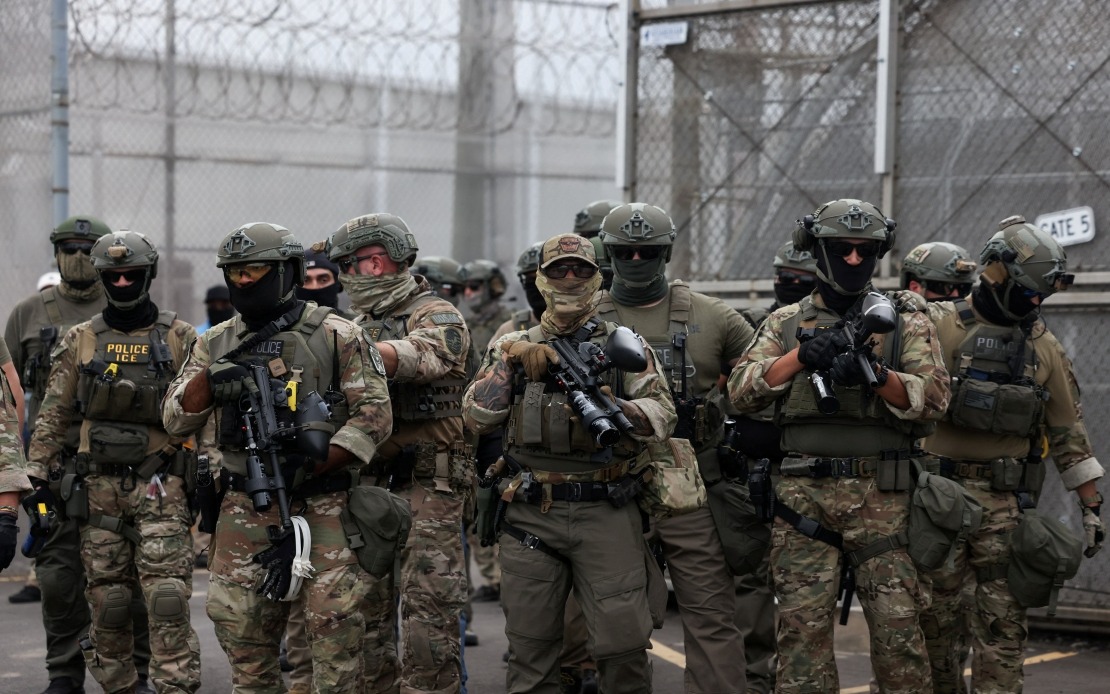
A Mexican national died in hospital after being shot by a United States Immigration and Customs Enforcement officer during an early morning confrontation, the Department of Homeland Security confirmed on Tuesday. The incident has triggered dual investigations into the circumstances surrounding the shooting, which authorities describe as a defensive response to an alleged vehicular attack on federal agents. The case adds to mounting scrutiny over use-of-force incidents involving US immigration enforcement agencies, with growing questions about whether official accounts align with eyewitness observations.
According to the Department of Homeland Security statement, the man identified as Lorenzo Salgado Araujo was allegedly present in the United States without legal authorization. When confronted by ICE officers, he purportedly refused to comply with their commands while remaining inside his vehicle. Authorities allege he then drove his car directly at federal agents, first striking a vehicle belonging to the enforcement team before attempting to strike an individual officer. In response to what officials characterised as an imminent threat, the officer discharged his weapon, resulting in fatal injuries. Salgado Araujo was transported to a medical facility but succumbed to his wounds.
The Department of Homeland Security has initiated an internal review mechanism to examine the officer's conduct during the shooting. Simultaneously, the Federal Bureau of Investigation's Houston division opened a separate investigation focused on the alleged assault against the federal officer. This parallel investigation structure reflects standard protocol when use-of-force incidents occur during federal law enforcement operations. However, the scope and independence of these inquiries remain subjects of public concern, particularly given historical patterns where official conclusions have diverged substantially from documentary evidence gathered at incident scenes.
A critical element complicating the narrative emerged when multiple civilian witnesses documented the encounter through photographs and video recordings, according to NBC News. This eyewitness documentation carries significant weight in evaluating contested accounts of police actions, as visual evidence frequently contradicts official characterisations of such incidents. The availability of independent video footage transforms potential disputes over what actually transpired into matters potentially subject to objective review. The presence of multiple recorded perspectives substantially increases pressure on investigating authorities to provide transparent and detailed explanations for all aspects of the officer's decision-making process.
The current incident mirrors patterns evident in previous fatal encounters between federal law enforcement and individuals during immigration enforcement operations. Six months prior, in January, federal agents engaged in a shooting that resulted in the deaths of two American citizens, Renée Good and Alex Pretti. Those deaths sparked considerable public backlash and nationwide controversy, with many Americans questioning whether the level of force employed was proportionate to the circumstances. Those cases established a precedent whereby deaths during immigration enforcement operations attract significant political and media attention, creating heightened expectations for thorough public accounting of officers' actions.
For Malaysian and Southeast Asian observers, this incident exemplifies broader concerns about police accountability and the potential for fatal outcomes when immigration enforcement encounters escalate. Malaysia maintains substantial enforcement operations against undocumented migrants and immigration violations, making the question of proportionate use of force during such operations directly relevant. The American experience demonstrates how quickly routine enforcement can result in lethal consequences, and how competing accounts of events can generate protracted public disputes when independent documentation exists alongside official narratives.
The circumstances surrounding Salgado Araujo's immigration status—why he allegedly lacked authorisation and how long he had resided in the United States—remain undisclosed details that could provide context for understanding how the enforcement encounter occurred. The Department of Homeland Security provided minimal biographical information beyond confirming his nationality, suggesting either that such details remain under investigation or that authorities deemed them peripheral to the core incident. However, from a transparency standpoint, Malaysian media and policymakers monitoring American immigration enforcement practices may find fuller contextual information essential for evaluating whether such incidents reflect systemic problems or isolated circumstances.
The timing and location of the encounter—described as occurring during early morning hours and centred in Houston—suggest this was part of broader enforcement operations rather than a random checkpoint. Immigration and Customs Enforcement conducts numerous operations throughout American communities, making such incidents statistically likely to recur. The question of whether enforcement procedures adequately account for potential vehicle-based threats during initial contact phases influences how other agencies assess their own protocols. Southeast Asian immigration authorities may examine whether American approaches to preventing vehicular escalation during enforcement operations offer useful lessons for their own training and procedure development.
The dual investigation framework—with Homeland Security examining internal conduct while the FBI investigates the alleged attack on the officer—potentially creates complications regarding information access and public disclosure. Investigators pursuing different institutional objectives may have divergent incentives regarding the pace and comprehensiveness of their inquiries. This structural tension, combined with the existence of civilian-recorded evidence, virtually guarantees that the final investigative conclusions will be heavily scrutinised by civil liberties advocates, immigration reform organisations, and concerned members of the public seeking clarity on whether the shooting was legally justified.
As additional details emerge through ongoing investigations and any potential legal proceedings, the case will likely influence broader debates about immigration enforcement tactics and officer training standards. For Malaysia, observing how American authorities address such incidents provides instructive context regarding international standards for accountability in enforcement operations. The presence of multiple video recordings and the certainty of public scrutiny ensure that investigations cannot proceed quietly, creating pressure for comprehensive answers to fundamental questions about what occurred and whether the officer's response was appropriately calibrated to actual threats posed.

