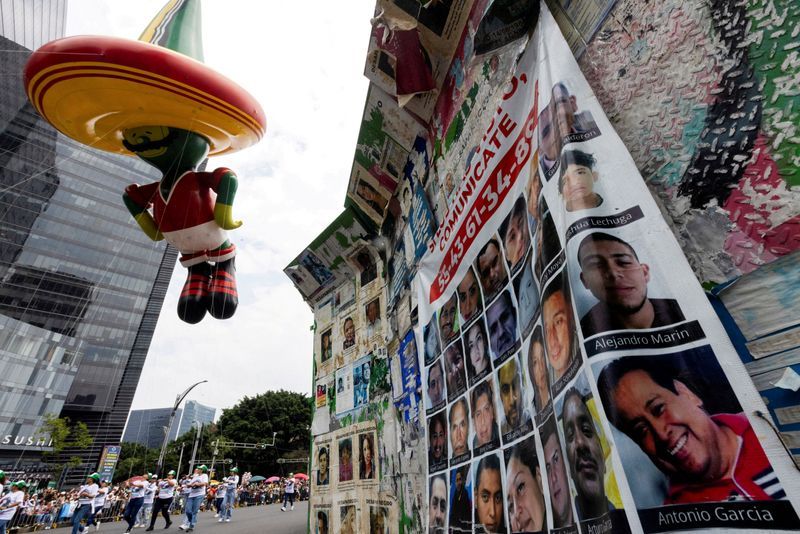
Mexico's preparation for its World Cup knockout encounter against England reveals a nation caught between sporting celebration and profound domestic crisis. The iconic Paseo de Reforma in Mexico City, lined with massive screens promoting the tournament and the national team's impressive run through the group stage, simultaneously displays haunting reminders of tragedy: posters bearing the faces of more than 135,000 missing Mexicans whose disappearances have accumulated since President Felipe Calderon's declaration of war against drug cartels in 2006. This juxtaposition encapsulates the emotional conflict consuming many Mexicans as their team pursues knockout-stage glory while the nation grapples with unresolved catastrophe.
Mexico's footballing achievement has been genuinely remarkable—the team reached the last 16 without conceding a goal, a defensive accomplishment that would typically command undivided national attention and celebration. Yet the tournament's celebration has repeatedly been disrupted by street protests and blockades, with the Paseo de Reforma serving not only as a venue for patriotic gathering but also as a stage for demonstrations against government policies. Teachers' union members from CNTE have occupied central city streets with tent encampments, demanding the government honour campaign commitments to overturn a 2007 law that restructured public-sector pensions and social security arrangements, whilst simultaneously calling for salary increases. This collision between jubilation and grievance has created an unusual psychological atmosphere in which many Mexicans find themselves torn between the collective national dopamine rush of sporting success and the pressing anxieties of everyday existence.
The economic backdrop to this World Cup is particularly sobering for ordinary citizens. Although inflation decelerated in early June, Mexico's core inflation rate remains stubbornly above the Bank of Mexico's three percent target, continuing to erode purchasing power for households already stretched thin by cost-of-living pressures. The tournament itself has inadvertently compounded these hardships: ticket prices for matches have become prohibitively expensive, reaching thousands of dollars in many cases, effectively transforming World Cup attendance from a realistic aspiration for working-class supporters into an exclusive privilege reserved for the wealthy. This pricing structure represents a fundamental shift in global football culture, where the financial barrier to stadium attendance has become so insurmountable that patriotic participation now requires substantial disposable income—a development that deepens inequality and exclusion.
Mexico's first World Cup knockout victory in four decades, a triumph over Ecuador that prompted nationwide celebrations, was tragically marred by violence. Four people died during the festivities surrounding the Paseo de Reforma, a sobering reminder that even moments of national joy can spiral into tragedy in a country contending with entrenched violence and social fragmentation. Graffiti opposing the World Cup remains visible across Mexico City and around the Azteca Stadium, testament to the sustained criticism that has accompanied the tournament since its inception. These anti-tournament messages reflect deeper scepticism about whether international sporting events genuinely benefit ordinary citizens or primarily serve political interests and corporate agendas.
The question of whether citizens can compartmentalise their enthusiasm for football from their concerns about national governance has emerged as a defining tension of this tournament. Some analysts argue that the World Cup creates a psychological escape valve, allowing people to experience collective euphoria whilst temporarily suppressing awareness of uncomfortable realities—including allegations, raised by United States authorities, that members of Mexico's ruling Morena party have colluded with drug trafficking organisations. This capacity for emotional compartmentalisation, whilst providing temporary relief, may ultimately serve political interests by allowing governments to deflect attention from accountability during periods of heightened national sporting interest.
President Claudia Sheinbaum's administration has maintained strong domestic approval ratings according to polling data from El Financiero, with her approval reaching 69 percent—reversing a gradual decline that commenced in March. The government has publicly committed to locating missing persons as a national priority, though observers note the disconnect between stated commitments and tangible progress in resolving cases that stretch back years. The government appears to recognise the value of the World Cup euphoria for political purposes, yet this instrumental deployment of sporting emotion may ultimately undermine the serious work required to address systemic challenges including organised crime, judicial dysfunction, and economic inequality.
Local political figures have encouraged citizens to hold multiple truths simultaneously—to celebrate Mexico's sporting achievements whilst maintaining critical scrutiny of government performance and FIFA's role in hosting decisions. This intellectual and emotional balancing act represents the lived reality for many Mexicans who refuse to abandon patriotic investment in their national team despite profound reservations about their country's trajectory. Rodrigo Cordera, a local politician, articulated this complexity on social media, noting that individuals can simultaneously experience excitement about football whilst harbouring legitimate anger at institutional failures and political dysfunction.
The tournament has exposed uncomfortable truths about who participates in global sporting spectacles and on what terms. Previously, the primary constraint limiting stadium attendance was ticket availability; now, the controlling factor is financial capacity. This transformation reflects broader shifts in how international sporting organisations distribute access and benefits, with costs increasingly borne by ordinary supporters whilst revenues accrue to corporations and wealthy stakeholders. For Mexico, hosting the World Cup alongside the United States and Canada therefore represents not an unambiguous national victory but rather a complicated experience in which sporting achievement coexists with resentment about exclusion and inequality.
Citizens like Alejandra Gonzalez, a Mexico City resident, articulate a measured perspective that acknowledges both the potential for sporting moments to generate positive national sentiment and the necessity for sustained critical engagement with governance failures. She observes that the tournament, whilst potentially diverting attention from systemic problems, does not eliminate them—it merely repositions them within collective consciousness. The challenge facing Mexican society involves maintaining critical consciousness about institutional shortcomings even as national sporting success generates legitimate pride and unity.
As Mexico's tournament progresses, the fundamental tension between celebration and crisis will likely intensify. The nation cannot indefinitely defer reckoning with 135,000 missing persons, persistent economic hardship, or governance challenges merely because sporting competition commands emotional attention. Instead, the World Cup functions as a temporary reprieve—a period during which the volume of national anxiety diminishes but underlying crises accumulate in the background. The aftermath of the tournament will require Mexico to address these deferred challenges with renewed urgency, potentially with government resources that might otherwise have been deployed earlier had sporting euphoria not provided political convenience.

