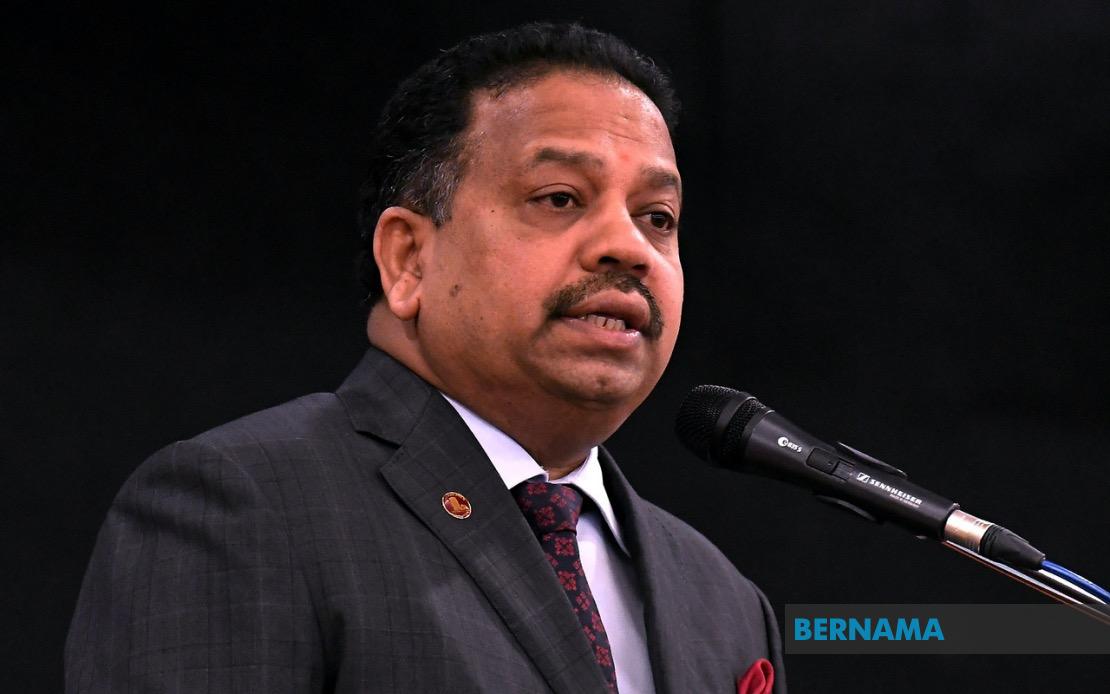
MIC president Tan Sri S.A. Vigneswaran has expressed confidence that the Indian community will rally behind Barisan Nasional candidates competing in the Johor state election, particularly those fielded by the Malaysian Indian Congress in contested seats. Speaking at a press conference in Kulai, Vigneswaran anchored his optimism on what he characterised as a productive working relationship between MIC, the state administration, and the federal government in tackling issues that directly affect Indian residents across the state.
The party's leadership has sought to position itself as a pragmatic political force capable of bridging community concerns with government machinery. Vigneswaran stressed that voters need state representatives who can function effectively within the existing governmental framework, translating constituent grievances into concrete policy responses. This messaging reflects a broader strategy among coalition-aligned parties to emphasise administrative competence and institutional access as primary voting considerations during the campaign.
MIC's four candidates contesting in the 16th Johor state election include K. Raven Kumar standing for the Kemelah assembly seat, V. Rugendran in Kahang, P. Pannir Selvam in Perling, and R. Kumaran in Bukit Batu. Each represents the party's attempt to maintain or expand its footprint in constituencies with significant Indian voter populations. The party's electoral strategy appears concentrated on demonstrating tangible outcomes from its presence in government rather than ideological appeals to opposition sentiment.
Throughout the campaign period, MIC leadership has deliberately adopted what party officials describe as a measured political approach, consciously avoiding personal attacks on rival candidates. Instead, the party has framed its campaign around problem-solving narratives and practical governance solutions. This tactical choice suggests an awareness that direct confrontation may alienate swing voters, while positioning the party as solution-oriented rather than opportunistic could resonate with pragmatic voters prioritising delivery over rhetoric.
The party faced a significant reputational challenge when a Tamil-language online portal published allegations that MIC had received government funding totalling RM221 million. Vigneswaran moved swiftly to dispute these claims, characterising the reporting as fundamentally inaccurate and potentially defamatory. He provided detailed clarification that the funds in question represent annual grants to AIMST University, an institution operated by a foundation rather than party machinery, with allocations designated specifically for maintenance, operational efficiency, and infrastructure development.
Since Datuk Seri Anwar Ibrahim assumed office as Prime Minister in 2023, AIMST University has received RM25 million in annual government grants, matching the allocation disbursed in previous years. Vigneswaran explained that these funds undergo standard audit procedures and finance specific initiatives including dormitory upgrades, renewable energy installations through solar systems, and operational cost reduction. By detailing the purpose and oversight mechanisms governing these allocations, the MIC leader sought to demonstrate transparency and deflate accusations of partisan misappropriation.
The university's cost-containment efforts directly benefit students by maintaining relatively affordable fee structures and reducing financial barriers to access. This connection between government support and student welfare represents an attempt to reframe the funding arrangement as serving broader social objectives rather than functioning as hidden party patronage. Vigneswaran's emphasis on audit trails and cost-reduction outcomes suggests recognition that clarifying institutional governance can neutralise politically damaging narratives.
MIC's legal team has been instructed to dispatch a formal demand letter to the portal requiring correction and retraction of the published allegations. This escalation signals the party's determination to pursue legal remedies against what party officials regard as false and damaging reporting. The legal strategy reflects broader patterns among Malaysian political entities in responding to adverse media coverage through formal demands and potential defamation proceedings, though such approaches carry their own reputational complexities and may amplify rather than diminish public attention to disputed claims.
For Malaysian readers and Southeast Asian observers, this episode illuminates ongoing tensions between digital media accountability and political communication in Malaysian politics. Tamil-language online portals have expanded their reach and influence among Indian communities across the region, sometimes publishing reports with limited institutional editorial oversight. The MIC's experience demonstrates how viral allegations, whether substantiated or not, can rapidly circulate through community networks and require urgent response mechanisms from political organisations.
The broader context reveals how Indian voters in Johor and across Malaysia occupy a strategically important but internally diverse political constituency. While MIC remains the traditional political representative of Indian interests within the Barisan Nasional framework, the community has become increasingly willing to evaluate alternatives and scrutinise government performance. Vigneswaran's confidence in voter support appears grounded in administrative relationships and service delivery rather than taken-for-granted communal loyalty, reflecting a more transactional political reality than historical patterns of bloc voting might suggest.

