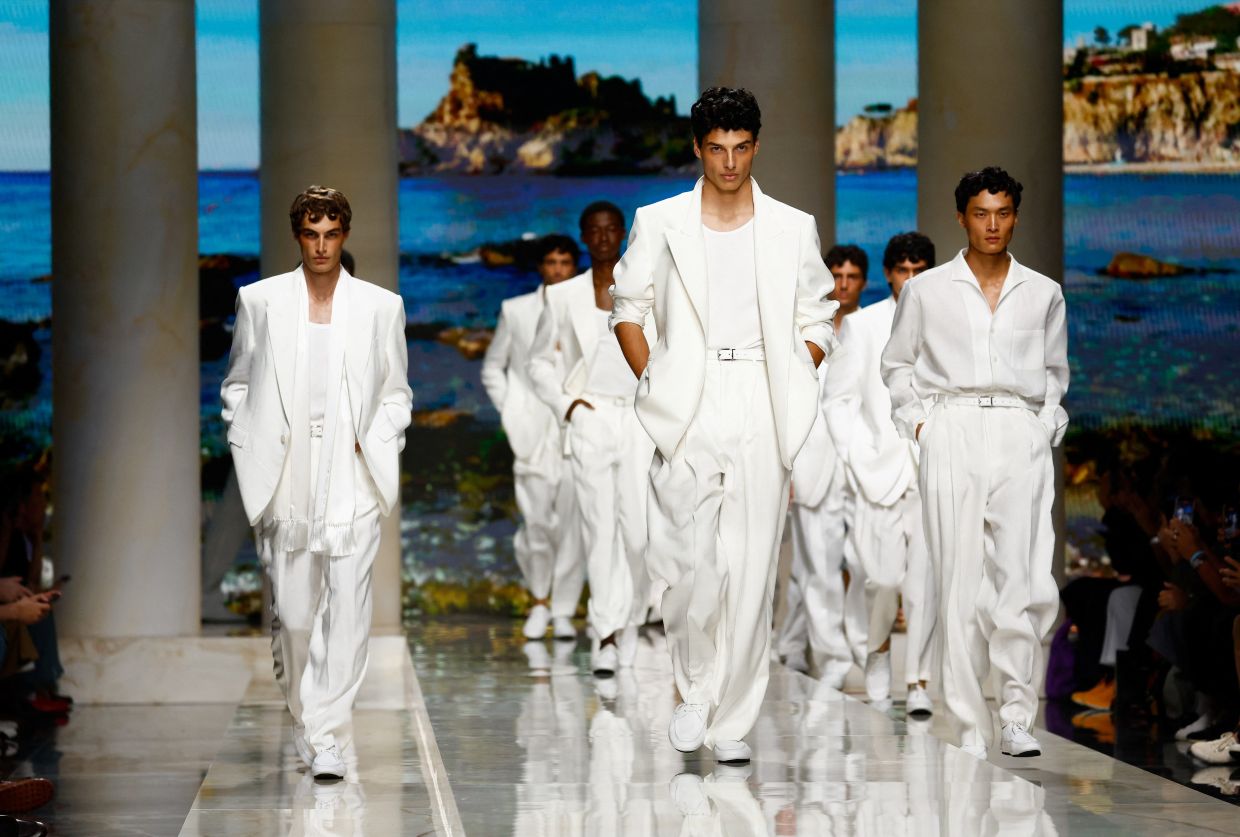
The Italian fashion capital's menswear collections for the upcoming warm months reveal a striking philosophical shift: as global uncertainties weigh on consumers and commentators, designers are choosing restraint and accessibility over elaboration. The Spring/Summer 2027 presentations that concluded on 22 June demonstrated that even luxury fashion responds to mood and circumstance, with leading houses calibrating their aesthetic vision to reflect a collective desire for simplicity without sacrificing the craftsmanship that defines high-end tailoring.
Prada's dual creative leadership of Miuccia Prada and Raf Simons exemplified this direction, positioning familiar garment archetypes as the foundation for innovation. Rather than reinventing the wheel, the Milan powerhouse examined proportions and material qualities—how a jacket sits on the shoulder, the weight of fabric against skin, the interplay between structure and ease. This approach proved influential across the calendar, establishing a template that resonated with how affluent consumers increasingly shop and think about investment pieces. The strategy acknowledges that in uncertain economic times, the appeal of proven designs reimagined lies in their psychological comfort: people want clothing they recognise, refined through disciplined design decisions.
The paradox that defined this season centred on material choices versus practical dressing. Milan's runways contradicted the implicit promise of summer dressing by presenting substantial leather jackets, densely knitted garments, and structured pieces that seem designed for climate-controlled environments rather than Mediterranean heat. This tension between aspiration and wearability suggests the fashion industry's elite may operate within different temperature parameters than typical consumers—or, more likely, recognises that luxury customers will adapt their lifestyles to accommodate aesthetic choices, whether through upgraded air-conditioning systems or deliberate avoidance of midday exposure.
Leather emerged as the season's defining material surprise, proving more versatile than conventional wisdom about warm-weather dressing would suggest. Prada's interpretations of leather drew conceptual lineage from denim's democratic appeal, translating the five-pocket jean silhouette into tailored coordinates constructed from animal hide. The cropped proportions and deliberately simplified pocket placements created an unexpected dialogue between workwear authenticity and luxury finishing. Beyond Prada, other houses deployed engineering techniques—woven and perforated construction methods—to increase breathability without abandoning leather's prestigious associations and tactile qualities. This represents significant technical innovation: leather becomes not an obstacle to summer dressing but a material reclaimed through modern fabrication.
The tailoring landscape has fundamentally shifted away from the oversized silhouettes that dominated the previous decade. After years of relaxed, oversized volumes that prioritised comfort and gender-neutral aesthetics, the pendulum swings toward garments that acknowledge and celebrate the body's actual contours. Across nearly every collection, designers reasserted the suit as menswear's foundational form—a statement that formality and structure retain cultural authority despite decades of casualisation in professional and social life. Yet this return to the body involved strategic compromises with climate and comfort, most obviously through transparent dress shirts, strategically unbuttoned fronts, and entirely omitted undershirts that expose toned physiques to air and light.
Dolce & Gabbana pushed this exposure furthest, introducing microshorts that foregrounded muscular legs—a silhouette that challenges traditional menswear's conventions around leg coverage and formality. The proliferation of exposed torsos across multiple collections suggests a broader cultural moment where luxury menswear increasingly borrows visual languages from leisurewear and athletic contexts, blurring boundaries between categories. This democratisation of the body within formal contexts represents a significant evolution: the well-dressed man no longer simply covers and contains but selectively reveals, using fashion as a medium for physical self-presentation rather than concealment.
Tailoring survived the seasonal emphasis on relaxation, but in fundamentally reconceived forms. Construction methods softened; necklines opened dramatically; fabric selection prioritised airflow and movement without abandoning the precision cutting that distinguishes bespoke menswear. The result balances antagonistic demands: maintaining visual formality and sartorial authority while physically adapting to environmental stress. Thom Browne's return to Milan after a decade's absence exemplified this evolution, introducing layered suiting built from seersucker and pleated constructions traditionally associated with summer dressing in American contexts. The designer's approach—bringing an American sensibility to Milan's rigorous tailoring tradition—enriches the season's conversation about how formal dress evolves across geographies and climates.
Yet not all of Milan embraced the season's dominant aesthetic of reduction. Philipp Plein presented deliberately maximalist crystal-encrusted denim requiring days of handwork, representing an unapologetic assertion of labour-intensive luxury and decorative abundance. Dolce & Gabbana similarly committed to embellishment through beaded accents that referenced natural textures and colour palettes. This split between minimalist and maximal expressions—between Prada's proportional discipline and Philipp Plein's crystalline exuberance—suggests the market accommodates multiple luxury philosophies. Consumers can choose restraint or spectacle, subtlety or unmistakable statement-making, reflecting how contemporary luxury no longer insists on singular aesthetic authority but instead offers curated options across the spectrum.
Beyond established houses, Milan's condensed calendar created space for emerging designers to gain visibility. Martin Quad's debut brought unusual tailoring innovations that gained recognition initially in Copenhagen but found new audiences through Milan's platform. Domenico Orefice explored leather and richly textured weaving in co-ed presentations that challenge traditional gender categories within formalwear. Japanese designer Shinya Kozuka's Shinyakozuka label delivered one of the season's most poetically summery visions: a bare-chested model draped in billowing sheer teal outerwear over generously cut white trousers, marrying exposure and coverage, transparency and volume in ways that transcend conventional menswear grammar. These emerging voices demonstrate that Milan's institutional power extends beyond heritage houses to nurture new perspectives on dressing and proportion.
The collective message from Milan's Spring/Summer 2027 presentations transcends seasonal trend forecasting to reveal deeper anxieties and aspirations. In economically uncertain times, luxury fashion responds by reasserting timeless forms—the suit, the tailored jacket, the structured trouser—while simultaneously innovating through proportion, fabrication, and strategic exposure. The industry acknowledges that consumers facing geopolitical tensions and economic pressures seek reassurance in familiar silhouettes; simultaneously, designers argue that authentic luxury operates through refinement rather than revolution. This balanced philosophy may explain the season's broad embrace of simplicity: not minimalism as visual poverty, but rather minimalism as disciplined elegance, achieved through masterful execution of essential forms. Whether through Prada's proportional precision or Shinya Kozuka's poetic drapery, Milan demonstrated that excellence in design requires clarity of vision and restraint in execution—lessons that extend far beyond fashion into how we communicate meaning through the objects surrounding our bodies.